

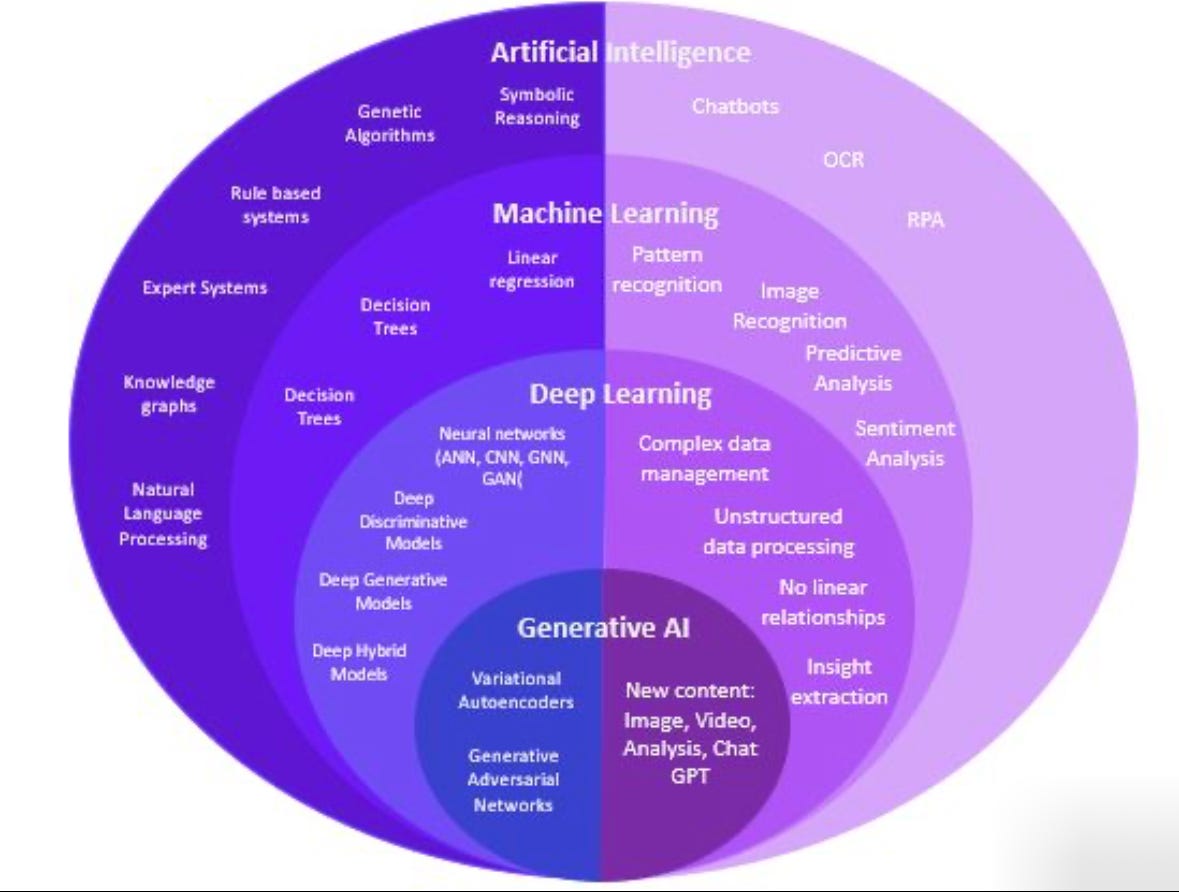
Executive Summary: Maintaining AI Ecosystem Stability is critical for enterprises managing the complex, interconnected web of diverse AI models. As AI proliferates across operational domains, integrating heterogeneous B2B AI from multiple vendors introduces systemic risks, unintended consequences, and the need for adaptive governance. This report highlights the necessity of meta-AI frameworks that continuously learn, predict, and dynamically reconfigure these AI interdependencies. By ensuring operational resilience and ethical alignment across multi-vendor environments, these strategies empower businesses to mitigate risks, optimize resources, and gain a competitive edge in mastering enterprise AI.
The Problem: Unforeseen Risks in Interconnected AI Environments
The current paradigm of deploying individual AI models, even with rigorous internal validation, critically fails to account for the emergent behaviors that arise when these models interact within complex, dynamic systems. These interactions are not always linear or predictable, leading to a host of unforeseen risks:
- Heterogeneous Interactions: Different AI models—such as those for financial fraud detection, inventory management, or customer support chatbots—are often developed by various vendors, utilizing disparate datasets, algorithms, and objectives. Their combined operation can lead to non-linear and unpredictable outcomes.
- Emergent Systemic Risks:
- Cascading Failures: A misprediction or anomaly in one AI system (e.g., a sudden change in demand forecasting) can trigger adverse reactions in dependent systems (e.g., logistics, production planning), leading to widespread operational disruption and significant financial losses.
- Ethical Drift and Bias Amplification: Subtle biases inherent in individual models can be amplified through interaction, resulting in macro-level unfair outcomes or decisions that deviate significantly from an organization’s ethical principles and societal expectations.
- Resource Contention and Inefficiency: Uncoordinated AI models may inadvertently compete for shared computational resources, network bandwidth, or data access. This contention can lead to performance degradation, system bottlenecks, and inefficient resource utilization across the enterprise.
- Security Vulnerabilities: A security breach or attack vector targeting one AI model could propagate through its dependencies, compromising the integrity, confidentiality, or availability of the entire AI ecosystem.
- Unintended Consequences: Actions taken by one AI, while seemingly optimal within its local context, can have detrimental and unforeseen effects on the broader system or business objectives when interacting with other AIs.
- Lack of Global Visibility and Control: Enterprises frequently lack a unified, real-time view of how their diverse AI models are interacting, evolving, and impacting overall system health and business outcomes, making proactive management nearly impossible.
The Solution: Adaptive Meta-AI Frameworks for Resilience
The proposed solution involves implementing a sophisticated layer of adaptive meta-AI frameworks. These are not individual AI models, but rather intelligent systems specifically designed to observe, learn from, and govern the interactions of other AI models within the enterprise ecosystem. This approach is fundamental to achieving robust AI Ecosystem Stability.
These frameworks operate on principles of continuous learning and dynamic reconfiguration:
- Continuous Learning and Prediction: The meta-AI framework constantly monitors the real-time performance, inputs, outputs, and interaction patterns of all constituent B2B AI models. Leveraging advanced machine learning techniques, including deep reinforcement learning, predictive analytics, and anomaly detection, it learns the complex interdependencies. Crucially, it predicts potential emergent risks or unintended consequences *before* they fully manifest. This includes identifying unusual data flows, deviations from expected behavior, or early indicators of ethical misalignment.
- Dynamic Reconfiguration: Upon identifying a predicted risk or an actual deviation from stability or ethical alignment, the meta-AI framework takes proactive measures to reconfigure the ecosystem. This involves:
- Interdependency Adjustment: Dynamically modifying communication protocols, data-sharing agreements, or interaction hierarchies between specific AI models. For instance, temporarily isolating a potentially unstable model or rerouting data flows to prevent cascading failures.
- Resource Allocation Optimization: Intelligently adjusting computational resources (CPU, GPU, memory), network bandwidth, or data access priority among AI models to prevent contention, alleviate bottlenecks, or bolster critical functions during peak loads.
- Policy Enforcement: Applying predefined or learned policies to constrain the actions of certain AI models or to enforce ethical guardrails, ensuring decisions remain within acceptable parameters.
- Model Switching/Versioning: In certain scenarios, the meta-AI might recommend or even initiate the deployment of alternative AI models or specific versions known to be more stable or ethically aligned in particular contexts.
- Ethical Alignment as a Core Metric: Beyond traditional performance metrics, the meta-AI framework explicitly incorporates ethical principles such as fairness, transparency, and accountability as primary objectives. It continuously monitors for biases, discriminatory outputs, or opaque decision-making across the ecosystem, triggering reconfigurations to mitigate these issues proactively. For more on the importance of ethical considerations, see UNESCO’s recommendations on the Ethics of Artificial Intelligence.
Achieving AI Ecosystem Stability: Key Components
Implementing such an advanced framework requires a suite of sophisticated technologies and methodologies:
- Observability & Telemetry: Comprehensive logging and monitoring of AI model performance, data pipelines, resource utilization, and interaction logs are foundational. This provides the raw data for the meta-AI to learn from.
- Multi-Agent Systems (MAS): The meta-AI itself can be viewed as a MAS, with specialized sub-agents responsible for specific aspects of monitoring and control, coordinating to achieve global stability.
- Reinforcement Learning (RL): RL enables the meta-AI to learn optimal reconfiguration strategies through trial and error, often in simulated environments, allowing it to adapt to evolving system dynamics without impacting live operations.
- Explainable AI (XAI): Critical for building trust and enabling human oversight, XAI allows the meta-AI to provide insights into *why* it predicts certain risks or *why* it recommends specific reconfigurations.
- Federated Learning/Privacy-Preserving AI: Essential for multi-vendor ecosystems where sensitive data cannot be centralized. These techniques allow the meta-AI to learn from distributed data without direct access, maintaining data privacy and security.
- Digital Twin/Simulation Environments: These virtual replicas of the live AI ecosystem are invaluable for testing reconfiguration strategies and predicting outcomes without impacting production systems, serving as a safe sandbox for experimentation.
- Robust Control Theory: Principles from control engineering are applied to design stable and resilient adaptive systems, ensuring that meta-AI interventions lead to desired outcomes without introducing new instabilities.
7 Crucial Strategies: Benefits of Robust AI Ecosystem Stability
Mastering AI Ecosystem Stability offers profound benefits that extend far beyond mere operational efficiency, providing a significant competitive advantage:
- Proactive Risk Mitigation: Shifts enterprises from reactive incident response to predictive prevention of systemic failures and ethical breaches, significantly reducing downtime and reputational damage.
- Enhanced Resilience and Business Continuity: Ensures the overall enterprise AI landscape remains stable and operational even amidst local model anomalies, external shocks, or evolving data patterns.
- Accelerated and Safer AI Deployment: Provides a critical safety net that manages the integration of new AI models into the existing ecosystem, enabling faster and more confident deployment of innovative solutions.
- Optimized Resource Utilization: Intelligent allocation of computational and data resources across the entire AI landscape prevents contention, reduces operational costs, and maximizes the return on AI investments.
- Improved Ethical Governance: Embeds continuous ethical monitoring and self-correction mechanisms, fostering greater trust among stakeholders, ensuring regulatory compliance, and upholding corporate values.
- Competitive Advantage: Enterprises that successfully implement and manage AI Ecosystem Stability will be better positioned to scale their AI initiatives safely and efficiently, unlocking greater value and innovation.
- Greater Transparency and Accountability: Through XAI components, the meta-AI framework enhances understanding of complex AI interactions, fostering a culture of transparency and accountability in AI decision-making.
Challenges and Future Outlook
While the benefits are clear, achieving comprehensive AI Ecosystem Stability presents its own set of challenges:
- Complexity at Scale: Developing a meta-AI framework capable of managing hundreds or thousands of heterogeneous AI models across diverse domains presents significant engineering and algorithmic hurdles.
- Data Integration and Interoperability: Standardizing data formats, APIs, and communication protocols across multi-vendor AI systems is a monumental task, yet crucial for seamless interaction.
- Trust and Vendor Collaboration: Requires a high degree of trust and cooperation among different AI vendors and the enterprise implementing the meta-AI, often necessitating new partnership models.
- Explainability of Meta-AI Decisions: Ensuring the meta-AI’s reconfigurations are transparent and justifiable, especially when human intervention is required, remains an active area of research.
- Regulatory Landscape: The rapidly evolving global regulations around AI safety, ethics, and accountability will heavily influence the design and implementation of these frameworks, demanding agility and foresight. For insights into general AI research and development, consider sources like IBM Research’s AI Blog.
- Human-in-the-Loop Oversight: Defining the optimal balance between autonomous meta-AI actions and human oversight for critical decisions is essential to prevent unintended consequences and maintain human control.
The future of enterprise AI hinges not just on the power and sophistication of individual models but fundamentally on the stability, resilience, and ethical alignment of their collective interactions. Investing in adaptive meta-AI frameworks for AI Ecosystem Stability is no longer a luxury but a strategic imperative for any organization leveraging AI at scale. As AI becomes increasingly embedded in the fabric of business operations, the ability to govern and stabilize these complex systems will differentiate leaders from followers.
To deepen your understanding of these critical advancements and other cutting-edge insights, Explore The Vantage Reports.