

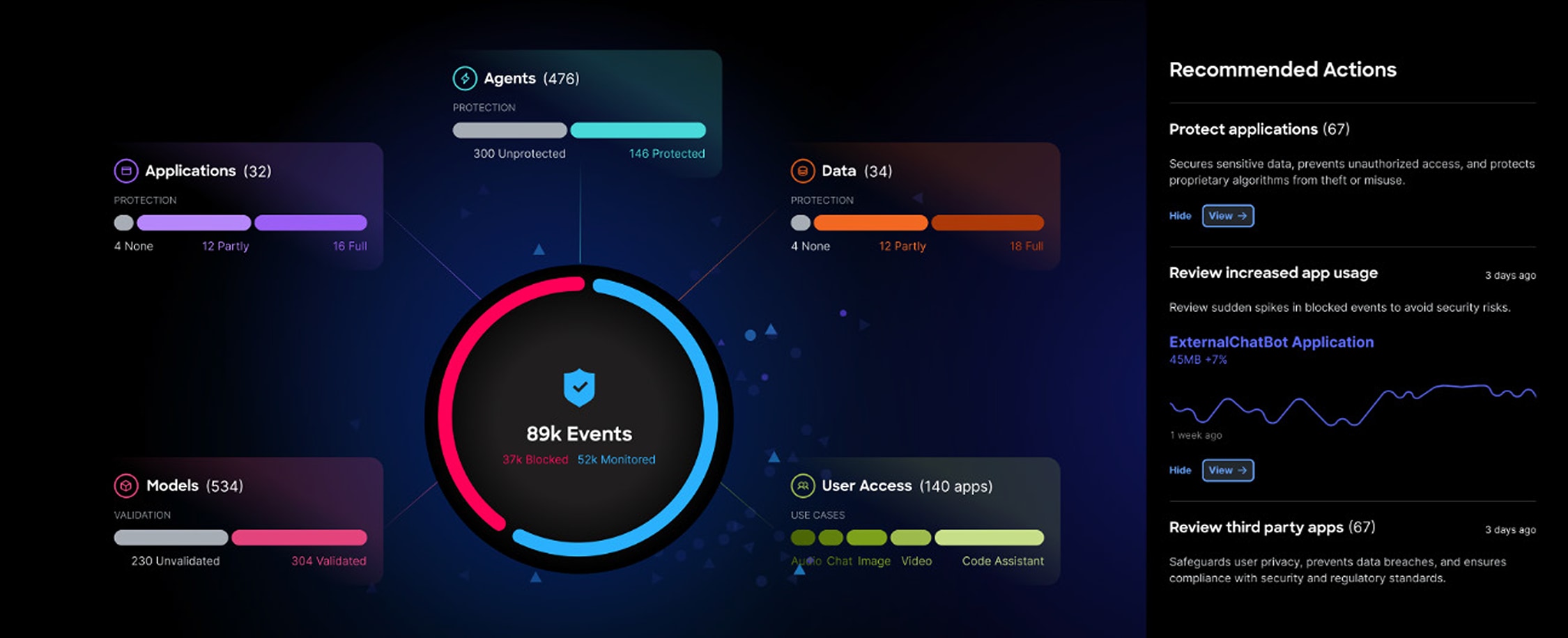
Executive Summary: In an era where cyber threats are escalating in sophistication, particularly those targeting artificial intelligence systems, the concept of AI Self-Defense has emerged as a critical paradigm shift in B2B security. Traditional perimeter defenses are proving inadequate against rapidly evolving zero-day adversarial attacks and insidious data poisoning techniques. This advanced capability empowers AI systems to autonomously detect, learn from, and dynamically counter threats, ensuring robust, trustworthy, and resilient operational autonomy in critical enterprise environments. For businesses relying on AI for core operations, active self-defense is no longer a futuristic concept but a present-day necessity.
1. Foundations of AI Self-Defense
At its core, AI Self-Defense in B2B contexts is built upon a synergistic combination of cutting-edge AI methodologies designed to proactively protect valuable digital assets. These foundational elements equip AI systems with the intelligence to anticipate and neutralize threats.
Adversarial Meta-Learning
This advanced form of machine learning empowers AI systems to learn how to learn from adversarial examples and attacks. Instead of merely identifying known threats, meta-learning allows AI to generalize from limited adversarial scenarios, rapidly adapting defensive strategies to novel, unseen (zero-day) attack patterns. It trains the AI to anticipate attacker methodologies, making it inherently more resilient to unforeseen manipulations. By training on diverse simulated attacks, the AI infers underlying attack principles, identifying the intent behind adversarial perturbations rather than just memorizing specific signatures. This enables generalized and robust defense, paramount where attackers constantly innovate.
Predictive Threat Intelligence (PTI)
Leveraging vast datasets of cyber threat indicators, attack vectors, and historical breach data, Predictive Threat Intelligence employs advanced analytics and machine learning to forecast potential future threats. For B2B AI systems, this means proactively identifying emerging attack campaigns, common vulnerabilities in AI architectures, and adversary tactics targeting specific AI models (e.g., prompt injection or evasion attacks). PTI provides the AI Self-Defense system with actionable foresight. By analyzing global threat landscapes, industry-specific trends, and enterprise vulnerabilities, PTI allows AI to pre-emptively strengthen defenses in likely target areas, often before an attack materializes. This proactive stance significantly reduces the window of vulnerability.
2. Autonomous Countermeasure Synthesis and Dynamic Deployment
A hallmark of effective AI Self-Defense is its capacity for autonomous action, moving beyond static defenses to dynamic, self-healing capabilities that respond in real-time.
Synthesize Adaptive Countermeasures
Upon detecting or predicting a threat, the AI system autonomously generates or modifies defensive strategies tailored to the specific attack vector and its own vulnerabilities. This might involve:
- Model Hardening: Adjusting model parameters or employing adversarial training on the fly.
- Data Validation & Sanitization: Deploying new data filters or anomaly detection algorithms to neutralize poisoned data or filter malicious inputs.
- Architecture Modifications: Dynamically reconfiguring network layers to mitigate specific attack pathways.
- Defensive Deception: Introducing subtle noise to its own outputs to confuse adversarial models.
These countermeasures are “adaptive” because they are specifically tailored to the nature and vector of the perceived threat, ensuring maximum effectiveness.
Dynamically Deploy Defenses
The synthesized countermeasures are then dynamically and seamlessly integrated into the AI system’s operational pipeline. This real-time deployment ensures minimal disruption to B2B operations while maximizing response speed against fast-evolving threats. The system continually monitors effectiveness through feedback loops, making further adjustments as needed. This creates a closed-loop, self-optimizing defense mechanism that learns and evolves alongside threats. Such continuous integration and validation are critical for maintaining operational continuity, ensuring B2B enterprises can rely on their AI systems even amidst sophisticated cyberattacks. For more insights into robust cybersecurity frameworks, consult resources like the National Institute of Standards and Technology (NIST).
3. Fortifying Against Evolving Adversarial Attacks and Data Poisoning
Fortifying Against Evolving Adversarial Attacks and Data Poisoning with AI Self-Defense
The primary objective of AI Self-Defense is to proactively secure B2B AI against the most sophisticated and often elusive threats that plague modern digital ecosystems.
Evolving Zero-Day Adversarial Attacks
These attacks exploit previously unknown vulnerabilities or novel manipulation techniques against AI models or infrastructure. Adversarial meta-learning, combined with PTI, allows the AI system to develop a generalized understanding of adversarial strategies and attacker motivations. This enables it to detect and defend against attacks for which no specific signature or patch exists, effectively moving beyond reactive patching to proactive resilience against unseen threats. Examples include novel evasion attacks or model inversion attacks. The ability to foresee and counteract such novel threats truly differentiates advanced AI Self-Defense from traditional security measures.
Data Poisoning
A particularly insidious threat where malicious actors inject corrupted or misleading data into an AI model’s training dataset, leading to biased, inaccurate, or exploitable outputs. AI Self-Defense systems employ advanced data integrity monitoring, robust anomaly detection, and sophisticated data sanitization techniques, informed by PTI, to identify and neutralize poisoned data before it compromises model integrity. This includes identifying subtle statistical shifts or malicious correlations and proactively quarantining or correcting affected datasets. Preventing data poisoning is crucial because the integrity of an AI model’s training data directly impacts its reliability and fairness, especially in sensitive B2B applications. IBM Security offers extensive research and solutions regarding AI security and data integrity.
4. Ensuring Resilient and Trustworthy Operational Autonomy
The ultimate goal of adopting AI Self-Defense mechanisms is to guarantee the uninterrupted and reliable functioning of B2B AI systems, which are increasingly central to enterprise operations and decision-making.
Resilient Operational Autonomy
By continuously adapting and defending itself, the AI system maintains its operational integrity and performance even under sustained adversarial pressure. This resilience is critical for B2B applications where AI drives core business processes, from financial fraud detection to supply chain optimization. The ability of an AI system to withstand attacks and continue functioning effectively ensures business continuity and minimizes financial and reputational damage. In a rapidly evolving threat landscape, such resilience is a fundamental requirement for competitive advantage and operational stability.
Trustworthiness
In B2B environments, trust in AI is paramount, especially when AI systems make high-stakes decisions or handle sensitive data. AI Self-Defense ensures that outputs and decisions made by AI systems are reliable, unbiased, and free from malicious manipulation, thereby preserving stakeholder confidence, regulatory compliance, and ethical standards. This is crucial for applications where AI decisions have significant financial, legal, or ethical implications, and where the integrity of AI-driven insights directly impacts business outcomes and customer relationships. Building and maintaining this trustworthiness is fundamental to the successful adoption and scaling of AI technologies across the enterprise.
Conclusion
AI Self-Defense represents a pivotal advancement in cybersecurity, particularly for the B2B sector where AI deployments are becoming increasingly mission-critical. By integrating adversarial meta-learning and predictive threat intelligence to autonomously synthesize and deploy adaptive countermeasures, B2B AI systems are no longer passive targets but active, intelligent defenders. This proactive fortification against evolving zero-day attacks and data poisoning is not just an enhancement; it is becoming a prerequisite for ensuring the resilient, trustworthy, and autonomous operation of AI in the modern enterprise landscape, safeguarding investments and fostering confidence in AI-driven transformation. As AI continues to embed itself deeper into business processes, the capabilities offered by AI Self-Defense will be indispensable for maintaining security, integrity, and continuous innovation. For more in-depth analyses and reports on emerging cybersecurity trends, you can Explore The Vantage Reports.