

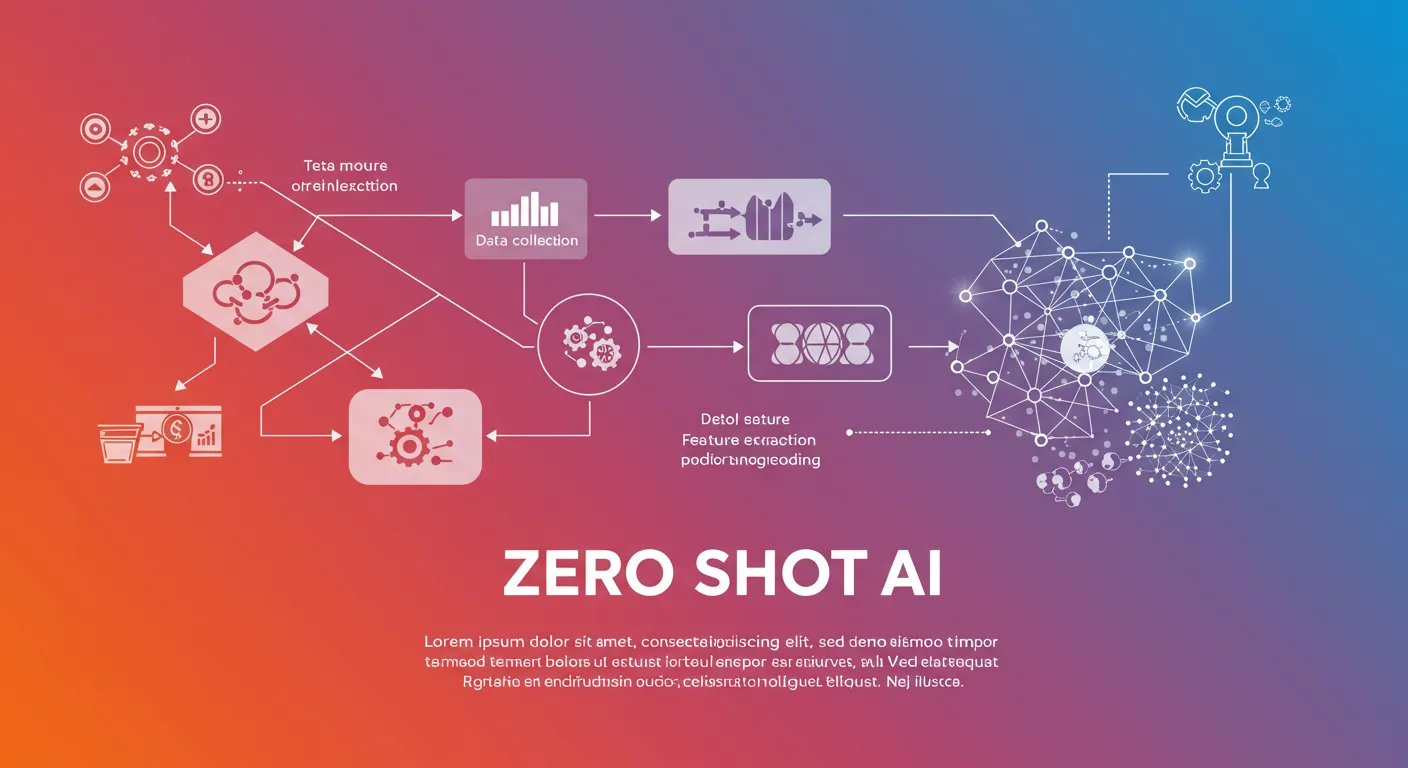
Global supply chains face constant disruption. Geopolitical shifts, climate events, and economic volatility create unprecedented challenges. Traditional AI often struggles with these “black swan” scenarios.
Zero-shot disruption training is vital. It enables AI systems to prepare for novel disruptions. Systems learn to orchestrate adaptive responses, even without historical data.
This advanced training builds truly resilient, self-optimizing global supply networks.
Synthetic Data: Preparing for the Unseen
Novel supply chain disruptions lack historical data. Examples include sudden sanctions or multi-region pandemics. This data vacuum makes traditional learning ineffective.
Advanced AI systems generate hyper-realistic synthetic datasets. These mirror complex B2B relationships. They form the foundation for zero-shot disruption training.
Generating Hyper-realistic, Causally-Consistent Data
Generative Adversarial Networks (GANs) and Variational Autoencoders (VAEs) are crucial. They learn underlying supply chain distributions. This includes lead times, inventory, and costs. They then generate new, unseen data points.
Causal Inference Models ensure “causal consistency.” They simulate cause-and-effect relationships. A port closure, for instance, impacts upstream suppliers. It also affects downstream distributors. These models capture how geopolitical events cascade.
Dynamic validation refines the generated scenarios. Real-world micro-events or expert feedback help. Reinforcement learning agents test plausibility. They ensure accuracy in complex B2B interactions.
Modeling B2B Supply Chain Disruptions
Micro-level simulations address node disruptions. These include factory fires or IT system failures. They also cover link disruptions, like shipping lane blockages.
Macro-level modeling integrates geopolitical factors. New trade agreements, tariffs, or regional conflicts are included. Cyber warfare targeting infrastructure is also modeled. Synthetic data captures how these events cascade through networks.
Zero-Shot Learning for Proactive Resilience
Zero-shot learning (ZSL) allows AI to respond to new disruptions. It addresses events never encountered during training. This is paramount for “unprecedented” scenarios.
Leveraging Synthetic Data for ZSL
Rich synthetic datasets provide a “semantic space” for ZSL. AI agents train on disruption attributes and consequences. They do not train on specific disruption instances.
Attribute-based learning is key. AI agents associate attributes like “port closure” or “geopolitical sanction” with impacts. They learn response strategies, even for new attribute combinations.
Meta-learning helps agents learn new patterns quickly. They leverage prior knowledge from similar disruptions. Deep Reinforcement Learning (DRL) agents explore vast scenarios. They learn optimal adaptive strategies in simulated environments.
This synthetic training ground allows agents to learn from future disruptions. They experience events that have not yet occurred.
From Reactive to Proactive & Adaptive
Zero-shot disruption training shifts the paradigm. It moves from reactive problem-solving to proactive resilience. AI agents “experience” countless novel synthetic disruptions.
They provide early warnings and predictions. Agents identify nascent indicators in real-time data. These align with learned synthetic scenarios. They also access pre-computed response strategies. These are tailored for specific disruption attributes.
The agents perform dynamic orchestration. They actively manage complex, multi-enterprise responses. This considers capacity, cost, and geopolitical implications.
Multi-Enterprise AI Agents and Collaborative Orchestration
Real-world supply chains involve many enterprises. Effective disruption response demands seamless collaboration. Data silos and competitive concerns often hinder this process.
Federated learning on synthetic data helps. Each enterprise’s AI agent trains on a shared model. This happens without exposing proprietary data. It builds collective intelligence for resilience. Secure multi-party computation enables collaborative decision-making.
Multi-enterprise AI agents can be decentralized. Each optimizes its supply chain segment. They coordinate with others through defined protocols. Shared objective functions guide them. This includes minimizing network disruption or ensuring product availability.
Orchestration Capabilities
Inventory optimization is another capability. Agents strategically reposition inventory, mitigating localized shortages. They facilitate capacity sharing between partners.
Agents also provide transparent risk communication. This includes real-time updates and coordinated action plans across the ecosystem.
For more insights on AI’s role, read our post on AI in Logistics Optimization.
The Intersection: National Security and Supply Chain Resilience
Zero-shot disruption training has profound national security implications. Critical infrastructure protection depends on resilient supply chains. Governments and defense sectors face increasing threats.
A cyber-attack on a national grid or a geopolitical blockade affecting essential resources are examples of critical threats. The ability to simulate and train for these scenarios is invaluable. It ensures continuity of vital services. It also maintains strategic resource availability during crises.
This training helps safeguard national interests. It prepares against both known and unknown threats. Investment in this technology is a strategic imperative.
Validation, Trust, and Implementation Challenges
Implementing zero-shot disruption training requires robust validation. Fidelity and utility of synthetic data are crucial. Metrics assess how well synthetic data mirrors reality. They also measure its effectiveness in learning.
Causality validation ensures modeled relationships reflect reality. Expert human validation and stress tests help. Bridging the sim-to-real gap is the ultimate test. Domain adaptation and continuous learning from real-world feedback are vital.
Ethical AI and bias mitigation are paramount. Synthetic data can amplify existing biases or create new ones. This leads to suboptimal strategies. Continuous auditing and ethical guidelines are essential.
The process is also computationally intensive. Generating hyper-realistic data demands significant processing power.
Discover how to mitigate broader risks with our Cybersecurity Best Practices Guide.
Future Outlook and Strategic Implications
Zero-shot disruption training is a paradigm shift. It moves from reactive mitigation to proactive resilience. Organizations mastering this gain a significant competitive advantage.
This training enhances business continuity. It minimizes downtime and financial losses. Optimized resource allocation becomes possible. It enables proactive resource shifts based on simulated disruptions.
Strategic agility improves. Businesses can rapidly pivot supply chain strategies. This responds to emergent geopolitical and economic shifts.
The integration of advanced AI is foundational. It prepares global supply chains for an unpredictable future.
Explore further with our article on Emerging Tech Trends in Industry.