

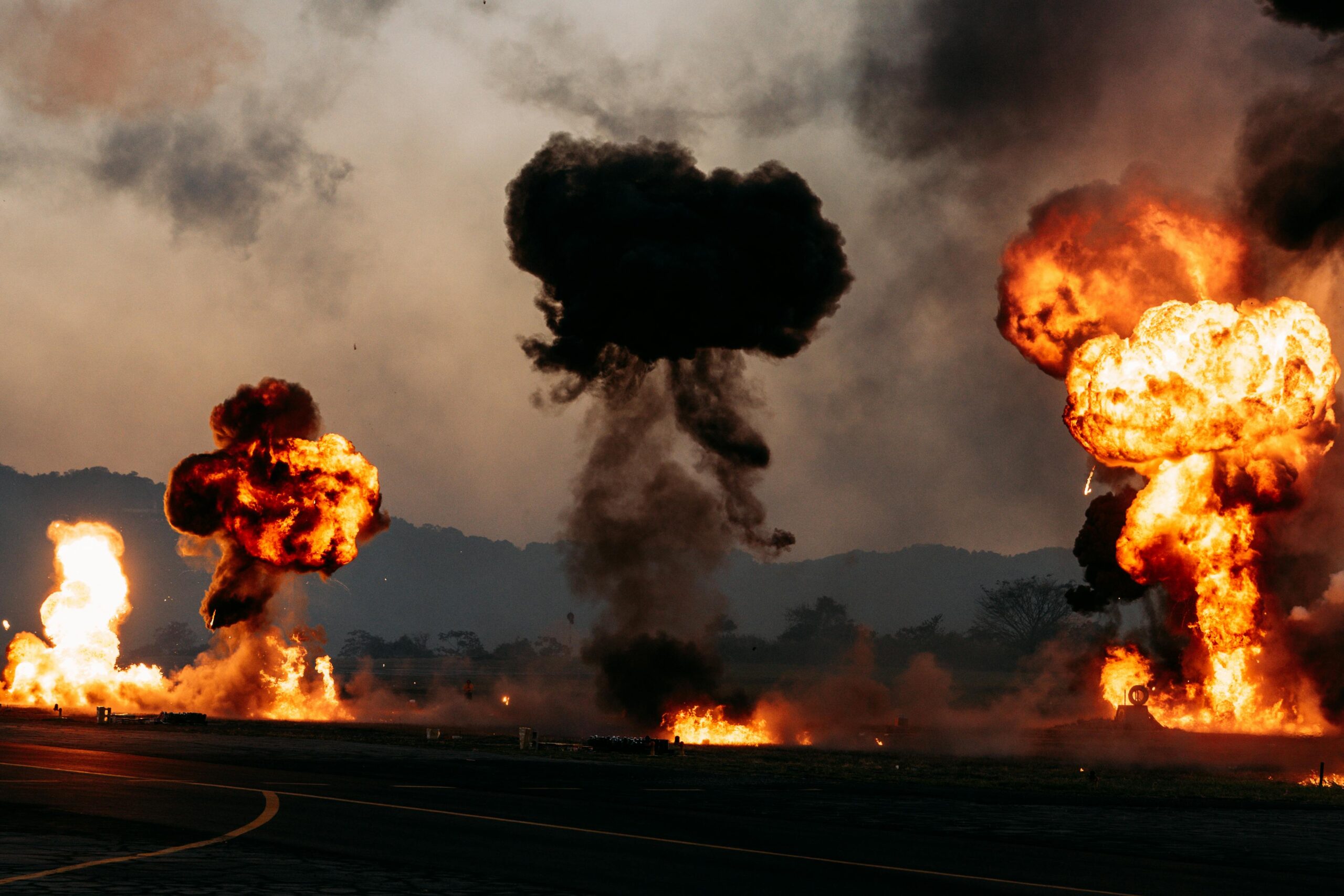
Executive Summary: Rising Tensions continue to define the complex geopolitical landscape involving the United States, Israel, and Iran, presenting a significant challenge to global stability and regional security. The intricate web of historical grievances, ideological clashes, and strategic imperatives has fostered an environment of heightened sensitivity and potential instability among these three key global actors. This report delves into the multifaceted dynamics that contribute to this escalating strain, offering critical insights into the underlying causes, current manifestations, and potential ramifications of these increasingly fraught relationships. Understanding these intricate interactions is paramount for policymakers, analysts, and global citizens alike, as the trajectory of these relationships has far-reaching implications for the Middle East and beyond.
The relationship between the United States and Iran has been characterized by periods of intense hostility since the 1979 Islamic Revolution. From the hostage crisis to the imposition of stringent sanctions, and the recent withdrawal from the Joint Comprehensive Plan of Action (JCPOA), a cycle of mistrust and confrontation has largely dictated their interactions. The US has consistently expressed concerns over Iran’s nuclear program, its development of ballistic missiles, and its extensive network of regional proxies, including Hezbollah in Lebanon, various militias in Iraq and Syria, and the Houthis in Yemen. These concerns are not merely theoretical; they often manifest in direct and indirect military confrontations, cyber warfare, and diplomatic standoffs, all contributing to the persistent state of **rising tensions**. The “maximum pressure” campaign initiated by the previous US administration, aimed at crippling Iran’s economy and forcing it to renegotiate a broader deal, further exacerbated these strains, leading to a tit-for-tat escalation of incidents in the Persian Gulf and beyond. The current US administration has sought to re-engage diplomatically but faces significant hurdles, including Iran’s continued nuclear advancements and regional activities, as well as domestic political opposition in both countries.
Israel, for its part, views Iran as its primary existential threat in the region. This perception stems from Iran’s stated anti-Israel rhetoric, its pursuit of nuclear capabilities, and its strategic encirclement efforts through proxies on Israel’s borders. The Israeli government has consistently advocated for a more aggressive stance against Iran, often urging the US to maintain or intensify sanctions and military pressure. Israel has also demonstrated a willingness to act unilaterally to counter perceived Iranian threats, conducting numerous airstrikes in Syria against Iranian-backed forces and engaging in covert operations aimed at disrupting Iran’s nuclear program. These actions, often met with retaliatory threats from Iran, create a volatile cycle of escalation that keeps **rising tensions** at a perilous level. The development of advanced missile technology by Iran and its allies, capable of reaching Israeli territory, further compounds Israel’s security anxieties, making the Iranian threat a constant and pressing concern in its national security calculus.
The United States finds itself in a complex strategic position, balancing its unwavering commitment to Israel’s security with its broader geopolitical interests in the Middle East and its desire to prevent a full-blown regional conflict. The US acts as both a key ally to Israel and a global superpower attempting to manage Iran’s influence and nuclear ambitions. This dual role often leads to delicate diplomatic maneuvers, particularly when Israeli actions against Iran risk broader regional conflagration. US policy shifts, such as the initial withdrawal from the JCPOA, have had profound impacts on the regional balance, often empowering hardliners in Iran and increasing the likelihood of direct confrontations. Conversely, any perceived softening of the US stance towards Iran can generate significant friction with Israel. This inherent tension in US foreign policy contributes significantly to the overall environment of **rising tensions**, as all parties closely monitor Washington’s every move for indications of future strategy.
Understanding the Roots of Rising Tensions
The current state of **Rising Tensions** is not a sudden phenomenon but rather the culmination of several deeply entrenched factors. At the core is Iran’s nuclear program, which, despite international monitoring, continues to raise proliferation concerns, especially after the US withdrawal from the JCPOA and Iran’s subsequent acceleration of uranium enrichment. Coupled with this is Iran’s expanding ballistic missile arsenal, which it views as a deterrent but is seen by its adversaries as an offensive threat. Furthermore, Iran’s regional foreign policy, characterized by supporting various non-state actors and projecting influence across the Levant and Persian Gulf, directly challenges the interests of the US and its regional allies. The US sanctions regime, intended to pressure Iran into compliance, has undeniably caused severe economic hardship within Iran, yet it has also fueled anti-American sentiment and strengthened the resolve of hardline factions, making diplomatic breakthroughs increasingly difficult. Israel’s proactive and often covert operations against Iran’s nuclear and military assets, while aimed at self-preservation, invariably provoke Iranian responses, creating a dangerous tit-for-tat dynamic that constantly flirts with the brink of wider conflict. Miscalculation by any party, whether through accidental engagement or misinterpretation of intentions, remains a significant risk factor in this highly charged environment.
The regional implications of these **rising tensions** are profound and extend far beyond the direct antagonists. Saudi Arabia and other Gulf Cooperation Council (GCC) states view Iran’s regional assertiveness as a direct threat to their security and stability, leading to proxy conflicts in Yemen and diplomatic standoffs that further destabilize the region. Syria and Iraq remain battlegrounds where Iranian-backed militias and US forces operate in close proximity, creating a constant risk of direct clashes. The potential for a broader regional conflict, whether accidental or intentional, looms large, with devastating humanitarian and economic consequences. Such a conflict could disrupt global energy supplies, trigger massive refugee flows, and draw in other international powers, transforming a regional dispute into a global crisis. The interconnectedness of regional security means that escalation in one area can quickly cascade, affecting neighboring countries and international maritime routes.
Economically, the impact of these **rising tensions** is substantial. Iran’s economy continues to grapple with the crippling effects of US and international sanctions, limiting its ability to trade globally and develop its domestic industries, particularly its crucial oil and gas sector. This economic pressure is designed to compel a change in behavior but also contributes to internal dissent and a sense of grievance that can be exploited by hardliners. Globally, the threat of conflict in the Persian Gulf, a vital artery for oil shipping, keeps energy markets volatile. Any disruption to oil flows could send prices soaring, impacting economies worldwide. Businesses operating in the region face increased risks, leading to reduced investment and hindering economic development in already fragile states. The economic dimension is not merely a consequence but also a tool in this geopolitical struggle, with sanctions being a primary instrument of pressure.
Amidst this fraught environment, diplomatic pathways remain elusive yet critically important. Direct communication channels between the US and Iran are limited, and between Israel and Iran, virtually nonexistent. International mediation efforts, often led by European powers or the United Nations, attempt to bridge these divides, but progress is slow and frequently undermined by new incidents or entrenched positions. The lack of trust, coupled with deeply held ideological differences and domestic political pressures in all three nations, makes de-escalation an arduous task. Each party often feels compelled to project strength and resolve, which can inadvertently lead to further escalation rather than compromise. A sustained and credible diplomatic initiative, backed by genuine political will from all sides, is essential to mitigate the risks associated with these escalating dynamics.
Looking ahead, the future scenarios stemming from these **rising tensions** range from continued managed competition to outright regional conflict. The worst-case scenario involves a direct military confrontation between Iran and either the US or Israel, potentially drawing in other regional actors and leading to widespread devastation. This could be triggered by an attack on critical infrastructure, a miscalculation during a military exercise, or a significant escalation of covert operations. Conversely, a best-case scenario would involve a return to robust diplomacy, potentially leading to a renewed nuclear deal with broader security guarantees, and a de-escalation of regional proxy conflicts. However, achieving such an outcome requires significant concessions and a fundamental shift in trust among the parties involved, which currently seems a distant prospect. The international community has a vital role to play in advocating for restraint, facilitating dialogue, and ensuring adherence to international norms to prevent further deterioration of the situation.
In conclusion, the **rising tensions** among the US, Israel, and Iran represent one of the most complex and perilous geopolitical challenges of our time. Rooted in historical animosities, ideological divides, and competing strategic interests, these dynamics demand vigilant monitoring and nuanced understanding. The interconnectedness of their actions means that any significant escalation could have catastrophic consequences for regional stability and global security. While the path to de-escalation is fraught with obstacles, sustained diplomatic efforts, clear communication, and a shared commitment to preventing conflict are indispensable. The global community must remain engaged, advocating for peaceful resolutions and supporting initiatives that can foster dialogue and build trust in this highly volatile region.