

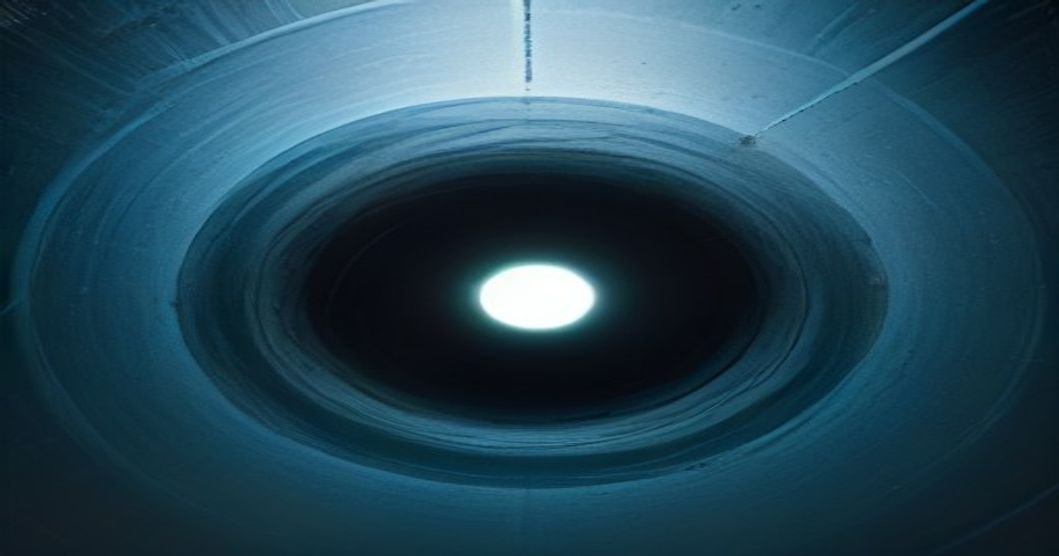
Scientists face a monumental challenge. They aim to unify quantum mechanics with general relativity. This quest requires experimental probes of quantum gravity. Such phenomena demand extreme energy scales, making direct observation difficult.
Recent breakthroughs in quantum computing offer a new path. Superconducting architectures are proving invaluable. This research explores engineering synthetic quantum spacetime lattices. These systems could simulate analogue black hole horizons and Lorentzian superconducting wormholes.
Ultimately, this work targets empirical validation for quantum gravity theories. The concept of “superconducting wormholes” captures this ambitious goal. We aim to realize these exotic spacetime structures on quantum hardware.
Engineering Spacetime with Superconducting Qubits
The core idea is profound. We construct an analogue of spacetime using superconducting qubits. These qubits are highly coherent. Each qubit, or a small cluster, represents a discrete “point” in a synthetic spacetime lattice.
Microwave pulses precisely control interactions between these qubits. This control mimics gravitational field dynamics. Researchers carefully tune coupling strengths and local potentials. They effectively sculpt a “metric” for this artificial spacetime.
Superconducting processors are reconfigurable. This feature is critical. It allows dynamic adjustments to lattice geometry. Interaction topology can also change. Consequently, we explore various spacetime configurations relevant to black holes and wormholes.
Multi-Qubit Entanglement for Spacetime Dynamics
Simulating complex spacetime geometries demands innovation. Multi-scale entanglement renormalization ansatz (MERA) provides a key method. MERA is a tensor network state. It efficiently encodes critical quantum many-body systems.
These systems feature long-range entanglement. MERA is ideal for holographic duality descriptions. The AdS/CFT correspondence is a prime example. For superconducting wormholes, MERA hierarchically coarse-grains entanglement.
This process maps a higher-dimensional gravitational theory onto a lower-dimensional quantum field theory. This theory lives on the superconducting qubit lattice boundary. MERA enables deterministic preparation and evolution of quantum states, representing curved spacetimes.
These structures include event horizons or wormhole-like throats. The renormalization group flow in MERA offers a natural framework. It explores different spacetime scales, from microscopic quantum fluctuations to macroscopic gravitational effects.
Analogue Black Holes and Lorentzian Wormholes
Within these engineered lattices, we aim to create and probe analogue phenomena. These mirror genuine black hole horizons and Lorentzian wormholes.
Simulating Black Hole Horizons
Researchers create regions where the effective “speed of light” is overcome. A background “flow” achieves this, engineered by qubit interactions. Particles, or qubit excitations, enter this region. They cannot escape, mimicking a black hole.
Furthermore, quantum fluctuations at this synthetic horizon could arise. They might produce analogue Hawking radiation, a thermal emission of entangled pairs. This offers a controlled environment to study the black hole information paradox.
Engineering Lorentzian Wormholes
The goal of traversable Lorentzian wormholes is more ambitious. This involves creating a specific entanglement structure across the qubit lattice. It mimics a spacetime “throat.” This throat connects two distant regions.
Theoretical frameworks often draw from ER=EPR, suggesting Einstein-Rosen bridges are equivalent to entangled pairs. Highly entangled quantum states could represent these connections. Superconducting qubits provide precise entanglement control. Combined with MERA, this offers a pathway to prepare such states.
We can then evolve these states, potentially allowing experimental probing of information transfer. Non-local connections across these synthetic wormhole geometries become testable. The “superconducting” aspect ensures necessary quantum coherence, maintaining these delicate entangled states over meaningful timescales.
Validating Quantum Gravity Theories
This research aims to move beyond speculation. It seeks empirical validation for quantum gravity theories. Observing quantum information, entanglement, and excitations within these synthetic spacetimes offers crucial clues.
- Information Paradox: Does information vanish behind a black hole horizon? Or does entanglement preserve it? Analogue Hawking radiation experiments could shed light on this mystery.
- Firewall Paradox: Do observers crossing a black hole horizon encounter a “firewall”? Or is spacetime smooth? Probing entanglement near synthetic horizons offers insights.
- Holographic Duality: Mapping gravitational dynamics to lower-dimensional quantum entanglement provides direct evidence. This supports holographic principles.
- Spacetime Microstructure: These experiments reveal clues about spacetime’s quantum nature. They might uncover granularities or non-local connections, as predicted by theories like loop quantum gravity or string theory.
The Intersection: National Security Implications
The pursuit of superconducting wormholes and quantum gravity might seem abstract. However, it holds significant national security implications. Understanding fundamental spacetime could revolutionize technology. Quantum-enabled sensors could achieve unprecedented precision, detecting subtle gravitational anomalies. This impacts stealth detection and subsurface mapping.
Furthermore, breakthroughs in quantum information transfer could lead to hyper-secure communication networks, impervious to classical eavesdropping. The ability to manipulate spacetime analogues, even synthetically, could inform future defensive technologies. It might also influence strategic advantage in a quantum-dominated world.
Challenges and Future Outlook
Immense promise accompanies significant challenges. Current superconducting quantum processors face limitations. Qubit count, coherence times, and error rates require significant improvement. Accurately simulating complex spacetime geometries demands many coherent qubits and precise control.
Mapping quantum gravity theories to quantum circuits remains an ongoing theoretical endeavor. However, superconducting quantum technology advances rapidly. Quantum error correction is improving, and theoretical understanding of quantum gravity analogues grows daily. Consequently, the experimental realization of “superconducting wormholes” becomes increasingly feasible.
This research represents a true frontier where quantum information science converges with condensed matter physics and fundamental physics. It promises unprecedented insights into the universe’s deepest mysteries.