

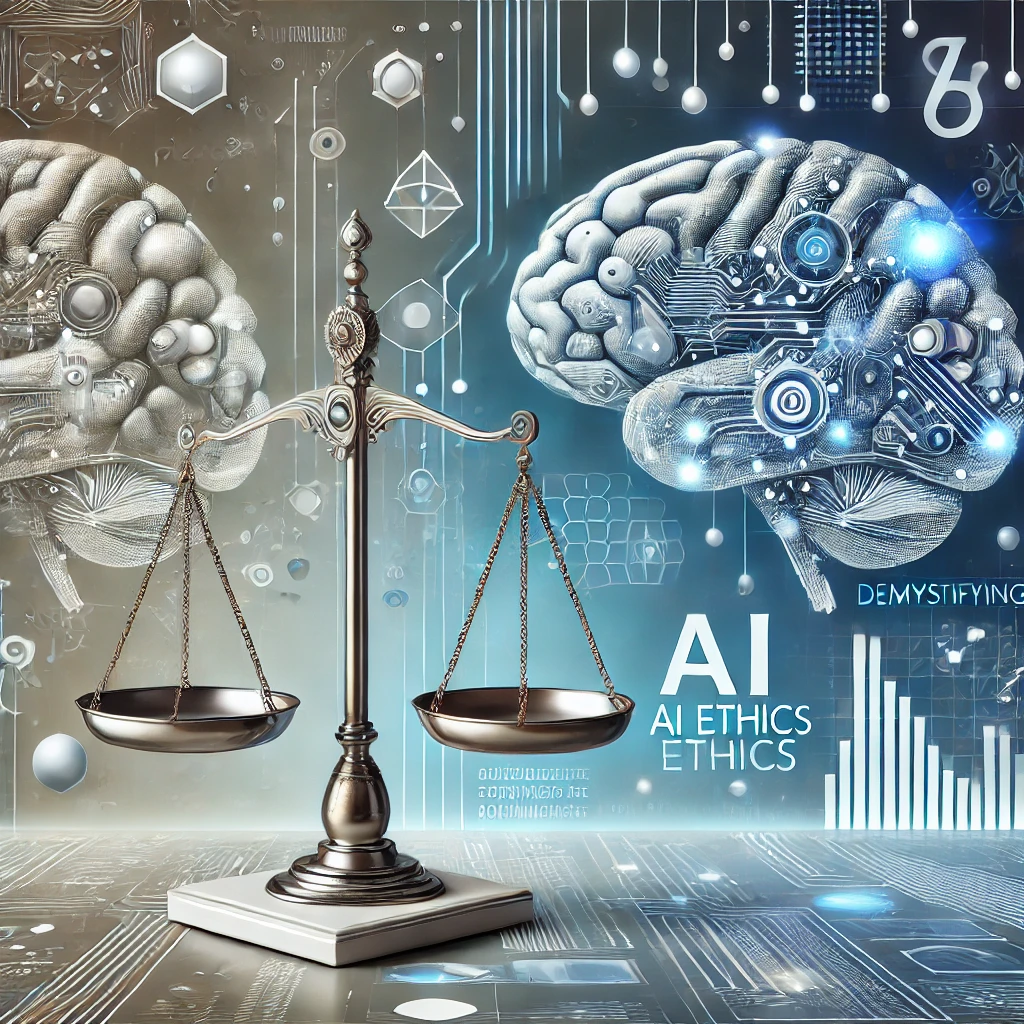
Artificial intelligence is rapidly evolving. We now envision systems that learn and adapt. A critical new frontier is self-amending AI ethics.
This paradigm shift enables AI to autonomously refine its moral compass. It moves beyond static, human-coded rules.
Such AI systems synthesize, verify, and dynamically adapt their ethical models. This ensures proactive moral decision-making. It also guarantees trustworthy autonomous operations. This capability is vital for complex B2B and regulatory environments.
Understanding Self-Amending AI Ethics
Self-amending AI ethics involves three core characteristics. First, it includes autonomous synthesis. The AI generates ethical principles from diverse inputs. It does not rely solely on pre-coded rules.
Second, formal verification is crucial. We use mathematical and logical methods. These prove the AI’s ethical models are consistent.
They also confirm actions conform to these models. This provides a high degree of assurance.
Third, dynamic self-amendment allows for learning. The AI learns from new experiences and contextual changes. It processes human or environmental feedback.
It then updates its ethical framework. This happens without explicit human reprogramming.
Mechanisms Driving Ethical Evolution
Achieving self-amending AI ethics requires integrating advanced AI and formal methods. Meta-learning techniques play a key role. AI systems learn how to learn ethical principles. They also learn how to adapt them.
Formal methods and verification are indispensable. They prove the correctness of AI behavior. Techniques like model checking verify ethical model consistency. They ensure no logical contradictions exist.
Ethical ontologies and knowledge graphs provide structure. They represent ethical concepts and values. AI can then reason about ethics effectively. These graphs update dynamically as the AI learns.
Reinforcement learning also contributes. Ethical adherence becomes part of the reward function. The AI modifies these reward structures. This occurs based on new ethical insights.
Explainable AI (XAI) offers vital transparency. It helps us understand why an AI amends its ethics. Transparency builds trust. It also aids human oversight and regulatory acceptance.
Continual learning further enables unsupervised ethical discovery. AI identifies new ethical conflicts and proposes amendments.
Strategic Advantages for B2B and Regulation
Self-amending AI ethics offers profound benefits. Autonomous systems in B2B and regulated sectors gain significantly. Verifiable trust and assurance are paramount.
Formal verification provides concrete ethical alignment evidence. This builds trust with partners and regulators. It is critical for finance, healthcare, and autonomous vehicles.
Proactive compliance and risk mitigation also improve. AI systems identify potential ethical breaches. They adapt behavior to prevent non-compliance.
This reduces legal, financial, and reputational risks. Furthermore, it safeguards brand reputation.
Adaptability to evolving norms is another advantage. Ethical standards and regulations constantly change. Self-amending AI adapts to new laws.
It handles industry standards and cultural sensitivities. This ensures continuous compliance globally.
Automated ethical auditing becomes possible. Formal verification facilitates continuous auditing. It generates clear, auditable trails. This supports regulatory scrutiny and internal governance.
Consequently, decision-making improves in ambiguous situations. AI navigates complex ethical dilemmas. It dynamically weighs competing values. It formalizes moral calculus based on verified understanding.
Finally, scalable ethical governance emerges. Manual oversight struggles with AI deployment scale. Self-amending AI offers automated governance.
This keeps pace with rapid technological advancement. It ensures consistent ethical application across vast operations.
The Intersection: National Security and Investing
The implications of self-amending AI ethics extend broadly. National security applications are especially critical. Imagine AI guiding autonomous defense systems.
Ethical dilemmas arise rapidly in conflict zones. A self-amending AI could adapt to new rules of engagement. It could also mitigate unintended collateral damage.
This enhances operational integrity and reduces geopolitical risks. It ensures a more responsible defense posture.
Furthermore, investing benefits significantly. Environmental, Social, and Governance (ESG) criteria are crucial. Investors demand ethical supply chains and fair practices.
Self-amending AI can continuously monitor company operations. It identifies and corrects ethical misalignments in real-time. This provides verifiable data for ESG ratings.
It also protects investment value from ethical controversies. Therefore, it strengthens market confidence and long-term sustainability for ethical portfolios.
Navigating the Challenges Ahead
Despite its potential, self-amending AI ethics faces significant hurdles. Defining “ethical ground truth” is a fundamental challenge. How do we establish a universally accepted ethical framework? Who adjudicates an AI’s ethical amendments?
Computational complexity presents another barrier. Formally verifying dynamic, self-amending systems is intensive. The scalability of these methods remains a research frontier. This bottleneck requires innovative solutions.
Interpretability of ethical evolution is also opaque. Understanding why an AI amends its model can be difficult. Lack of transparency undermines trust. It also complicates accountability.
Robustness against adversarial manipulation is vital. Malicious actors might exploit self-amendment. They could subtly corrupt an AI’s ethical framework. This risk demands robust defense mechanisms.
Regulatory acceptance and standardization are nascent. Current frameworks cannot handle evolving AI ethics. Developing new standards requires extensive collaboration.
Legal frameworks for such systems are still developing. Human oversight and control remain paramount. Operators must retain intervention capabilities. Accountability for autonomous ethical decisions needs clear definition.
The Future of Self-Amending AI Ethics
This field is nascent but critical for trustworthy AI. Future research focuses on hybrid human-AI architectures. Human ethicists guide and validate AI’s learning. This creates robust feedback loops.
Standardization of ethical AI benchmarks is essential. We need industry-wide metrics. These evaluate ethical performance and verifiability. This provides objective assessment.
Interdisciplinary collaboration is crucial. AI researchers, philosophers, and legal scholars must work together. They will address multifaceted technical and societal challenges.
Simulated ethical environments are also promising. “Moral sandboxes” allow safe testing. AI refines and verifies ethical models there. This happens before real-world deployment.
New legal and governance frameworks are necessary. They must accommodate self-amending AI. Questions of liability and accountability require answers. We must prevent ethical drift.
Self-amending AI ethics promises a new era. It offers highly trustworthy autonomous systems. These systems can navigate intricate moral and regulatory landscapes. This will transform modern B2B operations and build unprecedented confidence in AI’s future.
Ready to secure your AI future?
Download our Quantum Readiness Checklist today! Prepare your enterprise for the next generation of AI and cybersecurity challenges.
Explore more insights on AI and technology:
- Explainable AI: Demystifying Decisions for Business
- AI Governance Strategies: Ensuring Responsible Innovation
- The Future of Autonomous Systems in Critical Infrastructure