

Executive Summary
Quantum Vibrational Computing is an innovative field in quantum information science, proposing a novel architecture where computational information is encoded, processed, and stored within the collective vibrational states of supercooled molecular arrays. This approach leverages the inherent quantum mechanical properties of molecular vibrations—their coherence and discrete energy levels—to achieve ultra-low power, massively parallel computation at the fundamental quantum limit. Unlike traditional qubit architectures, this paradigm focuses on harnessing the quantized motion of atoms within molecules as the foundation for next-generation quantum information processing, promising significant breakthroughs in efficiency and computational power.
Core Principles: Vibrational States as Quantum Information Carriers
At the heart of quantum vibrational computing lies the concept of using molecular vibrations as qubits or even qudits. Information is encoded in the discrete quantum vibrational modes (e.g., stretching, bending, torsional modes) of individual molecules or collective phonon modes within an array. These modes can represent superposition states – a molecule simultaneously vibrating in its ground state and first excited state – or even higher-dimensional qudits if multiple excited vibrational states are accessible and controllable.
The initial engineering challenge involves meticulously identifying or designing molecules with well-defined, long-lived vibrational modes that are sufficiently isolated from environmental decoherence and possess suitable optical or microwave addressability. Molecules with specific symmetries, rigid structures, or tailored isotopic compositions are prime candidates, as their vibrational spectra are often cleaner and their coherence properties enhanced. Furthermore, the “collective vibrational states” aspect implies leveraging delocalized vibrational excitations (phonons or vibrons) that span multiple molecules in an array. This collectivity can significantly enhance coherence, provide robust entanglement pathways, and enable massive parallelism. Engineering strong coupling between adjacent molecular vibrons is, therefore, a crucial area of research.
Maintaining Quantum Coherence in Supercooled Molecular Arrays
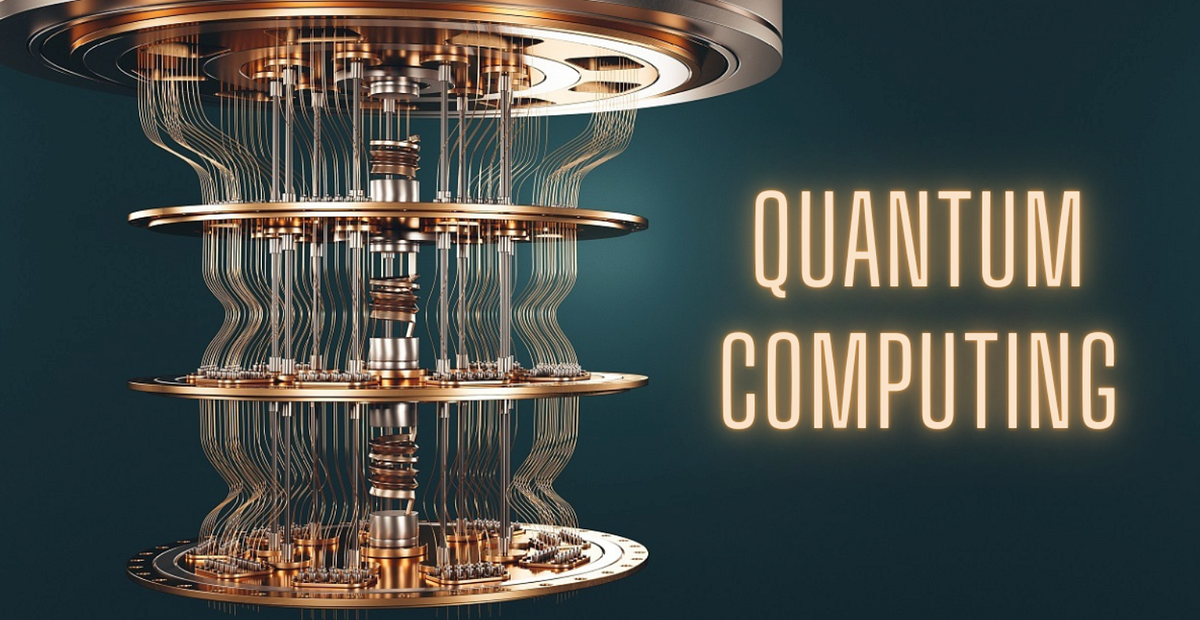
The integrity of quantum information hinges on maintaining coherence, and for vibrational qubits, this means operating at extreme cold. Achieving and maintaining supercooled temperatures, typically in the millikelvin range, is paramount. At these ultra-low temperatures, thermal noise, which rapidly dephases vibrational coherence, is minimized. The engineering feat involves developing cryostats and sample holders capable of sustained operation and precise control at these temperatures, often pushing the boundaries of cryogenic technology.
Beyond temperature, intrinsic molecular properties and the design of the array itself are critical. Molecules must be sufficiently isolated from unwanted interactions with their environment – such as the substrate, impurities, or stray electromagnetic fields – while still allowing controlled interaction for gate operations. This often involves embedding molecules in inert matrices, trapping them in optical lattices, or suspending them in vacuum. A primary engineering goal is to maximize the coherence lifetime of these vibrational states, as this directly dictates the complexity and duration of quantum computations. Research focuses on molecular designs that inherently resist decoherence, such as those with large energy gaps between vibrational states or those that can be isotopically enriched to reduce spin-phonon coupling.
Processing and Storage Mechanisms for Vibrational Qubits
Manipulating vibrational states to perform quantum logic gates (e.g., NOT, Hadamard, CNOT) requires exquisite precision and control. Several mechanisms are envisioned for this:
- Laser Pulses: Ultrafast, tailored laser pulses can excite, de-excite, and coherently couple specific vibrational modes. The engineering involves developing highly stable, tunable, and phase-controlled laser systems capable of femtosecond precision.
- Microwave Fields: For molecules with specific rotational or vibrational transitions that couple to microwave frequencies, resonant microwave pulses can drive these transitions, offering another avenue for control.
- Dipole-Dipole Interactions: Engineering the spatial arrangement of molecules to facilitate controlled dipole-dipole interactions between adjacent vibrational states is key for enabling two-qudit gates, which are essential for universal quantum computation.
- Optical Cavities: Placing molecular arrays within high-finesse optical cavities can dramatically enhance light-matter interaction, providing a powerful mechanism for strong coherent coupling and efficient readout of quantum states.
The stability and long coherence times of vibrational states at supercooled temperatures inherently support quantum memory. The challenge lies in creating arrays where individual or collective vibrational states can be independently addressed, written to, and read from without disturbing neighboring states, which is crucial for scalable quantum information storage.
Advanced Supercooled Molecular Array Engineering
The physical realization of quantum vibrational computing relies heavily on the ability to fabricate and control highly ordered, dense arrays of identical molecules. Techniques under development include:
- Self-Assembly: Designing molecules that spontaneously arrange into desired lattice structures through carefully engineered intermolecular forces.
- Molecular Beam Epitaxy (MBE): Precisely depositing molecules onto a surface layer by layer, offering atomic-scale control over array architecture.
- Optical Lattices: Trapping ultracold molecules in periodic potential landscapes created by interfering laser beams, providing a highly controllable and clean environment.
- Trapped Ions/Atoms with Molecular Impurities: Utilizing established ion or atom trapping techniques to host and control molecular species, leveraging existing highly developed platforms.
A significant hurdle is developing methods to selectively address individual molecules or small groups of molecules within a large array. This might involve spatial addressing with focused lasers, frequency addressing using slightly detuned vibrational modes, or a sophisticated combination of both, requiring advanced optical and microwave control systems.
Harnessing Quantum Vibrational Computing for Future Applications
The potential advantages of Quantum Vibrational Computing are compelling, promising a new era of ultra-efficient and powerful computation.
- Ultra-Low Power Consumption: Vibrational excitations typically involve energy scales in the meV range, significantly lower than electronic transitions. By exploiting these natural resonant frequencies and minimizing energy dissipation through supercooling, quantum vibrational computing promises orders of magnitude reduction in power consumption compared to classical and even other quantum computing architectures. This inherent efficiency could make large-scale quantum systems more viable.
- Massively Parallel Computation: The high density of molecules achievable in supercooled arrays allows for a vast number of computational units (vibrational qubits/qudits) to be packed into a small volume. This inherent scalability and potential for high connectivity could enable truly massively parallel computation, tackling problems currently beyond reach.
- Quantum Limit Performance: By operating at the quantum limit, where thermal noise is minimized and quantum coherence is maximized, these systems could perform computations with unprecedented precision and efficiency, tackling problems intractable for classical computers.
These capabilities open doors to transformative applications:
- Quantum Simulation: Simulating complex molecular dynamics, chemical reactions, and material properties with high fidelity. This could accelerate drug discovery, catalyst design, and the development of novel materials with bespoke properties.
- Optimization Problems: Solving complex optimization tasks in logistics, finance, and artificial intelligence, leading to more efficient resource allocation and decision-making.
- Machine Learning: Enhancing quantum machine learning algorithms with a potentially high-density, low-power platform, leading to breakthroughs in data analysis and pattern recognition.
- Fundamental Physics Research: Providing a unique platform for exploring quantum many-body physics, the nature of coherence in complex systems, and the boundaries of quantum mechanics.
For more insights into the broader field of quantum technologies, you can explore the research at Nature Quantum Computing.
Challenges and the Outlook for Quantum Vibrational Computing
Despite its immense promise, Quantum Vibrational Computing faces significant engineering and scientific hurdles. Scaling up the number of controllable and coherent vibrational qubits while maintaining their isolation and addressability remains a formidable task. Developing robust error correction schemes, which are essential for fault-tolerant quantum computation, must be specifically adapted to the unique characteristics of vibrational modes. Furthermore, creating efficient interfaces with classical control electronics and ensuring robust readout mechanisms are major research frontiers.
The precise fabrication and control of molecular arrays at the quantum level require continued innovation in nanofabrication, molecular synthesis, and quantum control techniques. However, ongoing advancements in cryogenics, ultrafast laser technology, and quantum optics are steadily pushing the boundaries of what’s possible. Researchers are actively exploring new molecular designs and array configurations to overcome these challenges. The potential for ultra-efficient, massively parallel quantum computation makes quantum vibrational computing a vibrant and exciting area of research, suggesting a future where molecular vibrations could indeed form the backbone of a new generation of ultra-efficient quantum computers. Explore The Vantage Reports for more cutting-edge insights. You can also delve into the foundational work in quantum information at institutions like NIST’s Quantum Information Program.