

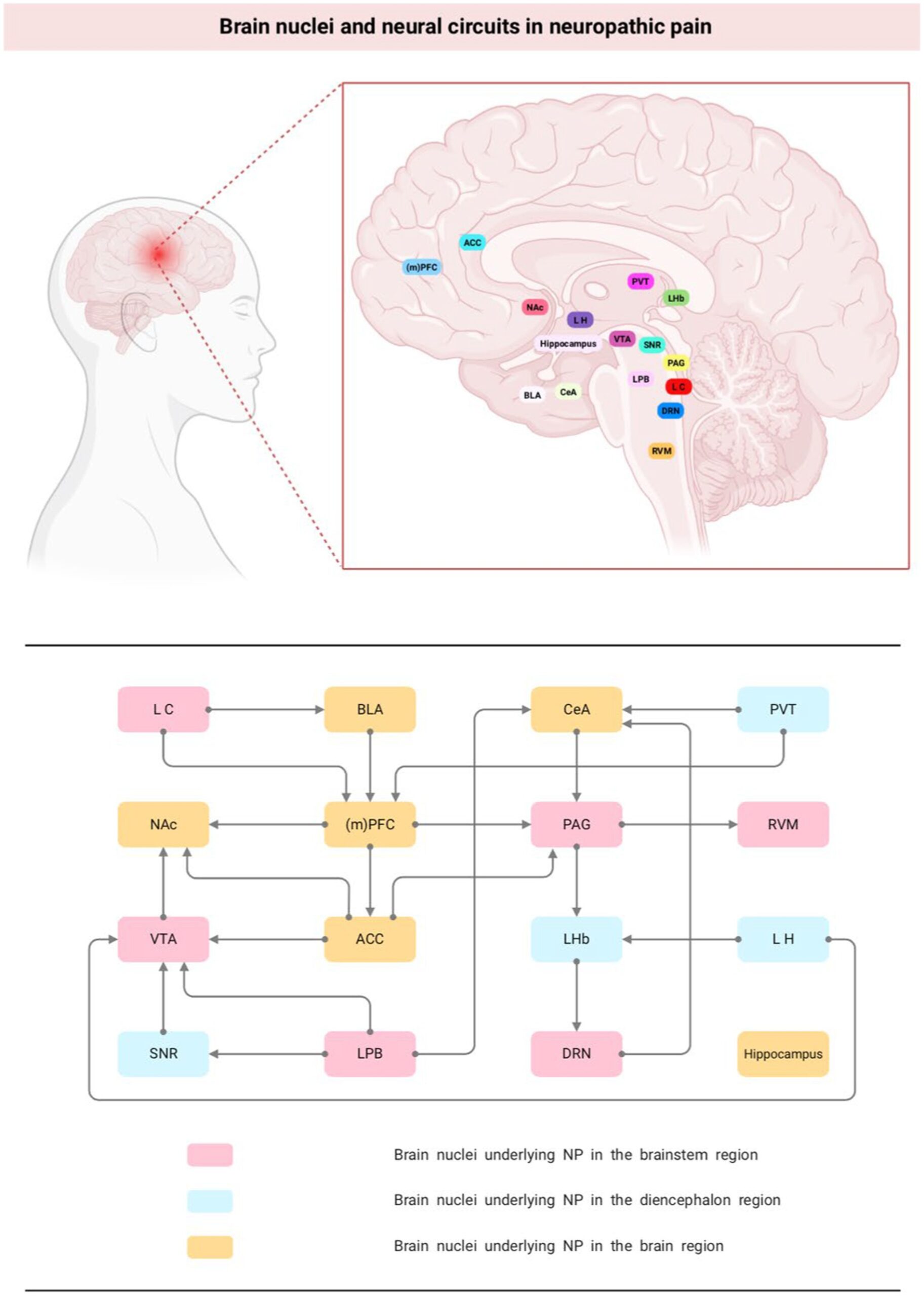
Chronic pain affects millions globally. It often leads to significant disability. Many individuals rely on opioid medications. These opioids carry substantial risks, including dependence.
We explore an innovative solution: **Pain Circuit Reprogramming**. This approach combines personalized non-invasive brain stimulation (NIBS) with targeted physiotherapy. It offers a powerful alternative to opioid reliance.
Understanding Chronic Pain’s Maladaptive Circuits
Chronic pain is more than extended acute pain. It involves complex, maladaptive changes within the central nervous system. We observe increased excitability in spinal cord and brain neurons. This leads to amplified pain responses, known as central sensitization.
Cortical reorganization also occurs. The somatosensory and motor cortices show alterations. This often blurs topographic representations. Conditions like phantom limb pain demonstrate this effect.
Additionally, the brain’s natural pain inhibition pathways become impaired.
Emotional and cognitive components are also crucial. Limbic structures and the prefrontal cortex contribute to these dimensions. Collectively, these changes reinforce pain perception. They form a persistent “chronic pain circuit.”
Personalized NIBS: Modulating Brain Activity
Non-invasive brain stimulation (NIBS) offers a non-pharmacological path. It modulates neuronal excitability. NIBS induces neuroplastic changes in pain-related brain regions.
Personalized stimulation means we tailor parameters. These include target area, intensity, and frequency. We base these choices on individual patient characteristics and neuroimaging findings.
Transcranial Direct Current Stimulation (tDCS)
Transcranial Direct Current Stimulation (tDCS) delivers a weak, constant electrical current. This current modulates cortical excitability. Anodal tDCS typically increases excitability. Cathodal tDCS, conversely, decreases it.
Clinicians often target the primary motor cortex (M1). This is usually contralateral to the pain site. The dorsolateral prefrontal cortex (DLPFC) is also a common target. It plays roles in pain modulation and mood.
Electrode placement is adjusted to optimize current flow. Current intensity is also carefully titrated.
Repetitive Transcranial Magnetic Stimulation (rTMS)
Repetitive Transcranial Magnetic Stimulation (rTMS) uses magnetic pulses. These pulses induce electrical currents in the brain. They can cause long-term potentiation (LTP)-like effects. They also induce long-term depression (LTD)-like effects.
These effects promote lasting synaptic plasticity changes. High-frequency rTMS (e.g., 10 Hz) often targets M1 or DLPFC. This enhances excitability.
Low-frequency rTMS (e.g., 1 Hz) can inhibit overactive areas. Targeting is precise. Neuro-navigation, guided by individual MRI scans, ensures precise targeting. Stimulation protocols are highly adaptable.
Both tDCS and rTMS aim to “prime” the brain. They make it more receptive to subsequent therapies. They normalize aberrant cortical excitability. Consequently, they promote adaptive plasticity. Explore more about neuromodulation advances.
Targeted Physiotherapy: Restoring Function
Physiotherapy is vital for chronic pain management. It focuses on restoring function. It reduces pain and improves quality of life. This is achieved through movement, exercise, and education.
Targeted physiotherapy involves specific interventions. These address individual deficits. They include motor control, proprioception, strength, and flexibility. A thorough sensorimotor assessment guides these interventions.
Physiotherapy facilitates motor learning. It engages neural circuits for movement. This process relies heavily on neuroplasticity.
Sensorimotor retraining corrects maladaptive movement patterns. It improves body awareness. These are frequently disrupted in chronic pain conditions.
Graded exposure gradually increases activity levels. This helps desensitize the nervous system. It reduces movement-related pain and fear-avoidance behaviors.
Synergistic Enhancement: NIBS + Physiotherapy for Pain Circuit Reprogramming
The combined approach offers true power. NIBS acts as a “neuroplasticity enhancer” for physiotherapy.
Pre-conditioning the brain with NIBS increases cortical excitability. This makes brain regions more amenable to plastic changes. Subsequent motor training and physiotherapy induce these changes. The brain becomes “primed” for learning.
NIBS optimizes cortical states. It can accelerate new motor skill acquisition. It also consolidates efficient movement patterns. Physiotherapy teaches these patterns.
This translates to faster functional recovery. It also reduces pain associated with movement. NIBS directly modulates pain processing regions. It reduces central sensitization.
It also enhances descending pain inhibition. Physiotherapy also offers analgesic effects. The combined impact on pain reduction is amplified.
This combination aims to “rewire” the brain. NIBS normalizes aberrant cortical excitability. It also normalizes connectivity.
Physiotherapy provides specific, adaptive inputs. These include corrective movements and sensory feedback. These inputs consolidate the changes.
This process helps dismantle maladaptive pain circuits. It replaces them with functional ones. The brain’s internal representation of the body improves. Its interaction with the environment also improves.
For example, NIBS targeting M1 can improve core muscle control in chronic low back pain. Specific exercises then reinforce this.
The Intersection: Impact on Daily Health
This innovative approach profoundly impacts daily health. It offers a path to reclaim an active life. Patients experience reduced pain. They regain functional abilities.
Consequently, they can participate more fully in daily activities. This includes work, hobbies, and social interactions. It directly improves overall quality of life. Moreover, it empowers individuals to manage their pain without constant medication. Discover other health tech innovations.
Circumventing Opioid Dependence
This integrated therapy offers a robust mechanism. It reduces reliance on opioids. The combined approach targets underlying neuroplastic changes. It addresses dysfunctional circuits.
These circuits perpetuate chronic pain. Crucially, the therapy does not merely mask symptoms.
The therapy promotes adaptive neuroplasticity. It facilitates functional recovery. This aims for long-term pain relief. It also improves function.
This reduces the need for continuous pharmacological intervention. Patients actively participate in their recovery. Physiotherapy fosters self-efficacy. It reduces the helplessness often linked to chronic pain.
This powerful, evidence-based pathway mitigates opioid risks. It provides a non-pharmacological alternative.
Conclusion
The personalized combination of NIBS and targeted physiotherapy marks a frontier. It transforms chronic pain management. This synergistic approach enhances cortical excitability. It facilitates adaptive motor learning.
It holds immense promise for **Pain Circuit Reprogramming**. This offers profound pain relief. It also provides functional restoration.
Crucially, it presents a powerful strategy. It circumvents opioid dependence. This ultimately improves patient outcomes. It addresses a significant public health challenge.
Further research will refine optimal personalization strategies. It will also explore long-term efficacy. This will continue to advance this transformative paradigm.
Download our “Quantum Readiness Checklist” to understand how cutting-edge technologies are reshaping healthcare. Learn more about the future of pain management.