

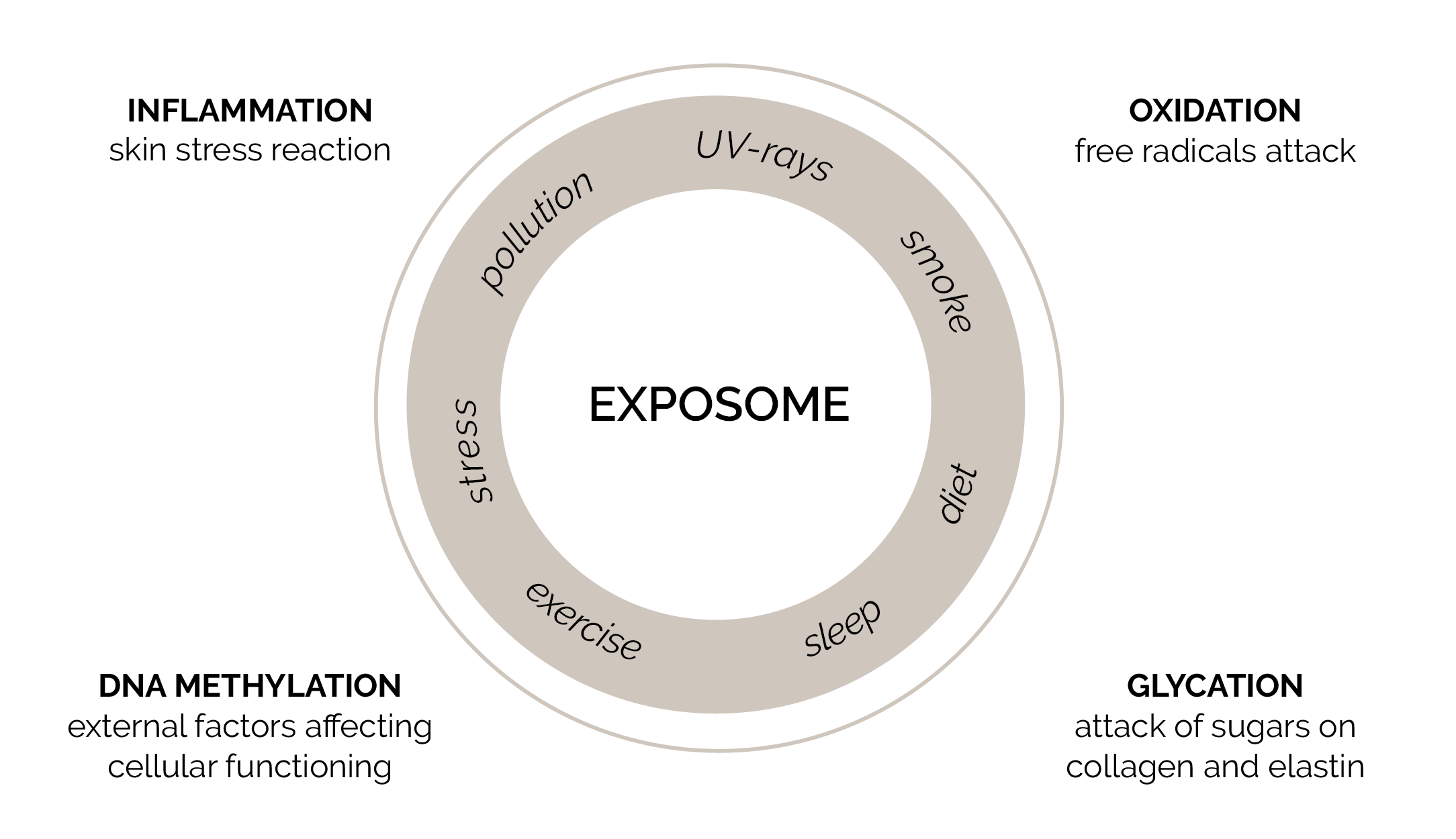
The profound intersection of Exposome Senescence Ayurveda offers a revolutionary paradigm in understanding and combating age-related diseases and chronic inflammation. As the global burden of chronic conditions escalates, there’s an urgent call for innovative preventive strategies. Central to this challenge is cellular senescence, a state of irreversible cell cycle arrest that, when accumulated, drives aging and pathology through its pro-inflammatory Senescence-Associated Secretory Phenotype (SASP). Crucially, the induction of senescence is heavily influenced by the exposome—the totality of environmental exposures from conception onwards, including lifestyle, diet, pollutants, and stress. This report delves into how personalized Ayurvedic Nidana Parivarjana (avoidance of causative factors) strategies can precisely modulate exposome-driven cellular senescence and the SASP, preventing chronic inflammation and extending organismal healthspan.
1. The Critical Link: Exposome, Senescence, and Chronic Inflammation
Cellular senescence, while initially a protective mechanism against tumor formation, becomes detrimental when senescent cells accumulate in tissues. These “zombie cells” secrete a complex array of pro-inflammatory cytokines, chemokines, growth factors, and proteases—collectively known as the SASP. This disruptive cocktail impairs tissue function, promotes chronic inflammation (often termed “inflammaging”), and contributes significantly to the pathogenesis of numerous age-related conditions, including cardiovascular disease, neurodegeneration, metabolic disorders, and fibrosis. The exposome serves as a continuous source of stressors—such as oxidative stress, genotoxic agents, xenobiotics, nutrient imbalances, and psychological stress—acting as a major upstream inducer of cellular senescence. Understanding and effectively mitigating these exposomic triggers is paramount for preserving and extending healthspan.
2. Personalized Nidana Parivarjana: Ayurveda’s Exposome Modulator
Nidana Parivarjana, a foundational principle of Ayurveda, emphasizes the avoidance of disease-causing factors specific to an individual’s unique constitutional blueprint (Prakriti) and current imbalance (Vikriti). This ancient wisdom provides a remarkably prescient framework for modern exposome management. Ayurvedic causative factors (nidanas)—ranging from incompatible foods (viruddha ahara), improper lifestyle (vihara), environmental toxins (ama visha), seasonal dysregulation (kala viparyaya), and mental stress (manasika hetu)—directly align with the multifaceted components of the modern exposome.
Personalized Nidana Parivarjana encompasses several key strategies:
- Dietary Modifications: Avoiding specific foods or food combinations that exacerbate dosha imbalances or create metabolic toxins (ama), thereby reducing the dietary exposome burden.
- Lifestyle Adjustments: Incorporating appropriate sleep-wake cycles (dinacharya), seasonal routines (ritucharya), and tailored physical activity to mitigate circadian disruption and metabolic stress.
- Environmental Awareness: Minimizing exposure to pollutants, allergens, and other environmental toxins relevant to an individual’s specific sensitivities.
- Stress Management: Employing practices like yoga, meditation, and pranayama to reduce psychological stress, a potent inducer of systemic inflammation and senescence.
By proactively identifying and eliminating these personalized causative factors, Nidana Parivarjana directly reduces cellular exposure to stressors that drive premature or excessive senescence, functioning as a sophisticated, individualized exposome modulator.
3. Modulating Cellular Senescence and SASP with Exposome Senescence Ayurveda
The targeted avoidance of nidanas through Nidana Parivarjana is hypothesized to precisely modulate the molecular pathways leading to exposome-driven senescence and SASP. This ancient wisdom, when applied to the modern understanding of cellular aging, reveals several key mechanisms:
- Reducing DNA Damage and Oxidative Stress: By avoiding genotoxic environmental agents, highly processed foods, and chronic psychological stress, Nidana Parivarjana can significantly minimize DNA damage and reactive oxygen species (ROS) production, both of which are critical triggers for senescence.
- Supporting Mitochondrial Health: Dietary and lifestyle interventions rooted in Ayurveda can bolster mitochondrial function, preventing the mitochondrial dysfunction that is a critical inducer of senescence and SASP.
- Attenuating Inflammasome Activation: By reducing the overall inflammatory load stemming from the exposome, Nidana Parivarjana can attenuate inflammasome activation, a central hub for SASP induction.
- Promoting Epigenetic Stability: Chronic exposure to detrimental exposomic factors can induce epigenetic changes that favor senescence. Ayurvedic practices aim to create an internal and external environment that supports epigenetic stability and healthy gene expression.
The resulting reduction in senescent cell burden and SASP components (e.g., IL-6, IL-8, TNF-α, MMPs) at the cellular level is expected to curtail the paracrine and systemic pro-inflammatory signaling that characterizes inflammaging.
4. Tissue-Specific Interventions: A Targeted Approach
Cellular senescence and the SASP manifest distinctly across different tissues, influenced by their unique cellular composition, physiological function, and exposure to local stressors. A truly effective strategy for modulating the cellular senescence process must account for this specificity. Nidana Parivarjana excels here, offering tailored approaches:
- Gut Microenvironment: Personalized dietary Nidana Parivarjana can foster a healthy gut microbiome, reduce intestinal permeability, and mitigate local inflammation, thereby preventing senescence in gut epithelial and immune cells that are constantly exposed to dietary components and microbial metabolites.
- Vascular Microenvironment: Avoiding factors like high glycemic load, trans fats, and chronic stress can significantly reduce endothelial cell senescence and SASP, which is crucial for preventing atherosclerosis and maintaining cardiovascular health.
- Skin Microenvironment: Protection from excessive sun exposure and environmental toxins, coupled with specific Ayurvedic topical applications and internal cleansing, can effectively prevent keratinocyte and fibroblast senescence, preserving skin integrity and youthfulness.
Leveraging high-resolution technologies allows for the observation of these specific tissue-level changes, providing an unprecedented understanding of how personalized interventions impact localized pathology.
5. High-Resolution Science: Profiling the Exposome and Senescence Biomarkers
To rigorously investigate the hypotheses surrounding Exposome Senescence Ayurveda, advanced technological platforms are indispensable for capturing the intricate interplay between environmental factors and cellular aging:
- High-Resolution Exposome Profiling: This involves sophisticated analytical techniques such as liquid chromatography-mass spectrometry (LC-MS) and gas chromatography-mass spectrometry (GC-MS) to quantify thousands of exogenous and endogenous chemicals in biological samples (blood, urine, hair, nails) and environmental samples. This allows for precise identification and quantification of an individual’s unique exposome, correlating specific exposures with senescence biomarkers. Targeted adductomics and metabolomics can further reveal the direct biological impact of these exposures, offering a granular view of how environmental factors contribute to cellular stress and aging.
- Spatial Single-Cell Multi-Omics of Senescence Biomarkers:
- Single-Cell RNA Sequencing (scRNA-seq): Identifies senescent cell populations within heterogeneous tissues based on specific transcriptional signatures (e.g., CDKN1A/p21, CDKN2A/p16, SA-β-Gal activity markers, SASP factors). This provides a molecular fingerprint of aging cells.
- Spatial Transcriptomics/Proteomics: Localizes these senescent cells within their native tissue context, revealing their precise anatomical distribution and interactions with the surrounding microenvironment. This is crucial for understanding how the SASP propagates locally and impacts neighboring cells.
- Single-Cell ATAC-seq (Assay for Transposase-Accessible Chromatin using sequencing): Provides insights into chromatin accessibility and epigenetic changes associated with senescence at a single-cell level, detailing how gene regulation is altered in aging cells.
- Multiplexed Imaging Techniques (e.g., CODEX, IMC): Allows for simultaneous detection of numerous senescence and SASP protein biomarkers (e.g., p16, p21, γH2AX, various cytokines) at high spatial resolution within tissue sections, offering visual evidence of cellular aging.
Integrating these powerful omics data with comprehensive exposome profiles will create an unprecedented, high-resolution map of how specific exposomic factors induce senescence in particular cell types within their microenvironments, and crucially, how personalized Nidana Parivarjana interventions effectively mitigate these detrimental processes.
6. The Ultimate Goal: Preventing Chronic Inflammation and Extending Healthspan
The ultimate goal of integrating the principles of Exposome Senescence Ayurveda with cutting-edge science is to demonstrate that personalized Nidana Parivarjana strategies, by effectively modulating exposome-driven cellular senescence and SASP, can prevent chronic inflammation and significantly extend organismal healthspan. This translates into tangible improvements in human well-being:
- Reduced Inflammaging: Decreased SASP production will lead to a significant reduction in systemic and localized chronic inflammation, a hallmark of aging and a major risk factor for numerous diseases. This directly addresses the global challenge of chronic inflammation.
- Delayed Onset of Age-Related Diseases: By preserving tissue integrity and function, these targeted interventions can delay or prevent the onset and progression of debilitating conditions such as cardiovascular disease, type 2 diabetes, neurodegenerative disorders, sarcopenia, and immunosenescence.
- Enhanced Functional Independence: Extending healthspan means not just living longer, but living healthier, with sustained physical, cognitive, and immune function, thereby dramatically improving the quality of life in later years.
Conclusion
The convergence of ancient Ayurvedic wisdom with modern scientific rigor offers a powerful new paradigm for precision prevention and healthspan extension. By understanding and actively managing the exposome through personalized Nidana Parivarjana, we gain an unparalleled ability to modulate cellular senescence and its pro-inflammatory consequences. This integrative approach to Exposome Senescence Ayurveda promises not just to extend lifespan, but to profoundly enhance the quality of life for individuals across the globe, ushering in an era of truly personalized and preventive healthcare.
To learn more about advanced health reports, please Explore The Vantage Reports.