

Chronic pain affects millions. Traditional treatments often fall short. A new frontier in precision medicine is emerging. It focuses on the primary cilium.
This tiny organelle offers a profound pathway. It enables fundamental changes in how our bodies interpret pain. This innovative approach is known as Cilia Pain Reprogramming. It aims to recalibrate pain pathways without drugs.
Primary Cilia: Your Cells’ Tiny Antennas
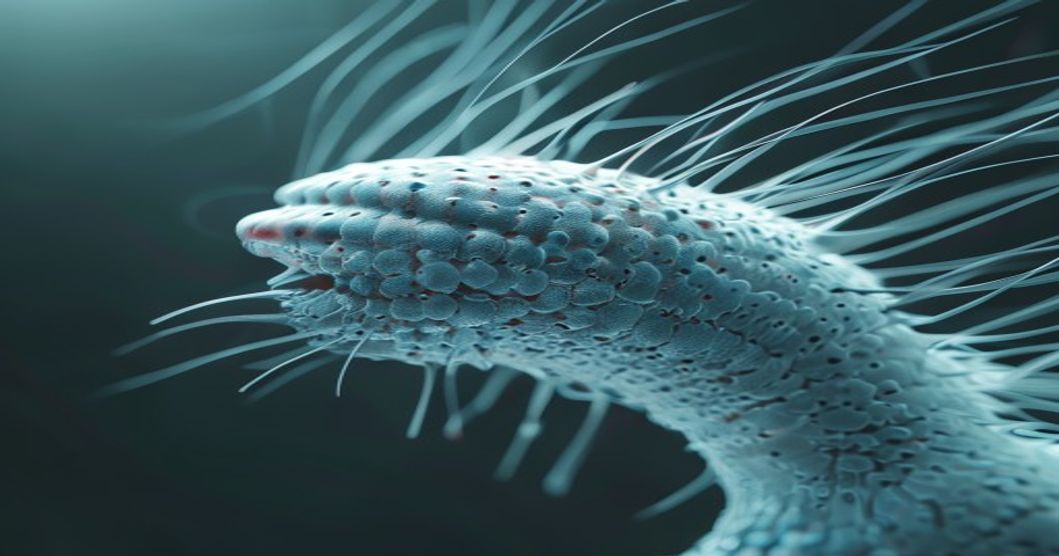
Primary cilia are solitary, immotile structures. They are present on most mammalian cells. Think of them as vital cellular antennas.
These antennas detect many extracellular cues. Crucially, they sense mechanical forces. In musculoskeletal tissues, cilia are perfectly positioned to sense shear stress, fluid flow, compression, and tension.
Cilia then translate these physical stimuli into biochemical signals. This mechanosensory capacity is vital. It supports tissue homeostasis, development, and repair.
Precision Mechanics for Cellular Change
Not all mechanical stimuli are equal. Researchers hypothesize that specific, targeted movement patterns matter most. These include precise mechanical loading protocols.
Such protocols involve specific frequencies, amplitudes, and durations. They also include the direction of force application. These forces can be compressive, tensile, or shear.
Targeted inputs can impact primary cilia differently. For example, low-magnitude, high-frequency vibrations stimulate osteogenesis. This likely occurs through specific ciliary responses in osteocytes.
Furthermore, cyclic tensile strain is crucial for tenocytes. It also supports ligament fibroblast function. Cilia potentially mediate optimal matrix remodeling responses here.
The “specificity” lies in finding the exact biomechanical signature. This signature must elicit a desired ciliary response. We move beyond general exercise to prescriptive mechanical interventions.
Modulating Ciliary Structure and Signaling Pathways
Mechanical loading can significantly influence ciliary structure. It affects several key aspects. These include ciliary length and axonemal stability.
Ciliary length can change. Both elongation and shortening occur. These changes often correlate with specific cellular states.
Excessive mechanical stress might shorten cilia. This could be a protective mechanism or a distress signal.
Conversely, optimal loading might promote stability. It could also encourage specific length modifications. Axonemal stability is crucial.
Microtubule dynamics within the cilium’s axoneme are essential. Mechanical forces influence tubulin modifications. This impacts ciliary rigidity and signal transduction.
The basal body anchors the cilium. It links intimately to the cytoskeleton. Mechanical forces can influence its positioning. This dictates the cilium’s orientation and sensitivity.
Activating Cellular Communication
Primary cilia initiate complex intracellular signaling pathways. They do this upon mechanical stimulation. Calcium (Ca2+) signaling is a prime example.
Cilia house mechanosensitive ion channels. These channels open with mechanical deformation. This leads to localized Ca2+ influx. This Ca2+ signal acts as a crucial second messenger. It impacts numerous downstream processes.
The Hedgehog (Hh) pathway also relies on cilia. It is vital for development and tissue repair. Mechanical forces modulate Hh pathway components. This alters cellular differentiation and proliferation.
Crosstalk exists with the Wnt pathway, particularly in bone and kidney. Mechanical inputs can influence Wnt ligand presentation via ciliary mechanisms.
The cAMP pathway is also involved. Mechanical forces regulate intracellular cAMP levels. This influences protein kinase A (PKA) activity and gene expression.
Finally, MAPK/ERK pathways are fundamental. They control cell growth, differentiation, and stress responses. They are downstream of Ca2+ and other ciliary signals.
Precise modulation of these cascades offers a powerful lever. It influences cellular behavior.
Recalibrating Pain Thresholds Through Cilia
A link between ciliary function and pain thresholds is emerging. This is especially true for mechanosensitive nociceptors. These are the neurons that detect harmful mechanical stimuli.
In chronic pain states, nociceptors become hypersensitive. Aberrant ciliary function may contribute to this. This could occur in the neurons themselves. It could also involve surrounding support cells.
For example, osteocytes in bone pain or chondrocytes in joint pain. If their cilia are dysfunctional, they might misinterpret normal loads. They could perceive them as noxious stimuli. This contributes to allodynia or hyperalgesia.
Cilia also regulate inflammatory responses. Targeted mechanical loading can optimize ciliary signaling. This could dampen pro-inflammatory pathways. It might also promote anti-inflammatory mediators. This reduces peripheral sensitization.
By tuning ciliary mechanotransduction, we aim to “reset” cells. We want to raise the pain threshold. This returns it to a physiological level. Learn more about cellular mechanisms of pain.
Cilia Pain Reprogramming: A Non-Pharmaceutical Solution
The long-term goal is fundamental chronic pain reprogramming. We aim to achieve this through sustained, targeted ciliary modulation. This involves re-establishing homeostatic mechanosensing.
Chronic pain often involves a breakdown. The body struggles to interpret mechanical forces correctly.
Specific mechanical protocols can restore optimal ciliary function. This re-educates cells. They then respond appropriately to physiological loads.
Cilia-mediated signaling pathways influence gene expression. Chronic application of targeted mechanical stimuli can change gene expression. These changes relate to pain processing and inflammation. They shift the cellular phenotype away from chronic pain.
This peripheral recalibration can lead to adaptive changes. These occur in the central nervous system. It effectively helps “unlearn” the chronic pain experience.
This approach offers a powerful alternative. It circumvents drug side effects and addiction risks.
It harnesses the body’s intrinsic cellular machinery. This provides a path for self-correction. Explore other precision medicine innovations.
The Intersection with Daily Health
The implications of Cilia Pain Reprogramming are vast. They directly impact our daily health and well-being. Imagine a future where chronic pain is managed without daily medication.
This research promises personalized physical therapies. These therapies would be tailored to an individual’s unique cellular biology.
This could mean a significant improvement in quality of life. Patients could regain mobility and reduce discomfort. It represents a paradigm shift in how we approach persistent pain.
This also opens doors for new investment opportunities. Companies developing advanced biomechanical devices will thrive. These devices will deliver precise mechanical stimuli. This is a burgeoning field with immense potential.
Download our exclusive “Cilia Health Guide: Understanding Your Body’s Tiny Antennas”.
This field requires advanced biomechanical modeling and high-resolution imaging. These tools monitor ciliary responses in real-time.
Translational research is crucial. We must move from lab models to human clinical trials. Conditions like chronic low back pain and osteoarthritis are key targets.
Developing smart wearables is also essential. These devices will deliver personalized mechanical stimuli. They will be tailored to individual patient needs.
By understanding and manipulating the primary cilium, we can revolutionize pain management. This offers a profound, non-pharmacological pathway to pain reprogramming. Read about the future of rehabilitation.