

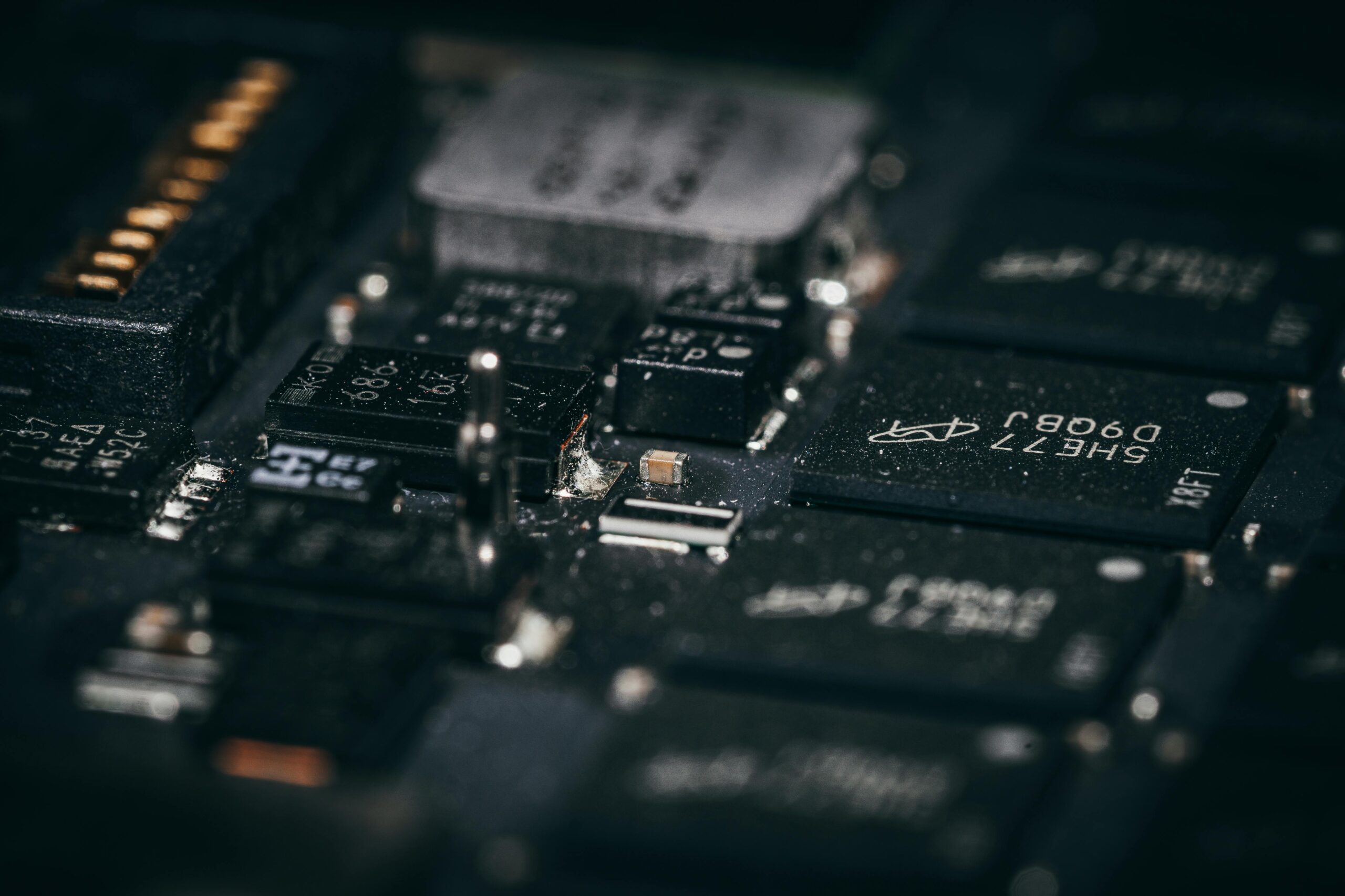
Executive Summary: Chiral Magnon Memory represents a paradigm shift in computing, leveraging topological spin textures and charge-free magnons to achieve ultra-low power, high-density, and inherently radiation-hardened information processing at terahertz frequencies. This technology promises to overcome the limitations of conventional charge-based electronics by utilizing spin waves for data storage and logic, offering revolutionary advantages like non-volatility, 3D integration potential, and topological protection for future computing needs.
The advent of Chiral Magnon Memory marks a paradigm shift in the realm of advanced computing, promising a radical departure from conventional charge-based electronics. This cutting-edge research delves into how leveraging topological spin textures can lead to ultra-low power, high-density, inherently radiation-hardened information processing capabilities, operating at unprecedented terahertz (THz) frequencies. By harnessing the unique properties of spin waves, Chiral Magnon Memory is poised to redefine the performance benchmarks for next-generation devices.
Foundations: Chiral Magnons and Topological Spin Textures
At the heart of this transformative technology lie two fundamental concepts: chiral magnons and topological spin textures. Understanding these components is crucial to grasping the profound potential of magnon-based computing.
Chiral Magnons: The Charge-Free Information Carriers
Magnons are quasiparticles that represent quantized spin waves in magnetic materials. Unlike electrons, which carry both charge and spin, magnons carry only spin angular momentum. This fundamental difference is key to their appeal: magnons are inherently immune to Joule heating, the primary source of energy loss and heat generation in modern electronics. This makes them ideal candidates for ultra-low power computing, circumventing a major limitation of current silicon-based technologies.
The “chiral” aspect refers to the specific handedness or direction-dependent propagation of these spin waves. This chirality is often induced by the Dzyaloshinskii-Moriya Interaction (DMI) in materials lacking inversion symmetry, such as interfaces between ferromagnets and heavy metals. This interaction imparts a unique, unidirectional flow to the spin waves, enabling robust and deterministic information transfer. This directional propagation is a critical feature for building reliable and efficient memory and logic arrays, offering a distinct advantage over traditional, omnidirectional signal propagation where energy is often wasted. To learn more about these fundamental excitations, you can read about magnons on Wikipedia.
Topological Spin Textures: Robust Data Bits
Topological spin textures are stable, localized, swirling configurations of magnetic moments within a material. Examples include skyrmions, anti-skyrmions, and merons. Their topological nature grants them exceptional robustness against thermal fluctuations, material defects, and external perturbations, making them ideal candidates for reliable information carriers in memory and logic devices.
- Skyrmions: These are nanoscale, vortex-like spin structures that can be incredibly small, down to a few nanometers. Their diminutive size allows for extremely high data storage densities, far surpassing the theoretical limits of conventional charge-based memory. Skyrmions can be efficiently generated, manipulated, and detected using spin currents, such as spin-orbit torques, offering precise control over individual data bits.
- Magnon-Texture Interaction: The interaction between chiral magnons and these topological spin textures is profound and forms the basis for encoding, storing, and processing information. Chiral magnons can be employed to nucleate, annihilate, or deterministically move skyrmions. The inherent chirality of the magnons can impart a specific, controlled directionality to skyrmion motion, significantly enhancing both control and energy efficiency in data manipulation. This synergistic relationship is central to the design of advanced memory architectures. For further reading on these fascinating structures, explore this review on skyrmion spintronics in Nature Reviews Materials.
Engineering Chiral Magnon Memory and Logic Arrays
The principles of chiral magnons and topological spin textures pave the way for revolutionary memory and logic architectures. By carefully engineering these interactions, scientists are developing novel computing paradigms that promise to transcend current limitations.
Memory: The Racetrack Concept
In chiral magnon-based racetrack memory, topological spin textures—typically skyrmions—serve as individual data bits. These bits are written, read, and shifted along magnetic nanowires, often referred to as “racetracks.” Efficient mechanisms like spin-orbit torques or direct interaction with propagating chiral magnons are used for these operations. The unidirectional propagation of chiral magnons ensures precise and energy-efficient data movement, minimizing errors and enabling the construction of high-density storage arrays. Information can be encoded not just in the presence or absence of these textures, but also in their specific topological charge or chirality, offering multi-bit storage potential within a single physical entity.
Logic Gates: Wave-Based Computing
Magnon-based logic gates leverage the wave-like properties of magnons. Information is encoded in the phase, amplitude, or interference patterns of propagating spin waves. Chiral magnons, with their robust and directional propagation, are ideally suited for constructing reconfigurable and ultra-low power logic operations. For instance, magnon waveguides can be engineered to interact at junctions, enabling the realization of fundamental Boolean gates such as AND, OR, and NOT. Furthermore, the inherent stability of topological spin textures can be exploited for robust logic, where the topological state of a skyrmion defines a logical input or output, offering a blend of stability and reconfigurability unmatched by conventional transistors.
7 Revolutionary Advantages for Next-Generation Computing
The unique attributes of Chiral Magnon Memory and logic arrays translate into a compelling suite of advantages that position them as a transformative technology for future computing needs:
- Ultra-Low Power Consumption (Charge-Free Transport): As magnons carry no charge, devices based on them inherently avoid Joule heating. This is the dominant energy dissipater in traditional electronics, meaning magnon-based systems offer dramatically reduced power consumption, primarily limited to highly efficient magnon generation and detection.
- Non-Volatile Operation: Information stored in stable magnetic states, such as skyrmions, or persistent magnon states, is non-volatile. This eliminates the static power consumption associated with data retention in volatile memory types like DRAM, leading to significant energy savings, especially in standby modes or during system shutdown.
- High-Density Information Storage (Nanoscale Features): The ability to stabilize skyrmions at dimensions well below 10 nanometers allows for memory densities that far surpass the theoretical limits of charge-based transistors. This enables unprecedented amounts of data to be stored in incredibly small footprints, pushing the boundaries of miniaturization.
- 3D Integration Potential: Magnetic materials offer exciting avenues for vertical stacking and three-dimensional integration of memory and logic components. This further enhances volumetric data density, allowing for more compact and powerful computing architectures that can pack more processing power into smaller physical spaces.
- Inherently Radiation-Hardened (Immunity to Ionizing Radiation): Unlike charge-based CMOS devices, where ionizing radiation creates electron-hole pairs leading to transient errors (soft errors) or permanent damage, spin-based devices are largely unaffected. Magnetic states and spin textures are robust against changes in local charge carrier concentrations, making them ideal for harsh environments like space or medical imaging.
- Topological Protection: The intrinsic topological stability of skyrmions provides a fundamental resilience against localized defects or radiation-induced perturbations. This inherent protection mechanism ensures high reliability and data integrity, even in challenging operational conditions, significantly enhancing system robustness.
- Terahertz (THz) Operating Frequencies: The natural resonance frequencies of magnons in many magnetic materials fall within the gigahertz to terahertz range. This enables processing speeds significantly beyond current electronic capabilities, facilitating ultra-fast data transfer and operation within device architectures, paving the way for truly high-speed computing.
Current Challenges and Future Outlook
Despite the immense promise of Chiral Magnon Memory, its full realization faces several engineering and scientific challenges that are actively being addressed by researchers worldwide:
- Material Science Advancements: The development of novel magnetic materials with optimal Dzyaloshinskii-Moriya Interaction (DMI), ultra-low magnetic damping, and stable topological spin textures at room temperature is paramount. These material properties are crucial for efficient and robust device operation in practical environments.
- Precise Manipulation and Detection: Achieving highly localized, efficient, and reproducible generation, manipulation, and detection of chiral magnons and skyrmions at the nanoscale remains an active area of research. This involves refining techniques for spin-current generation and developing advanced sensing methodologies that can operate at high speeds and densities.
- Scalability and Integration: Scaling these proof-of-concept devices into complex, large-scale memory and logic arrays, and integrating them seamlessly with existing electronic interfaces, poses significant engineering hurdles. Developing fabrication techniques compatible with current semiconductor manufacturing processes is essential for commercial viability.
- Fundamental Understanding: Further theoretical and experimental work is needed to fully understand the intricate interactions between chiral magnons, topological spin textures, and their dynamic behavior under various operating conditions. A deeper understanding will unlock new design principles and optimization strategies, accelerating development.
Nevertheless, the confluence of ultra-low power, high density, inherent radiation hardness, and terahertz operational frequencies positions Chiral Magnon Memory and logic arrays as a transformative technology. It is poised to redefine the future of computing, particularly for applications requiring extreme energy efficiency, robust performance in harsh environments, and unprecedented data processing speeds. The journey from fundamental physics to practical devices is complex, but the potential rewards are revolutionary.
For more in-depth analyses and reports on emerging technologies, Explore The Vantage Reports.