

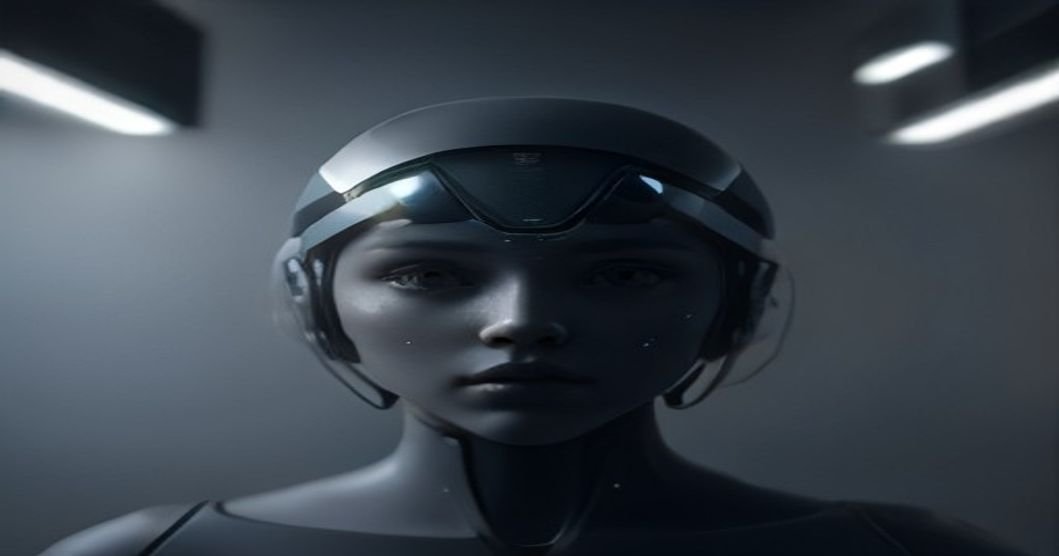
Advanced AI systems meet emerging quantum technologies. This convergence sparks a revolution in computing paradigms. Our research explores “Autonomous Time Crystals.” These systems redefine computational substrates. They promise unprecedented stability and efficiency.
We investigate AI’s role in designing, stabilizing, and reconfiguring these unique architectures. They defy traditional energy limits. Ultimately, they will enable hyper-resilient temporal data encoding for critical future industries.
Understanding Discrete Time Crystals (DTCs)
Discrete Time Crystals (DTCs) represent a novel phase of matter. They exhibit stable, periodic motion in time. This occurs even under external periodic forces. Unlike conventional crystals, DTCs break
They exist in a non-equilibrium state. DTCs perpetually oscillate. They do not absorb energy from their driving force. This “perpetual motion” is a macroscopic quantum phenomenon. It stands as a key characteristic.
Furthermore, DTCs show a subharmonic response. When driven by a pulse, they oscillate with a multiple of the driving period. This robust response is a hallmark.
Their stability arises from many-body localization (MBL). This prevents thermalization. It maintains coherence over long periods.
DTCs also harness quantum mechanics. They are potential building blocks for quantum information processing.
AI’s Transformative Role in DTC Engineering
AI systems are vital partners for DTC practical application. Their autonomous capabilities are critical. They span the entire lifecycle of DTC-based computational substrates.
Autonomous Design and Synthesis
AI algorithms explore vast parameter spaces. These include quantum interactions, material compositions, and driving protocols. This identifies optimal configurations for stable, high-coherence DTCs.
Generative AI and quantum chemistry play a role. Reinforcement learning and genetic algorithms assist this process.
AI can simulate quantum system evolution. It predicts DTC formation and stability. This guides experimental setup. It also informs material selection.
Dynamic Stabilization and Error Correction
AI-powered quantum control systems monitor DTC states in real-time. They detect deviations from desired periodic evolution. AI then applies precise feedback.
This might involve laser pulses or microwave fields. It counteracts decoherence. It also stabilizes the delicate non-equilibrium state.
Environmental conditions subtly shift. AI can dynamically adjust driving forces. This maintains the DTC’s subharmonic oscillation. It ensures perpetual operation. This is crucial for overcoming drift and long-term fidelity.
Reconfiguration for Computational Tasks
AI can dynamically reconfigure interaction pathways. It also adjusts driving sequences within DTC networks. This implements specific temporal logic gates. It enables various computational operations. This involves altering individual DTC “phase” or “periodicity.”
For complex B2B tasks, AI autonomously allocates DTC resources. It reconfigures their states for different algorithm parts. It manages temporal information flow. This maximizes throughput and efficiency. Explore more on AI in quantum computing here.
Platforms for Autonomous Time Crystals
Realizing Autonomous Time Crystals demands sophisticated quantum systems. These systems must offer precise control and interaction.
Trapped ions are highly controllable individual qubits. They offer long coherence times. They also provide strong, tunable interactions. They are ideal for demonstrating DTC principles. AI-driven control benefits from their isolation.
Superconducting qubits are scalable platforms. They feature fast gate operations. AI optimizes pulse sequences for driving and stabilizing DTCs. This integrates with existing quantum computing infrastructures.
Rydberg atom arrays offer strong, long-range interactions. They suit exploring MBL and DTC formation in larger systems. AI manages laser addressing and control.
Optomechanical systems are hybrid. They offer novel ways to create and observe DTCs. AI optimizes optical driving fields in these systems.
B2B Computational Substrates: Defying Dissipation Limits
Autonomous Time Crystals promise a new class of computational substrates. These offer unprecedented capabilities for business and industry.
Perpetually Operating Systems
DTCs are non-equilibrium and intrinsically stable. These substrates would require minimal energy input. They maintain their computational state once initialized. This fundamentally defies conventional energy dissipation limits. It leads to ultra-low power consumption for continuous operation.
This revolutionizes data centers and edge computing. It also impacts embedded systems. Operational costs and environmental footprint drastically reduce.
Hyper-Resilient Temporal Data Encoding
DTCs offer intrinsic error protection. Their robust subharmonic response and stability resist noise. Information encoded in a DTC’s phase is protected. Its MBL properties safeguard it.
AI manages redundant temporal encoding schemes. This allows self-correction. It recovers from localized errors without halting computation. Data is maintained through persistent temporal evolution. Learn about quantum security protocols.
This is critical for high-stakes B2B applications. Financial transactions require absolute data integrity. Secure blockchain infrastructure benefits. Real-time industrial control and long-duration scientific simulations also gain.
Quantum Advantage for Specific Tasks
DTCs are not general-purpose quantum computers. However, they could provide quantum speedups for specific tasks. This applies to temporal encoding, simulation, or optimization problems. Their unique properties are leveraged. This offers new forms of secure communication or distributed ledger technologies.
The Intersection: National Security and Investing
Autonomous Time Crystals hold significant implications for national security. Their hyper-resilient temporal data encoding ensures absolute integrity. This is vital for secure communications. It protects critical infrastructure from cyber threats. Data cannot be easily corrupted or altered.
Furthermore, investors should note the economic potential. Ultra-low power consumption and perpetual operation reduce costs. This creates new market opportunities. Industries will seek these efficient, robust computational substrates. Early adoption could yield substantial returns.
Challenges and Future Outlook
Immense potential exists. Yet, significant challenges remain. Scalability is a major hurdle. Moving from proof-of-concept to large-scale networks is complex. Extending DTC coherence in noisy, real-world environments is another. AI stabilization helps, but limits persist.
Developing robust AI control systems is crucial. They must reliably manage complex quantum systems. Integration also poses a challenge. Bridging exotic quantum phenomena with practical substrates is key. Discover the future of AI and materials science.
The future of Autonomous Time Crystals points to a computing paradigm shift. AI will master time crystal physics. Industries can anticipate energy-efficient and perpetually operational substrates. These will offer unprecedented resilience. They secure temporal data integrity for next-gen B2B applications.
This field converges fundamental physics, advanced AI, and engineering. It unlocks capabilities once confined to science fiction.