

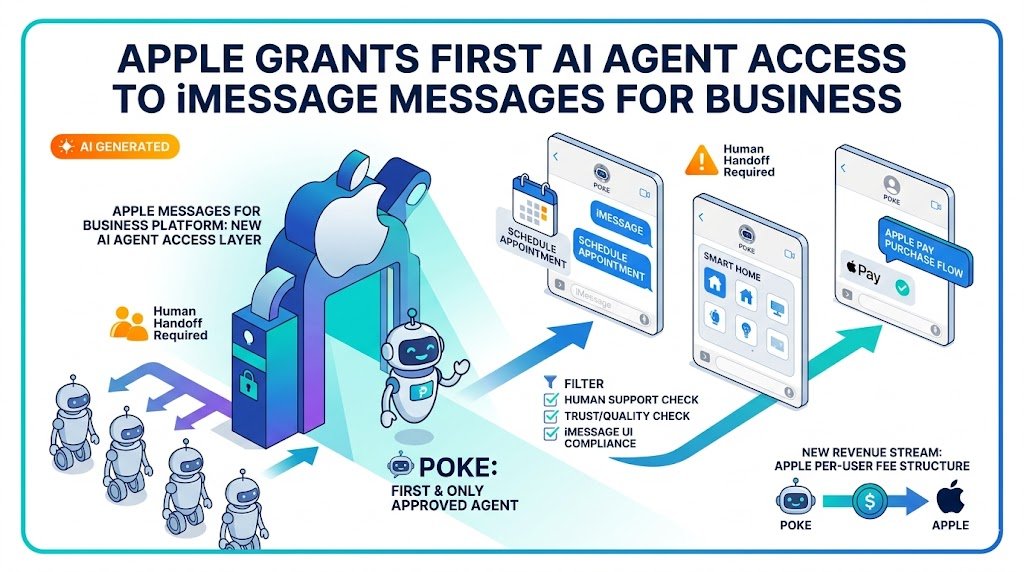
The future of intelligent assistance hinges on sophisticated AI agents. These agents promise seamless, proactive help. However, their effectiveness often demands broad access to personal data. This creates a direct tension with Apple’s stringent privacy policies. Understanding Apple Agent Access is crucial for users and developers alike.
Apple prioritizes user privacy. Its ecosystem is built on strict data controls. This approach challenges the data-hungry nature of advanced AI. We explore how Apple navigates this complex landscape.
Apple’s Privacy Framework
Apple has long championed user privacy. Its policies restrict how applications handle data. These measures protect user information.
Key Data Policies
- App Sandboxing: Each app operates in isolation. This prevents unauthorized data access between applications.
- Granular Permissions: Users explicitly grant data access. This applies to photos, contacts, location, and microphones.
- App Tracking Transparency (ATT): Apps must ask for consent. This is required before tracking user activity across other apps and websites.
- Data Minimization: Developers are encouraged to collect minimal data. Only essential data for an app’s function should be gathered.
- On-Device Processing: Apple increasingly uses local processing. Sensitive data stays on the device. This reduces cloud transfers.
These policies form a robust privacy shield. They give users control over their digital footprint. However, they also present unique challenges for AI innovation.
The Rise of AI Agents
AI agents are transforming digital interaction. They perform tasks, make decisions, and interact autonomously. These agents often operate across multiple services.
What AI Agents Need
Effective AI agents require extensive data. They need a deep understanding of user context. This includes preferences, habits, and communication history. Calendar events and app data are also vital.
Such broad access enables powerful, proactive assistance.
Furthermore, cross-app functionality is essential. An agent might book a reservation or send a message. This requires interaction with different applications.
Anticipating user needs depends on aggregated data patterns. This is where the conflict with Apple’s policies emerges.
The Core Conflict: Data Access vs. Privacy
A fundamental tension exists. AI agents need broad, often unfettered, data access. They aim to build comprehensive user profiles. This enables seamless task execution.
Conversely, Apple restricts app data. Apps are confined to their sandboxes. Explicit user consent is required for specific data types. Cross-app tracking is prevented without permission.
This creates a significant hurdle for AI agents. An agent planning a trip, for instance, faces severe limitations. It needs to read emails, check calendars, browse messages, and access shopping apps simultaneously.
Consequently, developers struggle to build powerful agents. They must navigate Apple’s strict access rules. This could stifle innovation within the Apple ecosystem.
Technical and Policy Challenges for Apple Agent Access
Implementing advanced AI agents within Apple’s framework presents several hurdles. These challenges span technical and policy domains.
Key Obstacles
- Unified Data Layer: Apple lacks a single, privacy-preserving data layer. AI agents could query this layer with user consent. Currently, app data remains largely siloed.
- Consent Fatigue: Granular consent for every data point is impractical. Users could become overwhelmed. This would hinder AI agent adoption.
- Data Security: Aggregated data must be secure. It must not be re-identifiable or exploited. Ensuring this security is paramount.
- Developer Experience: Building AI agents on Apple platforms is complex. Developers constantly battle access restrictions. This might push innovation to more open platforms.
- Trust and Transparency: Apple must clearly communicate data usage. Users need to understand what data AI agents access. They also need to know why and how it is protected.
Addressing these challenges is critical. It will determine the future of AI agents on Apple devices.
Apple’s Strategic Solutions
Apple is actively exploring solutions. Its approach is likely multi-pronged. The goal is to enable AI while upholding privacy.
Potential Avenues
- Enhanced On-Device AI: Powerful Neural Engines process data locally. This reduces cloud access needs. It significantly enhances privacy. Features like intelligent photo suggestions demonstrate this.
- System-Level AI Services: Apple integrates AI agent capabilities directly into its operating systems. This includes iOS, iPadOS, and macOS. Apple can manage data access under its own privacy framework. Siri’s evolution exemplifies this strategy.
- Privacy-Preserving Technologies: Advanced techniques are being implemented. Federated learning, differential privacy, and secure multi-party computation are examples. These allow AI models to learn from aggregated data. Individual data points remain private.
- Refined Consent Models: Apple is developing intuitive consent mechanisms. These are specifically for AI agents. Users can grant broader permissions to trusted agents. They maintain oversight over their data.
- “Intelligent Sandbox” / API Expansion: Secure APIs could allow approved AI agents to interact with app data. This would happen in a controlled, privacy-preserving manner. User-defined scopes might be incorporated.
These strategies aim to bridge the gap. They seek to balance AI ambition with user data protection.
The Intersection: Investing in AI and Privacy
The development of Apple Agent Access has significant investment implications. Apple’s approach shapes the entire mobile AI market.
Companies investing in AI need to watch Apple closely. Its privacy stance could create a unique competitive advantage. Alternatively, it could limit third-party innovation.
Investors should monitor Apple’s API releases. They should also track its on-device AI advancements. These will indicate future market directions.
Companies that align with Apple’s privacy-centric vision may see greater success. Robust privacy features can build user trust. This translates into stronger brand loyalty and market share.
Therefore, Apple’s strategy is a bellwether for the tech investment landscape.
Implications for Users and Developers
The evolving landscape of Apple Agent Access impacts everyone. Both users and developers face new opportunities and constraints.
User Experience
Users could gain highly personalized assistance. Proactive AI agents would enhance daily tasks. This would happen without compromising privacy.
Apple must ensure clear transparency. Users need to understand all data usage.
Developer Innovation
AI agent developers face a tighter regulatory environment. This is stricter than on more open platforms.
Innovation might focus on on-device AI. Agents could operate within their own app’s data scope.
Apple-approved system integrations are another path. This could favor larger developers. Those with resources to navigate complex privacy frameworks will benefit.
Direct partnerships with Apple will also become more valuable.
For deeper insights into navigating these challenges, download our Quantum Readiness Checklist. It helps prepare your systems for future tech shifts.
Future Outlook
Apple will likely expand its system-level AI capabilities. An evolved Siri or a new “Apple Agent” is probable.
The company will carefully curate third-party AI agent interaction with app data.
The key is a robust, privacy-centric framework. This framework must allow AI agents to be genuinely useful.
It must also prevent them from becoming data-hungry privacy threats.
Expect continued investment in on-device AI. Sophisticated privacy-enhancing technologies will also grow.
These will bridge the gap between AI ambition and Apple’s commitment to user data protection.
The evolution of Apple’s developer APIs and consent models for AI will be a critical area to watch. This will define the next generation of intelligent experiences on Apple devices.
Discover more about digital privacy in our related articles: