

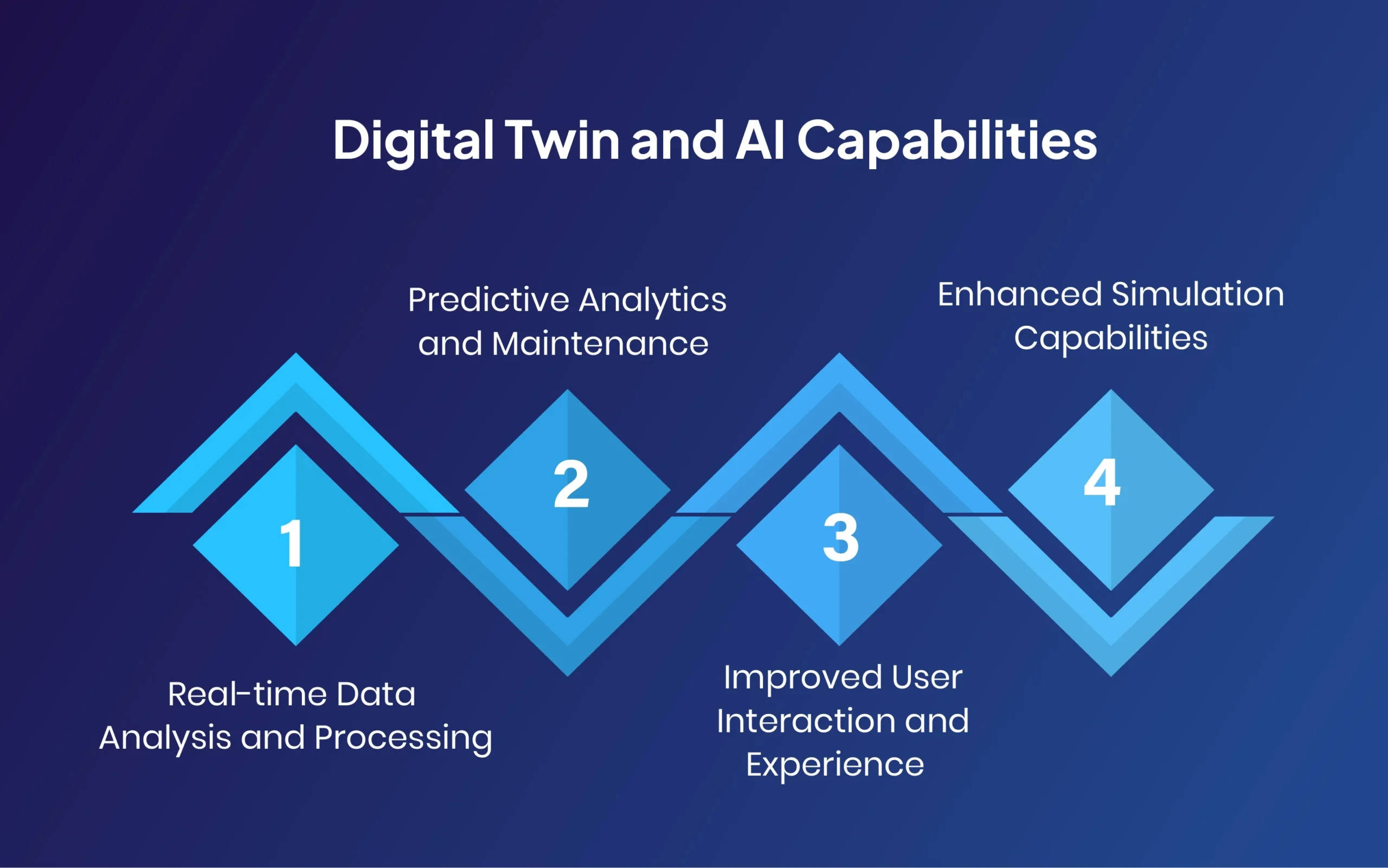
The advent of Anticipatory Digital Twins marks a pivotal shift in how critical infrastructure systems are managed, moving beyond reactive measures to proactive, pre-emptive defense against cascading failures. In an increasingly complex and interconnected world, the resilience of vital B2B infrastructure – from energy grids and transportation networks to telecommunications and smart cities – is paramount. Traditional monitoring and predictive maintenance systems, while valuable, often fall short of providing the holistic, system-level foresight needed to avert large-scale disruptions. This report delves into how cutting-edge technologies like Physics-Informed AI (PIA) and Geometric Deep Learning (GDL) are converging to create these powerful anticipatory systems, redefining operational continuity and systemic resilience.
1. The Urgent Need for Proactive Resilience
Critical infrastructure forms the backbone of modern society and the global economy. Its intricate networks, comprising countless components and interdependencies, are constantly under pressure from environmental factors, operational stresses, cyber threats, and human error. A localized failure, if unchecked, can rapidly propagate through the system, triggering a domino effect that leads to widespread outages, significant economic losses, safety hazards, and societal instability. Consider a single substation failure in a power grid, which could overload adjacent lines, causing further failures and plunging entire regions into darkness. Or a defect in a bridge structure, which could compromise the entire transportation network.
Current predictive maintenance typically focuses on individual component health, signaling when a specific part might fail. However, it often lacks the capability to predict how that failure will impact the broader system, or to foresee novel, emergent behaviors arising from complex interactions. This is where the concept of the Anticipatory Digital Twin becomes not just advantageous, but imperative. It represents a paradigm shift from merely predicting what might fail to autonomously predicting how and when cascading failures will propagate, and then pre-empting them. This proactive stance is essential for maintaining operational continuity and enhancing the inherent resilience of our most vital systems.
2. Core Technologies Driving Anticipatory Digital Twins
The sophisticated capabilities of ADTs are built upon the synergistic integration of two advanced AI methodologies: Physics-Informed AI (PIA) and Geometric Deep Learning (GDL). These technologies address the unique challenges of modeling complex physical systems and their intricate interconnections.
Physics-Informed AI (PIA): Embedding Reality into Models
Traditional data-driven AI models, while powerful, often face limitations in safety-critical domains. They require vast amounts of historical data, can struggle with interpretability, and may fail to generalize effectively to unseen scenarios, especially when real-world failure data is rare. Physics-Informed AI offers a revolutionary solution by embedding known physical laws, conservation principles, and domain-specific equations directly into neural network architectures or their loss functions.
For an Anticipatory Digital Twin, PIA provides several critical advantages:
- Enhanced Predictive Accuracy: PIA models can accurately simulate complex physical processes – such as fluid dynamics in pipelines, thermal stresses in power components, or load distribution in bridges – even with limited sensor data, because they respect fundamental physics. This leads to more reliable predictions of component degradation and potential failure.
- Improved Generalization: By adhering to universal physical laws, PIA models are inherently more robust to novel or unseen scenarios. They can extrapolate beyond the training data distribution, which is crucial for predicting emergent failures that may not have historical precedents.
- Reduced Data Dependency: PIA can effectively leverage sparsely available sensor data alongside established physics equations, making it ideal for systems where comprehensive sensor coverage is not feasible or where failure events are infrequent. This overcomes a major hurdle for many critical infrastructure applications.
- Interpretability and Trust: The explicit incorporation of physical laws makes the model’s predictions more interpretable and trustworthy for engineers and operators, fostering confidence in autonomous recommendations.
Geometric Deep Learning (GDL): Understanding System Interconnections
Critical infrastructure systems are inherently graph-structured. A power grid is a network of generators, transmission lines, and substations. A transportation system consists of roads, railways, and intersections (nodes and edges). Traditional deep learning architectures (like CNNs or RNNs) are not optimally designed to process this non-Euclidean, irregularly structured data. Geometric Deep Learning, particularly Graph Neural Networks (GNNs), provides the framework to analyze and learn from these complex interdependencies.
GDL’s role in an Anticipatory Digital Twin is multifaceted:
- Modeling Interconnectedness: GDL excels at representing and learning from the topological and relational structures of critical infrastructure. It can capture how changes or failures in one node (e.g., a power substation) affect its connected neighbors and the entire network.
- Cascading Failure Analysis: GNNs are uniquely suited to model the propagation of failures across a network. They can identify critical paths, choke points, and vulnerabilities that could lead to cascading events. By understanding the “geometry” of interaction, GDL predicts how a local fault might propagate system-wide.
- Anomaly Detection in Graph Data: GDL can detect subtle anomalies in network behavior that might signify the onset of an emergent failure, by learning normal patterns of interaction and deviation across the graph structure.
- Optimization of Network Resilience: GDL can be used to identify optimal strategies for resource allocation, network re-configuration, or load balancing to enhance systemic resilience in response to predicted threats or ongoing stresses.
3. Constructing the Anticipatory Digital Twin: A Synergistic Approach
An Anticipatory Digital Twin is a dynamic, high-fidelity virtual replica of a physical critical infrastructure system. It is continuously updated with real-time data and empowered by the synergistic integration of PIA and GDL to predict and pre-empt future states.
The construction process involves several key steps:
- Data Ingestion and Fusion: The twin continuously ingests real-time data from a multitude of sources, including IoT sensors, SCADA systems, operational logs, maintenance records, and external feeds such as weather patterns, geological activity, or cyber threat intelligence. This data is often heterogeneous and multi-modal, requiring advanced fusion techniques.
- Physics-Informed Geometric Deep Learning Models:
- The infrastructure’s physical layout and interconnections are first modeled as a dynamic graph.
- PIA is applied to model the underlying physical processes within each component and their interactions (e.g., energy flow, material stress, communication latency).
- GDL (specifically GNNs) then processes the graph-structured data, learning the complex interdependencies and dynamics across the entire network.
- Crucially, the loss function for the GNNs is augmented with physical constraints and equations. This ensures that the learned dynamics are not only data-driven but also physically consistent and stable, leading to what can be described as a “Physics-Informed GNN” (PIGNN) or similar hybrid architecture.
- Multi-Fidelity Modeling: ADTs can incorporate models of varying fidelity. High-fidelity PIA models might be used for critical components or subsystems where precise physical understanding is paramount, while lower-fidelity, data-driven GDL models handle broader network dynamics. All these models are integrated into a cohesive, comprehensive representation.
- Predictive and Pre-emptive Capabilities: The true power of an ADT lies in its ability to look into the future:
- Failure Prediction: The ADT continuously simulates future states of the infrastructure based on current conditions and predicted external factors, identifying potential failure modes and their probabilities.
- Emergent Behavior Detection: By observing deviations from predicted “normal” system behavior in the twin, and leveraging the GDL’s ability to spot network-wide anomalies, the ADT can detect emergent failures that are not reducible to single component issues.
- Cascading Failure Simulation: The GDL component specifically simulates failure propagation paths, identifying which initial failures are most likely to trigger widespread cascades across the network.
- “What-if” Scenario Analysis: Operators can pose hypothetical scenarios (e.g., “What if this generator fails during a heatwave?”) to the ADT, which then uses its PIA/GDL models to predict the system’s response and potential cascading effects, allowing for proactive planning.
- Pre-emptive Action Recommendation: Based on predicted failures and cascades, the ADT autonomously suggests or even directly initiates pre-emptive actions. This could include load shedding, rerouting power, reconfiguring communication links, dispatching maintenance teams, or activating backup systems, all aimed at averting or mitigating the impending crisis. For more insights on digital twins, you can explore resources from IBM’s comprehensive guide on Digital Twins.
4. Optimizing for Systemic Resilience and Operational Continuity
The ultimate goal of deploying Anticipatory Digital Twins in critical infrastructure is to move beyond mere fault detection and reactive measures towards proactive resilience engineering. This paradigm shift offers profound benefits:
- Enhanced Systemic Resilience: By anticipating and pre-empting cascading failures, the ADT significantly reduces the likelihood and impact of widespread disruptions. This ensures the system’s ability to absorb, adapt to, and rapidly recover from shocks, maintaining core functions even under duress.
- Proactive Risk Management: The ADT provides continuous, real-time risk assessment, allowing operators to prioritize maintenance, strengthen vulnerabilities, and implement mitigation strategies before incidents occur. This transforms risk management from a periodic exercise into an ongoing, dynamic process.
- Optimized Operational Continuity: Minimizing downtime and service interruptions is paramount. The ADT’s ability to recommend and execute pre-emptive actions ensures continuous, stable operation, even in the face of evolving threats or gradual degradation.
- Resource Optimization: By accurately predicting needs and vulnerabilities, the ADT can optimize the allocation of operational resources, refine maintenance schedules, and inform capital investments, leading to more efficient and effective infrastructure management.
- Faster Recovery: In the event a failure cannot be entirely pre-empted, the ADT can rapidly diagnose the root cause, predict recovery times, and simulate optimal recovery strategies, significantly accelerating the restoration of services.
5. Challenges and Future Directions
While the promise of Anticipatory Digital Twins is immense, their development and deployment in large-scale critical infrastructure face significant challenges:
- Data Quality and Availability: Ensuring high-quality, synchronized, and secure data streams from diverse, often legacy, sources is a major hurdle. Data gaps, noise, and inconsistencies can severely impact model accuracy.
- Computational Intensity: Running complex PIA and GDL models in real-time for vast, interconnected infrastructure systems requires substantial computational resources, including high-performance computing and robust edge processing capabilities.
- Model Validation and Trust: Rigorously validating the accuracy, reliability, and robustness of PIA/GDL models in safety-critical applications is crucial. Building trust among human operators in autonomous decision-making systems is equally vital.
- Integration with Legacy Systems: Seamless integration with existing operational technology (OT) and information technology (IT) infrastructure, which often comprises disparate and aging systems, presents a complex engineering challenge.
- Cybersecurity: Protecting the ADT itself from cyber threats is paramount, as it holds a complete, dynamic model of critical infrastructure, making it a high-value target for malicious actors.
- Ethical and Regulatory Frameworks: Establishing clear ethical guidelines and regulatory frameworks for autonomous decision-making, particularly when those decisions impact public safety and essential services, is an ongoing imperative. The intersection of AI and critical infrastructure is a growing field, as highlighted by IEEE’s discussions on AI in Critical Infrastructure.
Future research and development will focus on creating more robust and scalable PIA/GDL architectures, incorporating advanced uncertainty quantification to provide confidence scores with predictions, enabling federated learning across distributed infrastructure, and advancing human-AI collaboration interfaces to empower operators with effective pre-emptive action tools.
The Power of Anticipatory Digital Twins
The journey towards fully realizing the potential of Anticipatory Digital Twins is complex but undeniably transformative. By leveraging the combined strengths of Physics-Informed AI and Geometric Deep Learning, we are moving closer to a future where critical infrastructure is not just resilient, but truly anticipatory – capable of foreseeing and averting crises before they even begin. This proactive approach will safeguard our economies, enhance public safety, and ensure the continuous operation of the essential services that underpin modern life.
To learn more about how advanced technologies are shaping the future of industrial resilience, please Explore The Vantage Reports.