

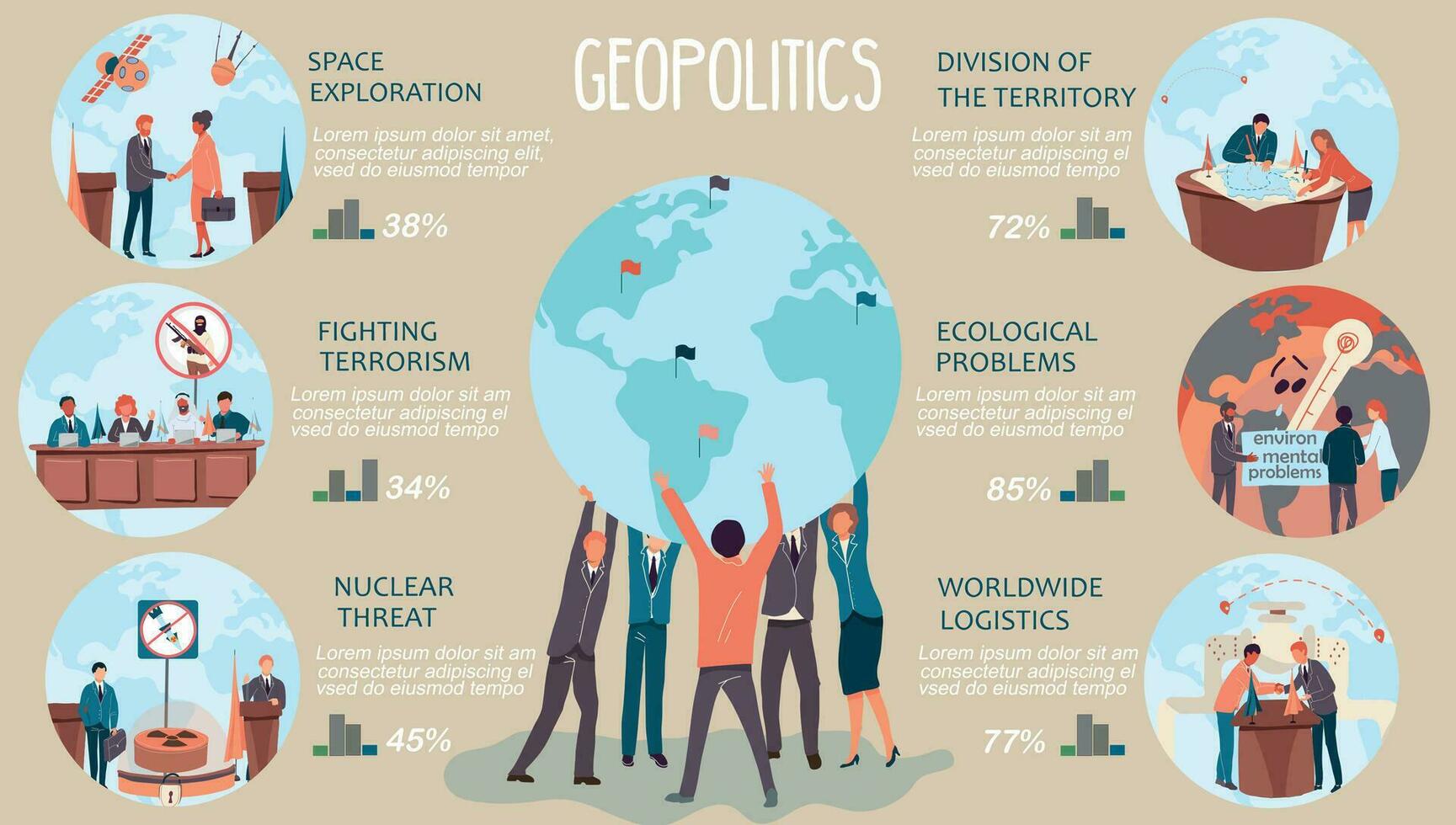
Resource Geopolitics is fundamentally redefining the global economic order, marking an irreversible transformation where traditional tenets of viability are giving way to new strategic imperatives. The pursuit of pure efficiency, long the cornerstone of global trade and investment, is being supplanted by a heightened focus on resilience, security, and resource sovereignty. This profound shift is not merely a cyclical adjustment but a structural change, driven by the increasingly intertwined forces of geopolitical alignment and the strategic imperative of securing access to critical resources. Nations and corporations worldwide are recalibrating their strategies, moving beyond purely economic metrics to integrate geopolitical risk, supply chain resilience, and the strategic control of essential commodities into their core operational and investment decisions. This report delves into the mechanisms of this redefinition, highlighting how the strategic control and availability of key resources, coupled with shifting geopolitical allegiances, are dictating the new parameters of economic success and national security.
1. The Shifting Sands of Economic Viability: Beyond Pure Efficiency
The era of hyper-globalization, characterized by an unwavering pursuit of cost efficiency, is yielding to a new paradigm where resilience, security, and strategic alignment are paramount. Economic viability is no longer solely measured by quarterly profits or GDP growth but by a nation’s or company’s ability to withstand shocks, maintain critical supply chains, and operate within trusted geopolitical spheres. This represents a significant departure from the post-Cold War consensus, where open markets and interconnected supply chains were seen as inherently stable and beneficial.
- Resilience Premium: Businesses are increasingly willing to absorb higher costs to diversify supply chains away from single points of failure or politically risky regions. This includes strategies like friend-shoring (relocating production to allied nations), near-shoring (bringing production closer to end markets), and on-shoring (domestic production). The objective is to build redundancy and robustness, even if it means sacrificing some degree of cost optimization.
- Strategic Decoupling: Major economies are actively pursuing “de-risking” strategies, particularly in advanced technologies and critical inputs, aiming to reduce dependency on potential adversaries. This creates parallel economic ecosystems, where compatibility and trust among allies often trump unfettered market access, leading to distinct technological standards and supply networks.
- National Security as an Economic Driver: Investments in strategic industries – such as semiconductors, rare earths, biotechnology, advanced manufacturing, and defense – are now viewed through a national security lens. This perspective often justifies substantial government subsidies, protectionist measures, and export controls that would have been anathema in previous decades, fundamentally altering market dynamics.
- New Metrics: Economic health is increasingly assessed by factors such as domestic manufacturing capacity for critical goods, energy independence, food security, and control over digital infrastructure, rather than just traditional indicators like trade balances or foreign direct investment (FDI) volume. These new metrics reflect a holistic understanding of national resilience in a turbulent global environment.
2. Geopolitical Alignment as an Economic Imperative
Geopolitical alignment has transcended diplomatic rhetoric to become a foundational pillar of economic strategy. The formation of new blocs, the weaponization of economic tools, and the explicit linking of market access to political adherence are profoundly reshaping global trade and investment flows, creating a more fragmented and politically charged global economy.
- Bloc Formation and Strategic Alliances: The world is witnessing the consolidation of economic blocs (e.g., G7, BRICS+, AUKUS, EU) where trade, technology transfer, and investment are increasingly prioritized among allies. These alliances facilitate shared resource security strategies and coordinated economic policies, fostering intra-bloc dependencies while potentially increasing friction with external blocs.
- Weaponization of Economic Tools: Sanctions, export controls, tariffs, and investment restrictions are no longer fringe measures but central instruments of foreign policy. Access to markets, technology, and finance is increasingly contingent upon geopolitical behavior, rendering entire sectors or nations economically vulnerable overnight. This makes navigating the global economic landscape far more complex for businesses.
- Trust-Based Supply Chains: The concept of “trust” has entered the supply chain lexicon. Companies are pressured to ensure their partners and suppliers align with their home nation’s geopolitical interests, leading to complex due diligence beyond traditional financial and ethical considerations. This adds layers of political risk assessment to procurement and partnership decisions.
- Impact on FDI and Trade Routes: Foreign Direct Investment is increasingly scrutinized for national security implications, leading to stricter review processes and even forced divestitures in sensitive sectors. Traditional trade routes and maritime chokepoints are viewed as potential vulnerabilities, driving investments in alternative infrastructure and logistics, such as the development of new land corridors or Arctic shipping routes.
- Digital Sovereignty: The race for control over data, digital infrastructure, and AI capabilities is intrinsically linked to geopolitical alignment. Nations are erecting digital borders, promoting domestic technological ecosystems, and implementing data localization policies to secure their information space and protect their economic future from foreign influence.
The Battleground of Resource Geopolitics: Critical Commodities and Dependencies
Access to critical resources – ranging from raw materials to advanced technological components and even abstract concepts like data – is now the primary determinant of national power and economic resilience. The concentration of these resources and their processing capabilities in a limited number of hands creates acute vulnerabilities and fuels intense geopolitical competition. This nexus of control and dependency defines the modern landscape of Resource Geopolitics, where strategic advantage is often measured in terms of material security.
- Identification of Key Critical Resources:
- Minerals: Rare earths, lithium, cobalt, nickel, copper, and graphite are indispensable for electric vehicles, renewable energy, and advanced electronics. Their supply chains are often highly concentrated, particularly in China, creating significant leverage for the controlling nations.
- Semiconductors: Often referred to as the “brains” of the modern economy, with advanced manufacturing concentrated in Taiwan and South Korea, creating a critical dependency for virtually every industrial sector globally. Geopolitical tensions in these regions have immediate and profound global economic repercussions.
- Energy: Oil, natural gas, and increasingly, materials for renewable energy (e.g., uranium for nuclear, polysilicon for solar) remain fundamental. Energy security is a direct driver of geopolitical strategy and economic stability, particularly as the transition to green energy reshapes global power dynamics.
- Food & Water: Climate change, population growth, and geopolitical instability are elevating food and water security to critical national security concerns, leading to resource nationalism and potential conflicts over arable land and freshwater sources.
- Data & AI: Considered the “new oil,” control over data, algorithms, and AI development capabilities is a strategic resource that underpins future economic and military power. The race for AI supremacy is inherently a geopolitical contest.
- Supply Chain Vulnerabilities and Concentration Risks: The global just-in-time supply chains, optimized for efficiency, have proven brittle. Over-reliance on single suppliers or geographic regions for critical inputs exposes nations to immense economic and strategic risk, as evidenced during recent global crises. Diversification is no longer a luxury but a strategic necessity.
- Resource Nationalism and Strategic Stockpiling: Nations are increasingly asserting control over their domestic resource endowments, imposing export restrictions, and demanding local processing to maximize domestic value capture. Simultaneously, strategic stockpiling of critical minerals, medical supplies, and energy reserves is becoming a standard practice for national security.
- Technological Dependencies: Beyond raw materials, the dependency on specific technologies, intellectual property, and advanced manufacturing know-how (e.g., ASML’s lithography machines for chipmaking) creates choke points that can be exploited for geopolitical leverage. Nations are heavily investing in indigenous technological development to mitigate these risks.
The intricate web of global supply chains and dependencies highlights the urgent need for robust strategies to enhance resilience. For further insights into global economic shifts and supply chain resilience, consider exploring reports from the World Economic Forum.
4. The Confluence of Disruption: An Irreversible Shift
The convergence of geopolitical alignment and the strategic imperative of critical resource access is not merely creating economic headwinds; it is fundamentally rewriting the rules of the global economy. This disruption is characterized by an irreversible shift towards a more complex, fragmented, and politically charged international economic order.
- Fragmented Globalization: The world is moving away from a single, integrated global market towards a more fragmented system of regional or ideologically aligned economic blocs, each with its own supply chains and technological standards. This “de-globalization” or “slowbalization” implies a less interconnected and more localized economic future.
- Increased Transaction Costs: The prioritization of resilience and security over pure efficiency inevitably leads to higher costs for businesses (e.g., redundant supply chains, compliance with diverse regulatory regimes, higher labor costs in friend-shored locations). These costs are often passed on to consumers, contributing to inflationary pressures.
- Accelerated Innovation in Strategic Sectors: Competition for resource independence and technological sovereignty is fueling massive government and private investment in domestic innovation. This is particularly evident in areas like advanced manufacturing, green energy technologies, and artificial intelligence, driving rapid advancements in strategically critical fields.
- Redistribution of Economic Power: Nations with abundant critical resources, advanced manufacturing capabilities, or strategic geopolitical positioning are gaining leverage and influence. Conversely, those heavily reliant on external inputs or exposed to geopolitical risks face diminishing economic viability and increased vulnerability.
- Enduring Uncertainty: Businesses and governments must navigate an environment where geopolitical shifts can instantly reconfigure supply chains, market access, and investment opportunities. Scenario planning, agility, and adaptability become paramount for survival and success in this volatile landscape.
Understanding the dynamics of international relations is crucial in this evolving landscape. The Council on Foreign Relations offers valuable analysis on global geopolitics and national security strategies.
In conclusion, the fundamental redefinition of economic viability is the defining disruption of our era. It mandates a paradigm shift from purely economic optimization to a holistic strategy integrating geopolitical realities, resource security, and technological sovereignty. Nations and enterprises that fail to adapt to this new landscape of Resource Geopolitics risk being left behind in a rapidly reconfiguring global order. Proactive engagement with these shifts is not just strategic, but essential for future prosperity and stability.
Explore The Vantage Reports for more in-depth analysis on global trends and strategic insights.