

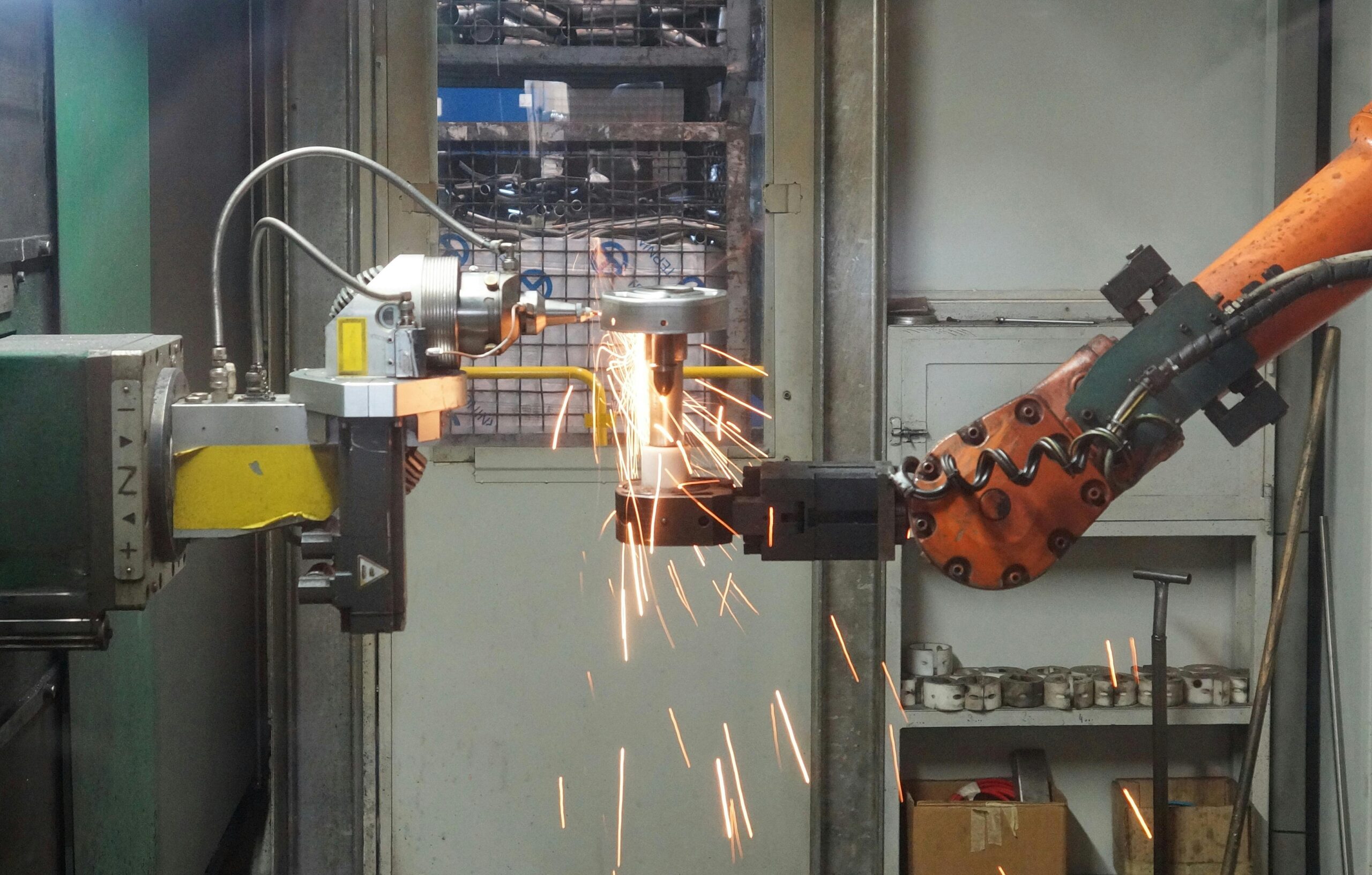
The emergence of Adaptive Robot Dexterity marks a pivotal moment in the evolution of B2B industrial automation, ushering in an era where robots can autonomously infer, learn, and replicate complex, human-demonstrated assembly skills. This capability is not merely an incremental improvement; it represents a fundamental shift towards more intelligent, flexible, and versatile robotic systems. By leveraging advanced deep reinforcement learning (DRL) combined with sophisticated multimodal sensor fusion—integrating haptic, visual, and even nascent auditory data—industrial robots are now being engineered to adapt seamlessly to the inherent material variability and unstructured nature of real-world manufacturing environments. This unlocks unprecedented levels of flexibility, autonomy, and efficiency in production lines that were once considered the exclusive domain of human operators.
The Paradigm Shift: From Fixed Automation to Intelligent Adaptability
Traditional industrial robots have long been the backbone of high-volume, low-mix manufacturing, excelling in highly structured environments where parts are presented with extreme precision. However, the modern manufacturing landscape is rapidly evolving, demanding greater flexibility, mass customization, and the ability to handle diverse product variants with varying materials and geometries. This paradigm shift necessitates a move away from rigid, pre-programmed automation towards systems that can adapt, learn, and perform dexterous tasks that were previously too complex or variable for machines.
Adaptive Robot Dexterity directly addresses this critical gap by empowering robots to:
- Generalize Skills: Robots can apply learned skills to novel situations and objects that deviate significantly from their initial training data, allowing for rapid re-tasking without extensive re-programming.
- Handle Variability: These intelligent systems can dynamically compensate for real-world changes in object pose, material properties, lighting conditions, and other environmental factors, ensuring consistent performance.
- Learn Intuitively: Complex skills are acquired through observation and demonstration, mimicking human learning processes rather than relying on laborious, explicit programming.
This evolution enables manufacturers to embrace high-mix, low-volume production strategies, respond faster to market demands, and integrate automation into more intricate assembly processes.
Core Technologies Fueling Adaptive Robot Dexterity
The realization of truly dexterous and adaptive robots is built upon the convergence of several cutting-edge technological advancements:
Deep Reinforcement Learning (DRL): The Autonomous Learning Engine
Deep Reinforcement Learning is the linchpin for enabling autonomous skill acquisition in adaptive robots. Unlike conventional programming, DRL allows robots to discover optimal policies—sequences of actions—through trial and error, guided by a carefully designed reward function. For dexterous assembly, DRL agents can master intricate force control, precise motion planning, and robust decision-making under uncertainty, far exceeding the capabilities of hand-coded routines.
- Policy Learning: Sophisticated DRL algorithms, such as Proximal Policy Optimization (PPO), Soft Actor-Critic (SAC), and Deep Deterministic Policy Gradient (DDPG), train deep neural networks to directly map raw sensor observations to motor commands. This results in complex, non-linear control policies that can handle the nuances of dexterous manipulation.
- Exploration-Exploitation: Robots continuously balance exploring new actions to discover more effective strategies with exploiting known good actions, iteratively refining their skill sets.
- Sim-to-Real Transfer: A crucial aspect involves training complex DRL policies in high-fidelity simulations, which allows for generating vast amounts of data efficiently. These policies are then transferred to physical robots, often employing techniques like domain randomization and adaptation to bridge the reality gap and ensure robust performance in the physical world. This approach dramatically reduces the time and cost associated with training on expensive physical hardware. For more on DRL advancements, refer to resources like DeepMind’s publications on reinforcement learning.
Multimodal Sensor Fusion: Comprehensive Environmental Understanding
Just as human dexterity relies on a rich interplay of senses, adaptive robots require multimodal sensing to perceive their environment comprehensively and robustly. Fusing data from different sensor types provides redundancy, complementarity, and resilience against the limitations of individual sensors, leading to a more holistic and reliable understanding of the workspace.
- Haptic (Tactile/Force-Torque) Sensing: Essential for fine manipulation, compliant object handling, and precise assembly. Force-torque sensors on wrists or grippers provide critical feedback on contact forces, torques, and object interaction. Advanced tactile sensors (e.g., GelSight, optoelectronic arrays) offer high-resolution pressure distribution, enabling capabilities like shape recognition, slip detection, and inference of material properties (e.g., stickiness, deformability). This is paramount for tasks such as peg-in-hole insertion, delicate cable routing, or handling fragile components.
- Visual (2D/3D Vision) Sensing: Provides high-level scene understanding, accurate object localization, precise pose estimation, and quality inspection. Stereo cameras, LiDAR, and structured light sensors generate detailed 3D point clouds for accurate spatial reasoning. Deep learning models, including Convolutional Neural Networks (CNNs) and Transformers, process this visual data for robust object detection, segmentation, and grasp planning, even in cluttered or partially occluded environments.
- Auditory Sensing (Emerging): While less prevalent, auditory cues can offer valuable supplementary information about contact events, friction, motor strain, or successful part mating. Microphones integrated into the robot or workspace can detect anomalies, confirm actions, or provide feedback that complements visual and haptic data, especially in noisy industrial settings where specific sounds can indicate process success or failure.
- Fusion Architectures: Data from these diverse modalities are intelligently integrated using advanced deep learning architectures (e.g., late fusion, early fusion, cross-modal attention networks). This creates a holistic, robust representation of the robot’s state and environment, enabling more nuanced and reliable decision-making.
Human Demonstration and Skill Transfer (Learning from Demonstration – LfD)
Teaching complex dexterous skills to robots through direct programming is an arduous and time-consuming process. Learning from Demonstration (LfD), also known as Imitation Learning, offers a more intuitive approach, allowing robots to learn by observing human experts performing tasks. This simplifies skill acquisition and provides a natural interface for training.
- Data Collection: Human demonstrations are captured using various methods, including teleoperation, motion capture systems, or instrumented tools, recording not just trajectories but also forces and sensory feedback.
- Skill Inference: DRL, when combined with LfD, enables robots to move beyond merely mimicking raw trajectories. They can infer the underlying intent, sub-goals, and critical features of the demonstrated skill, leading to a deeper understanding and better generalization.
- Generalization and Adaptation: The learned policies can then be further adapted using DRL, either in simulation or through limited physical interaction, to handle variations not present in the original demonstrations (e.g., different part sizes, slight misalignments, or novel orientations).
Autonomous Inference and Replication of Dexterous Skills
The powerful synergy of DRL, multimodal sensor fusion, and LfD empowers robots to transcend simple pick-and-place operations, enabling them to:
- Infer Latent Skills: Robots can now understand the “why” behind human actions, not just the “what.” This includes inferring the need for compliant motion during a tight-tolerance insertion or the specific pressure required to seat a connector securely.
- Replicate with Adaptation: They can execute the inferred skill, dynamically adapting their trajectory, force, and compliance in real-time based on live sensor feedback. This capability is crucial for tasks such as:
- Compliant Assembly: Accurately inserting tight-fitting components, routing flexible cables, or mating deformable parts where precise force control and adaptability are paramount.
- Deformable Object Manipulation: Handling delicate materials like textiles, rubber seals, or even biological tissues without damage, requiring continuous adaptation to shape changes.
- Tool Use: Operating handheld tools with human-like dexterity, applying variable forces, and maintaining specific orientations for complex operations.
Addressing Real-World Manufacturing Challenges
Adaptive Robot Dexterity provides robust solutions to long-standing challenges in industrial settings:
- Material Variability: Robots can learn to identify and compensate for variations in material properties—such as stiffness, friction, or surface texture—through haptic and visual feedback, adjusting their grasp pressure or insertion force accordingly to prevent damage or ensure proper fit.
- Unstructured Manufacturing Environments: Adaptive systems are capable of handling dynamic changes in the workspace, including shifting part locations, unexpected obstacles, or varying lighting conditions. They continuously update their environmental model via sensor fusion and adapt their task plan in real-time to maintain operational continuity.
- Robustness and Error Recovery: The ability to detect errors (e.g., misaligned parts, dropped components) through sensor anomalies and execute learned recovery strategies autonomously minimizes downtime and significantly reduces the need for human intervention, leading to higher throughput and reliability.
Unlocking New Frontiers with Adaptive Robot Dexterity
The impact of Adaptive Robot Dexterity is poised to revolutionize industries that demand high precision, unparalleled flexibility, and the handling of complex assemblies. This technology is not just for the future; it’s already beginning to reshape key sectors:
- Electronics Manufacturing: Enabling the assembly of intricate PCBs, connecting delicate cables, and inserting small components with extremely tight tolerances, which are currently manual or highly specialized processes.
- Automotive Interior Assembly: Streamlining the installation of dashboards, routing complex wiring harnesses, and fitting upholstery, where material variability, ergonomic challenges, and aesthetic precision are common.
- Aerospace: Facilitating the assembly of complex sub-components and handling lightweight, often deformable composite materials with the precision required for flight-critical parts. For deeper insights into advanced manufacturing, explore resources like NIST’s manufacturing initiatives.
- Medical Devices: Crucial for the manufacturing and assembly of precision instruments, where sterility, delicate handling, and absolute accuracy are paramount.
- High-Mix, Low-Volume Production: Enabling rapid re-tasking and adaptation for customized product lines, drastically reducing setup times and increasing overall manufacturing efficiency, making personalized production economically viable.
Challenges and Future Outlook
While the promise of adaptive robot dexterity is immense, several challenges remain to be addressed for widespread industrial adoption:
- Data Efficiency: DRL often requires vast amounts of data to learn complex policies. Improving sample efficiency and effectively leveraging synthetic data from simulations are critical research areas.
- Generalization: Achieving true generalization across a wide range of tasks and environments, beyond the specific training domain, is an active area of research to ensure robots can handle unforeseen variations.
- Computational Demands: Real-time execution of complex DRL policies and multimodal fusion requires powerful, low-latency computing infrastructure, which can be a significant investment.
- Safety and Explainability: Ensuring safe human-robot interaction in dynamic industrial environments and providing transparent explanations for robot decisions are crucial for building trust and facilitating integration.
- Standardization: Developing common frameworks, benchmarks, and best practices for evaluating dexterous manipulation and adaptive learning will accelerate development and foster broader adoption.
The future of industrial robotics is undeniably adaptive. As DRL algorithms continue to mature, sensor technologies become more sophisticated and affordable, and computing power increases, Adaptive Robot Dexterity will fundamentally transform manufacturing. It promises to enable factories to be more flexible, efficient, and resilient, capable of meeting the ever-evolving demands of global markets and delivering unparalleled product quality and customization. The journey towards fully autonomous and highly dexterous robots is well underway, promising a new era of industrial capabilities. Explore The Vantage Reports for more in-depth analyses on emerging technologies.