

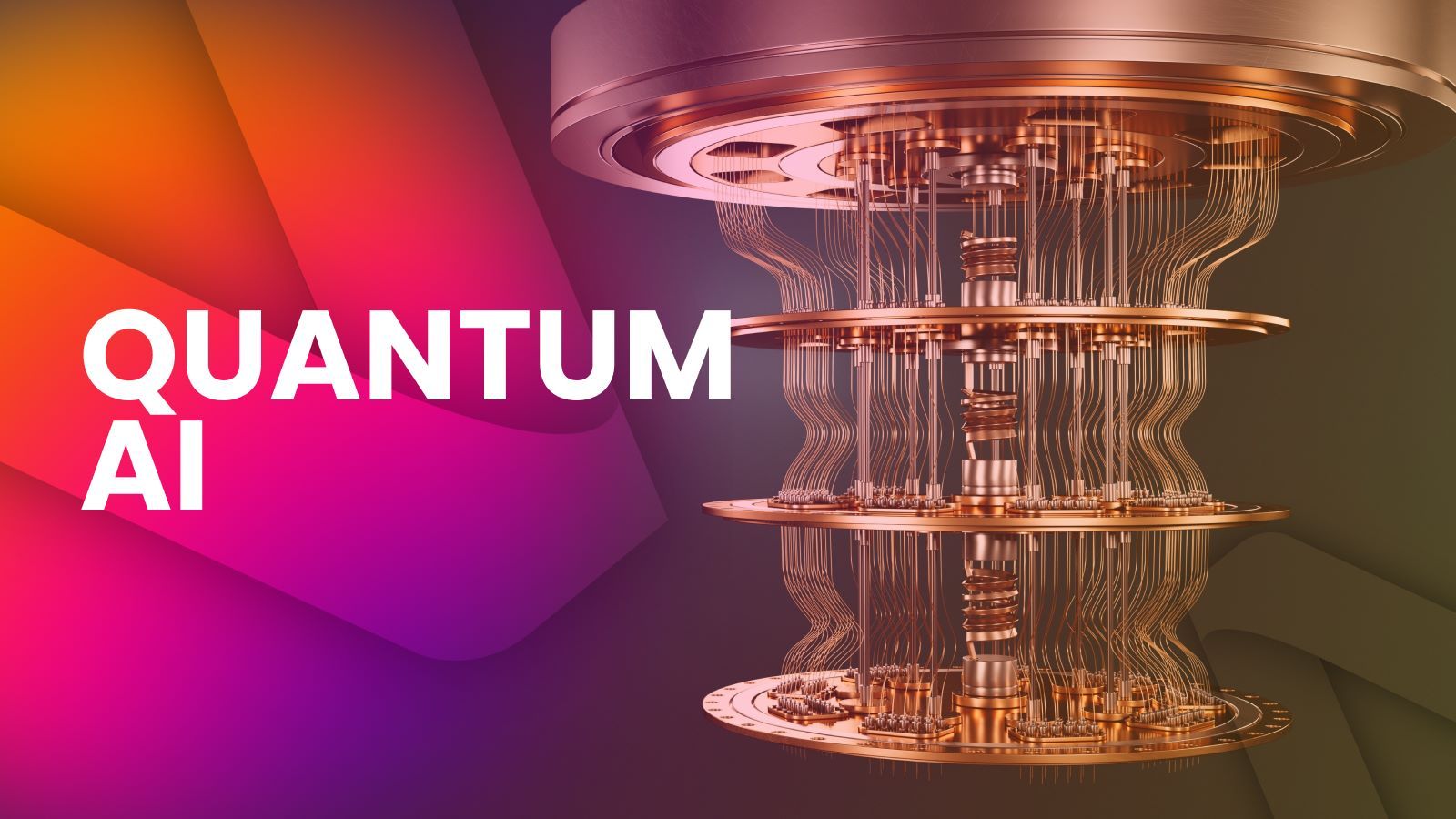
Executive Summary: The Entangled Phonon-Photon transducer is a cornerstone technology essential for realizing scalable quantum computing and the quantum internet. These sophisticated devices are engineered to coherently convert quantum states, including entanglement, between mechanical vibrational modes (phonons) and optical fields (photons). By serving as quantum-coherent bridges, they facilitate seamless information flow between localized quantum processors (which interact with phonons) and expansive, global quantum communication networks (which rely on photons for long-distance transmission), meticulously preserving fragile quantum characteristics during this critical interfacing process.
The realization of scalable quantum computing and the envisioned quantum internet hinges on the ability to coherently transfer quantum information between vastly different physical systems, making the **Entangled Phonon-Photon** transducer a cornerstone technology. Photons, as quanta of light, are unparalleled carriers for long-distance quantum communication due to their speed, minimal loss in optical fibers, and weak environmental interaction. However, the powerhouse of on-chip quantum processing and memory often resides in solid-state qubits—such as superconducting circuits, spin qubits, or trapped ions—which intricately interact with phonons, the quanta of vibrational energy. The profound challenge lies in forging an interface capable of converting quantum states, including the delicate property of entanglement, between these disparate carriers while preserving their fragile quantum characteristics.
Quantum-entangled phonon-photon transducers are sophisticated devices meticulously engineered to coherently convert quantum states, and crucially, entanglement, between mechanical vibrational modes (phonons) and optical fields (photons). Their fundamental mission is to serve as quantum-coherent bridges, facilitating seamless information flow between localized quantum processors and the expansive, global quantum communication networks of the future.
The Quantum Interfacing Imperative: Bridging Disparate Domains
The quest for a universal quantum internet demands the ability to link diverse quantum systems. While photons excel at long-haul transmission, solid-state qubits offer robust local processing and memory capabilities. This dichotomy creates a critical bottleneck: how do we connect these two worlds without destroying the quantum information they carry? Traditional interfaces are often lossy or introduce classical noise, rendering them unsuitable for quantum applications. The true innovation of entangled phonon-photon transducers lies in their capacity for quantum-coherent conversion, ensuring that the superposition and entanglement inherent to quantum states are not merely transferred, but impeccably preserved.
This imperative drives research into novel materials and architectures that can sustain quantum coherence across multiple energy domains, paving the way for hybrid quantum systems that leverage the strengths of each constituent platform. The ability to translate quantum information between the microwave domain (typical for superconducting qubits), the mechanical domain (phonons), and the optical domain (photons) is not just an engineering feat, but a fundamental requirement for scaling quantum technology.
Engineering Principles for Entangled Phonon-Photon Transduction
The engineering of these transducers harnesses strong light-matter interactions, typically within ultracold cryogenic environments to suppress thermal decoherence. Two primary mechanisms stand out:
Optomechanics: Light-Induced Vibrations for Quantum Conversion
Optomechanics represents a widely explored avenue where the radiation pressure of light is used to couple photons to mechanical resonators, or conversely, the mechanical motion modulates the optical properties of a cavity. In essence, a high-quality (high-Q) optical cavity is intimately coupled to a high-Q mechanical resonator. Photons circulating within the cavity exert a minuscule but significant radiation pressure on the mechanical element, inducing vibrations that manifest as phonons. Conversely, the precise motion of this mechanical element alters the cavity’s optical path length, thereby modulating the photons.
The generation of entanglement in optomechanical systems is achieved by carefully tuning laser fields and operating in the quantum regime. Techniques like sideband cooling or pulsed interactions allow for entanglement to be generated either directly between the mechanical mode and the optical field, or indirectly between two optical modes mediated by a common mechanical mode. Common architectures include suspended nanobeams, membranes, or intricate optomechanical crystals integrated within Fabry-Pérot cavities or photonic integrated circuits (PICs). Materials such as silicon nitride (SiN) are highly favored due to their exceptionally low mechanical dissipation and excellent optical transparency.
Electromechanics and Piezo-Optomechanics: Hybrid Pathways for Entangled Phonon-Photon Transduction
This hybrid approach introduces an electrical interface, often directly connecting to superconducting qubits, to mediate the phonon-photon conversion. Here, state-of-the-art superconducting circuits (e.g., transmons, flux qubits) are coupled to electromechanical resonators—such as surface acoustic wave (SAW) devices or bulk acoustic wave (BAW) resonators—via the piezoelectric effect. These mechanical resonators then proceed to interact with an optical cavity or waveguide, frequently through a secondary optomechanical or electro-optic coupling mechanism.
The primary advantage of this approach lies in providing a direct and robust pathway to interface cutting-edge superconducting qubits with optical photons, leveraging the distinct strengths of both platforms. Materials like lithium niobate (LiNbO3) or gallium arsenide (GaAs) are critical due to their potent piezoelectric and optical properties. However, a significant challenge remains in the complexity of integrating superconducting, mechanical, and photonic components onto a single chip while maintaining high coherence across multiple transduction steps.
Achieving Ultra-Low-Loss and High-Fidelity Quantum Transfer
The paramount requirement for these transducers is the preservation of quantum information with minimal loss and maximum fidelity. This mandates addressing several critical engineering considerations:
Maximizing Conversion Efficiency
The probability of coherently converting a quantum state from one domain to another must approach unity. This demanding goal is achieved through establishing strong coupling rates between the interacting modes, exemplified by high optomechanical cooperativity or robust electromechanical coupling. Concurrently, both optical and mechanical resonators must possess exceptionally high quality factors (Q-factors) to minimize intrinsic energy dissipation and ensure a highly efficient conversion process.
Mitigating Decoherence and Loss
Quantum systems are inherently fragile. Phonons, in particular, are highly susceptible to thermal noise. Operating at millikelvin (mK) temperatures is absolutely crucial to dramatically reduce the thermal occupation of mechanical modes, thereby ensuring they remain in their quantum ground state. Device designs rigorously minimize clamping losses and material defects that could lead to phonon dissipation. For photons, while generally robust in optical fibers, losses within the transducer itself—such as absorption or scattering—must be minimized through optimized material selection and advanced fabrication techniques.
Crucially, the transducer must operate with absolute coherence, guaranteeing that any pre-existing entanglement is preserved during conversion. Furthermore, the transducer itself must be capable of generating entanglement between the phonon and photon modes without introducing classical noise or dephasing. This preservation of quantum properties is paramount for all quantum communication protocols that rely on shared entanglement.
Precision Frequency Matching
The ability to convert quantum information across vastly different frequency domains—for instance, from the microwave frequencies characteristic of superconducting qubits to the optical frequencies used for long-distance communication—presents a formidable engineering challenge. This often necessitates the careful selection and integration of intermediate mechanical frequencies to bridge the spectral gap efficiently and coherently.
The Transformative Role in Distributed Quantum Architectures
The true power and potential of entangled phonon-photon transducers lie in their capacity to act as universal quantum interfaces for modular and distributed quantum systems.
Interfacing Heterogeneous Quantum Platforms
Different quantum computing architectures excel in specific areas—be it gate speed, coherence time, or connectivity. Transducers enable these disparate systems to communicate, allowing for the construction of hybrid quantum computers that judiciously leverage the strengths of each. For example, a superconducting qubit processor could execute rapid computations, while an NV center might serve as a long-lived quantum memory, with photons transmitting entanglement between them. Recent advancements in optomechanical interfaces highlight this potential.
Enabling Modular Quantum Computing
As quantum computers scale, a monolithic architecture quickly becomes unmanageable and prone to errors. Transducers facilitate modularity by allowing smaller, specialized quantum computing modules to be interconnected. This distributes the processing load, simplifies fabrication, and offers a promising pathway towards fault-tolerant quantum designs, crucial for practical quantum applications.
Foundations for Quantum Networks and Repeaters
These transducers are fundamental building blocks for the quantum internet. They can seamlessly interface local quantum processors (ee.g., based on superconducting qubits or spin qubits) with long-distance optical fiber networks. By generating and distributing entanglement between distant nodes, they enable sophisticated quantum communication protocols like entanglement swapping and quantum teleportation, which are essential for quantum repeaters that overcome photon loss over vast distances. The National Institute of Standards and Technology (NIST) continues to make significant strides in this area.
Scaling Quantum Computing Beyond Monolithic Limits
Ultimately, by providing a robust and coherent pathway to distribute entanglement and quantum information across a network, these transducers offer a viable route to scale quantum computing beyond the inherent limitations of single-chip systems. This paves the way for the realization of truly large-scale quantum processors, unlocking unprecedented computational power.
Current Status and the Path Forward for Entangled Phonon-Photon Technology
Significant progress has been made in the development of quantum phonon-photon transducers. Experimental demonstrations have successfully shown coherent state transfer between microwave and optical photons via mechanical modes, the generation of entanglement between mechanical resonators and photons, and initial steps towards quantum-state-preserving transduction. The promise of the **Entangled Phonon-Photon** interface is becoming increasingly tangible.
However, formidable challenges persist:
- Efficiency and Fidelity: Current transduction efficiencies and fidelities, while improving, are often still below the stringent thresholds required for fault-tolerant quantum computing and practical quantum repeaters.
- Integration Complexity: Fabricating and integrating multiple, high-performance quantum components—such as superconducting circuits, mechanical resonators, and photonic circuits—onto a single chip, while maintaining cryogenic operation, remains a technically demanding endeavor.
- Broadband Operation: Developing transducers that can efficiently interface a wide range of qubit frequencies with standard telecom wavelengths is an active and crucial area of research.
Despite these hurdles, the field is advancing at a rapid pace. Future research will intensely focus on discovering novel materials with superior quantum properties, developing enhanced device designs that minimize loss and maximize coherence, and pioneering advanced quantum control techniques to further improve performance. The successful engineering of quantum-entangled phonon-photon transducers is not merely an incremental step but a critical leap towards realizing the full potential of quantum technologies, underpinning the development of robust quantum networks and scalable, distributed quantum computing architectures. This fundamental technology will redefine our ability to harness the quantum world.