

Executive Summary: In a global economy grappling with instability, trade friction, and supply chain fragility, Strategic Logistics Hubs have emerged as critical assets driving operational resilience and localized adaptability. These meticulously located industrial properties, often multi-modal, offer unparalleled access to transportation infrastructure, key markets, and advanced automation, enabling businesses to de-risk supply chains, accelerate e-commerce fulfillment, and optimize costs. This indispensable role has led to a significant financial re-rating and aggressive M&A activity in the industrial real estate sector, as investors and corporations increasingly view these hubs as vital enablers for competitive advantage and future-proofing in an ever-changing world.
In today’s complex global economy, marked by persistent geopolitical instability, trade protectionism, and the lingering after-effects of widespread supply chain disruptions, **Strategic Logistics Hubs** have emerged as the cornerstone of operational resilience and localized adaptability. These critical assets are experiencing a significant financial re-rating and an aggressive surge in mergers and acquisitions (M&A), reflecting their indispensable role in maintaining business continuity and securing competitive advantage. Investors and corporations are no longer viewing these properties merely as infrastructure, but as vital enablers in an increasingly insecure and constrained global environment.
Navigating Global Volatility: The Imperative for Resilience
The global economic landscape has undergone a profound transformation. The era of ‘just-in-time’ supply chains, meticulously optimized for cost efficiency and minimal inventory, has decisively given way to a ‘just-in-case’ imperative. Companies are now prioritizing resilience – the capacity to absorb shocks, diversify risks, and recover swiftly from unforeseen events – alongside adaptability, which is the ability to rapidly pivot sourcing, manufacturing, and distribution strategies. This fundamental strategic shift directly translates into an amplified demand for real estate that can facilitate these capabilities, making the valuation of industrial properties, particularly those with strategic significance, soar.
Localized supply chain adaptability, in particular, has become a paramount concern. This involves reducing over-reliance on distant, vulnerable links by strategically positioning inventory closer to end-markets, diversifying manufacturing footprints, and fortifying regional distribution networks. Such a paradigm shift necessitates industrial properties that can function as flexible, high-throughput nodes within these evolving, more decentralized networks. The ability to quickly respond to localized demand fluctuations or regional disruptions is now a non-negotiable aspect of modern commerce.
Understanding Strategic Logistics Hubs
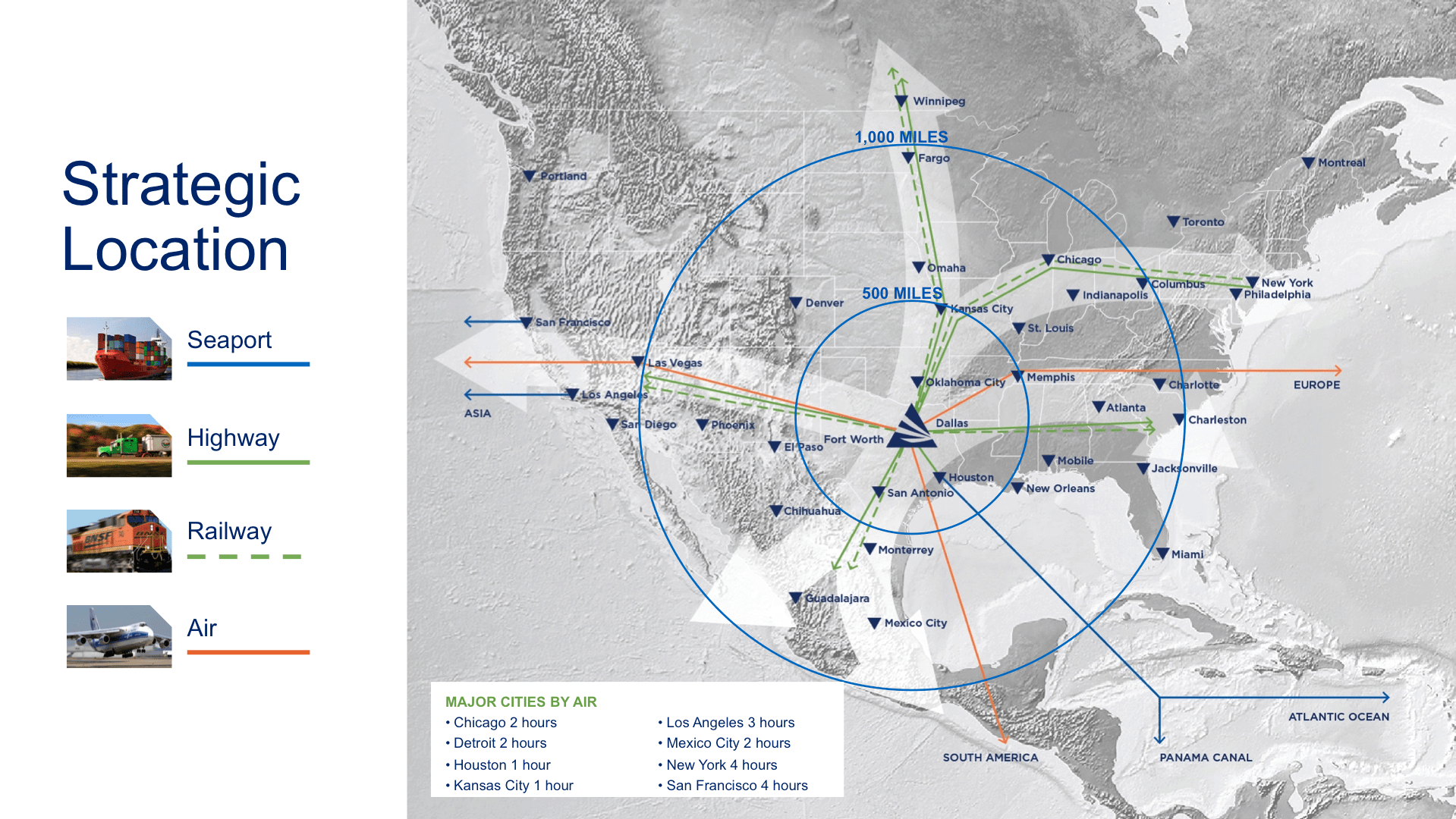
At their core, **Strategic Logistics Hubs** are meticulously located industrial properties that offer unparalleled access to key transportation infrastructure, major population centers, and critical manufacturing zones. Multi-modal logistics hubs represent the zenith of this concept, seamlessly integrating various transport modes – including road, rail, air, and sea – within a single, cohesive ecosystem engineered for maximum efficiency and flexibility. These hubs are designed to optimize the movement of goods, reduce transit times, and minimize operational costs through intelligent design and connectivity.
- Prime Location: Proximity is paramount. Strategic hubs are situated near major international ports, cargo airports, intermodal rail terminals, and dense highway networks. These locations are critical for significantly reducing transit times, lowering overall transportation costs by enabling optimal mode selection, and mitigating risks associated with single-mode reliance or last-mile bottlenecks in congested urban areas.
- Seamless Connectivity: The ability to effortlessly transfer goods between disparate transport modes within the same facility or complex is a cornerstone of efficiency. This seamless connectivity is crucial for optimizing freight movement, drastically reducing transshipment costs, and minimizing delays at common choke points, ultimately accelerating delivery speeds and enhancing supply chain predictability.
- Advanced Infrastructure: Modern, high-specification warehouses, efficient cross-dock facilities, specialized storage solutions (such as cold storage for perishables or secure storage for hazardous materials), and cutting-edge automation capabilities (including robotics, AI-driven inventory management, and IoT sensors) are essential components. These advanced infrastructures significantly enhance operational efficiency, throughput, and accuracy, making these hubs future-proof.
- Labor Access: Access to a stable, skilled, and readily available labor pool for logistics, warehousing, and technical operations is an increasingly vital strategic consideration. The availability of a competent workforce directly influences site selection, operational effectiveness, and the long-term viability and scalability of a logistics hub.
- Scalability & Flexibility: Properties that can readily accommodate expansion, reconfiguration, or repurposing are highly valued. This adaptability allows them to meet fluctuating demand, evolve with technological advancements, or pivot to new product lines. Ample yard space, flexible building designs, and robust utility infrastructure are key attributes that ensure long-term operational agility.
Drivers of M&A and Financial Re-rating: A Confluence of Forces
The current global environment provides compelling and sustained drivers for the intense investment surge and re-rating observed in strategic logistics assets. These are not transient factors but structural shifts reshaping global commerce:
- Geopolitical Instability & Trade Friction: Ongoing trade disputes, sanctions, and regional conflicts compel companies to de-risk their supply chains. This often involves diversifying manufacturing and distribution away from politically volatile areas, favoring ‘friendly-shoring’ or ‘near-shoring’ strategies that rely heavily on strategically located hubs.
- Economic Nationalism & Protectionism: A global resurgence in tariffs, non-tariff barriers, and ‘buy local’ initiatives incentivizes localized production and warehousing. This strategy helps companies bypass trade friction, meet domestic content requirements, and serve regional markets more effectively from local distribution points.
- Pandemic-Induced Disruptions: The COVID-19 pandemic vividly exposed the fragility of lean, globalized supply chains, leading to widespread stockouts and production halts. This experience triggered a lasting shift towards inventory build-up (safety stock) and the establishment of more resilient, localized distribution networks, increasing demand for storage and distribution facilities.
- Labor Shortages & Rising Costs: Persistent shortages across trucking, warehousing, and port operations, coupled with increasing labor costs, underscore the critical need for highly efficient, well-located hubs. These facilities can streamline processes, leverage automation to mitigate dependency on scarce human resources, and optimize workforce deployment.
- Energy and Commodity Price Volatility: High and unpredictable energy costs make efficient logistics routes, reduced transport distances, and optimal modal choices even more critical for effective cost control and achieving environmental sustainability goals. Hubs that enable these efficiencies offer a significant advantage.
- E-commerce Acceleration: The continued, rapid expansion of e-commerce demands ever-faster delivery times, necessitating more robust ‘last-mile’ and ‘middle-mile’ distribution networks. These networks are often centered around sophisticated strategic hubs capable of handling high volumes, rapid turnaround, and complex order fulfillment. For more insights into global supply chain resilience, explore the World Economic Forum on Supply Chain Resilience.
Investment Trends and Outlook: Capitalizing on Resilience
The financial market has responded decisively to these structural changes, with institutional investors, private equity firms, sovereign wealth funds, and real estate investment trusts (REITs) aggressively deploying capital into the industrial logistics sector. The financial re-rating of **Strategic Logistics Hubs** manifests in several key ways:
- Compressed Capitalization Rates: Reflecting higher valuations, lower perceived risk premiums, and strong income growth expectations for prime logistics assets. This indicates investor confidence in the long-term profitability and stability of these properties.
- Increased Transaction Volumes and Valuations: A significant surge in M&A activity is evident, with companies acquiring logistics providers, entire portfolios of industrial assets, or engaging in sale-leaseback transactions. This allows them to free up capital while simultaneously securing critical operational space for their evolving supply chains.
- Robust Development Pipelines: There is a strong emphasis on the development of new, purpose-built, high-specification facilities in strategic locations. These are often designed to meet specific tenant operational requirements, incorporate advanced technologies, and adhere to stringent sustainability goals, ensuring future demand.
- Long-Term Lease Commitments & Rental Growth: Tenants are increasingly willing to commit to longer lease terms and higher rents for prime locations. They recognize the immense operational value and competitive advantage these assets provide, viewing them as indispensable components of their business strategy rather than discretionary overhead.
This upward trend is expected to continue and strengthen, as the underlying drivers – global uncertainty, the imperative for resilient supply chains, and the ongoing digital transformation of commerce – are structural and long-term rather than cyclical. Companies are recalibrating their real estate portfolios to align with new supply chain strategies, viewing these assets as fundamental operational infrastructure. For a deeper dive into the industrial real estate market, consider reviewing the JLL Industrial Real Estate Outlook. Explore The Vantage Reports for more expert analysis.
Conclusion: The Future-Proofing Power of Strategic Logistics Hubs
The profound financial re-rating and robust M&A surge in strategically located industrial real estate and multi-modal logistics hubs underscore a fundamental and irreversible shift in global economic priorities. In a world increasingly defined by insecurity, constraint, and rapid change, operational resilience and localized adaptability have transitioned from desirable attributes to non-negotiable competitive advantages. The market is unequivocally assigning a significant and enduring premium to assets that enable these capabilities, transforming them into highly coveted investment opportunities and essential components of future-proofed global commerce. The modern **Strategic Logistics Hub** is far more than just a warehouse; it is the linchpin of a resilient, adaptable, and competitive global economy, providing the foundational infrastructure for businesses to thrive amidst ongoing volatility.