

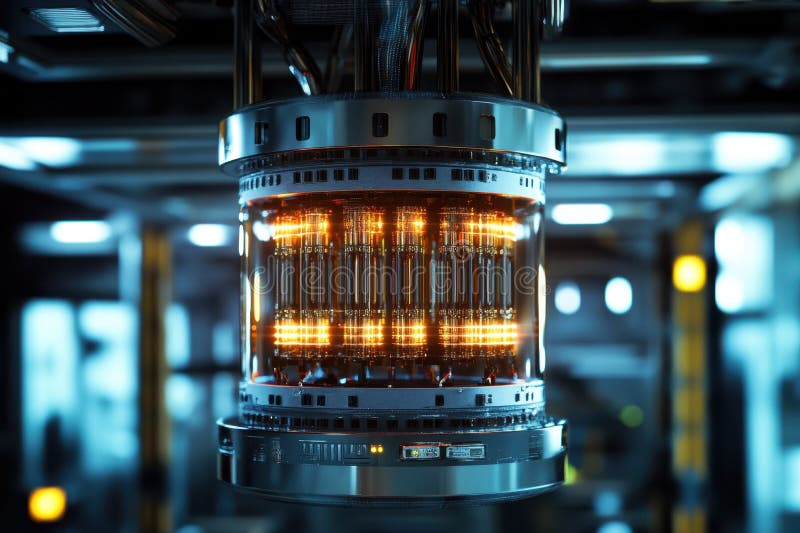
Quantum Time Computing represents a revolutionary frontier in the quest for stable and powerful quantum technologies, addressing the fundamental fragility of quantum information. Traditional quantum systems grapple with the pervasive issue of decoherence, where delicate quantum states rapidly degrade due to environmental interactions, necessitating complex and resource-intensive error correction. This emerging paradigm, leveraging the exotic properties of discrete time crystals (DTCs), offers a transformative pathway towards ultra-stable, self-correcting quantum memory and coherent computational units. By harnessing the inherent temporal periodicity of DTCs, researchers envision a future where quantum computers are not only more robust but also intrinsically resilient to errors, drastically simplifying their architecture and accelerating their practical realization. This report delves into the foundational concepts, current advancements, and profound implications of this groundbreaking field, illuminating how DTCs are poised to revolutionize quantum information processing.
1. Discrete Time Crystals (DTCs): The Temporal Foundation of Quantum Stability
Discrete Time Crystals (DTCs) are an extraordinary state of matter that defies conventional expectations, exhibiting periodic motion in time even when subjected to a time-periodic drive. Unlike their spatial counterparts, conventional crystals that break spatial translation symmetry, DTCs uniquely break discrete time translation symmetry. This means they possess an intrinsic “ticking” or oscillation at a subharmonic frequency of the external driving force, effectively operating out of sync with their environment. This stable, out-of-phase oscillation is not merely a response but a robust consequence of many-body localization, a quantum phenomenon that prevents the system from thermalizing and succumbing to a featureless equilibrium. The discovery of DTCs has opened up entirely new avenues for understanding non-equilibrium quantum matter and its potential applications.
Inherent Temporal Periodicity: The Defining Characteristic
The defining characteristic of DTCs is their robust, self-sustaining temporal periodicity. This intrinsic “ticking” is not just a passive response to an external drive but an inherent and stable property of the system, making them remarkably stable against various perturbations. Imagine a clock that continues to tick perfectly, even when slightly jostled or exposed to minor disturbances – this analogy captures the essence of a DTC’s resilience. This inherent temporal order provides a natural, robust clockwork mechanism at the quantum level, which is precisely what makes them so compelling for quantum information applications.
Discovery and Experimental Realization
The concept of time crystals was first theorized by Nobel laureate Frank Wilczek in 2012, proposing a state of matter that exhibits periodic motion in its lowest energy state. While initial theoretical work focused on continuous time crystals, the focus soon shifted to discrete time crystals, which were experimentally realized in 2017. These groundbreaking experiments were conducted using two distinct quantum systems: trapped ions at the University of Maryland and disordered chains of qubits at Harvard University. These early demonstrations provided concrete evidence for the existence of this exotic phase of matter, confirming theoretical predictions and paving the way for intensive research into their practical applications. The ability to create and observe DTCs in controlled laboratory settings marked a pivotal moment, transforming a theoretical curiosity into a tangible component of quantum research.
2. Leveraging DTCs for Ultra-Stable Quantum Memory
The enduring challenge in quantum computing lies in preserving the delicate superposition and entanglement of qubits for extended periods, far beyond their typical decoherence times. Quantum memory units are notoriously fragile, requiring elaborate shielding and constant error correction. DTCs offer a compelling and potentially revolutionary solution due to their inherent stability and profound resistance to thermalization, promising a new era of quantum data storage.
Self-Correcting Storage Mechanisms
The temporal periodicity of a DTC acts as an intrinsic “clock” that can naturally protect encoded quantum information. By encoding quantum states within the robust, subharmonic oscillations of a DTC, the memory itself becomes inherently resilient to errors. Small perturbations, which would typically lead to rapid decoherence in conventional qubits, are effectively “self-corrected” by the crystal’s robust periodic dynamics. This intrinsic error suppression mechanism means that the stored quantum information is shielded from rapidly degrading, offering a passive yet powerful form of quantum error correction without the need for constant external intervention. This capability is a game-changer for reducing the complexity and resource demands of quantum memory.
Extended Coherence Times
One of the most significant advantages of DTCs is their potential to dramatically extend qubit coherence times. The many-body localized nature of DTCs prevents them from rapidly thermalizing with their environment. This crucial isolation from thermal noise, combined with their stable temporal periodicity, suggests that qubits embedded within or interacting with a DTC could maintain their coherence for significantly longer durations than conventional qubits. Longer coherence times translate directly into more reliable quantum operations and drastically reduce the need for frequent quantum error correction cycles, thereby simplifying the overall quantum computer architecture and making fault-tolerant quantum computing a more achievable goal.
Potential Implementations and Architectures
Current research explores various innovative approaches for implementing DTC-based quantum memory. One promising avenue involves encoding quantum information directly into the internal states of particles that form the DTC itself, such as the spin states of atoms in a driven chain. Another approach involves using the DTC’s stable periodic field to protect external qubits, effectively creating a robust quantum environment. In both scenarios, the stability of the DTC’s temporal order provides a natural “shield” against environmental noise, acting as a protective shell for fragile quantum information. These concepts are pushing the boundaries of quantum engineering, seeking to integrate the unique properties of time crystals into practical quantum memory solutions.
3. Quantum Time Computing: Processing Units & Architectures
Beyond their transformative potential for quantum memory, the unique properties of discrete time crystals are being rigorously investigated for their capacity to enable coherent quantum computation itself. This involves forming the basis of novel processing units that could revolutionize how quantum algorithms are executed. The concept of Quantum Time Computing moves beyond mere storage, envisioning a future where the very act of computation is intrinsically linked to the stable, temporal dynamics of time crystals.
Robust Coherent Operations
The stable, periodic dynamics inherent to DTCs could be ingeniously harnessed to perform quantum gates with unprecedented fidelity. By precisely timing external control pulses with the inherent “ticking” of a DTC, quantum operations could be executed in a manner that is significantly less susceptible to common timing errors or environmental fluctuations. This intrinsic synchronization offered by the time crystal’s regular beat could lead to more reliable and coherent quantum operations, reducing the likelihood of errors during critical computational steps. This level of precision is vital for complex quantum algorithms requiring a sequence of many high-fidelity gates.
Intrinsic Error Suppression in Computation
The self-correcting nature of DTCs, initially envisioned for memory, extends naturally to the computational process itself. If quantum gates are meticulously designed to leverage and align with the DTC’s underlying temporal order, the entire computational process could benefit from an intrinsic suppression of errors. The system would naturally tend to return to its stable periodic state, effectively preserving the integrity of intermediate quantum states during computation. This means that errors arising from environmental noise or imperfect control could be passively mitigated, making the quantum computation inherently more robust without the heavy overhead of active error correction codes.
Quantum Time Computing: Novel Architectures and Algorithms
The paradigm of quantum time computing suggests entirely new computational architectures where computational steps are intrinsically linked to, and perhaps even driven by, the temporal dynamics of time crystals. This could pave the way for novel forms of quantum algorithms that explicitly exploit temporal periodicity, potentially simplifying complex computations and making them inherently more robust. For instance, the stable phase of a DTC could act as a robust reference for sensitive quantum phase operations, providing a stable backdrop against which quantum interference effects can be precisely measured and manipulated. Such architectures could unlock new computational efficiencies and capabilities previously unimagined.
Experimental Challenges and Future Directions
Realizing DTC-based processing units presents a formidable set of experimental challenges. It requires not only exquisite control over many-body entangled systems but also the intricate ability to interface delicate quantum information with the robust, yet complex, dynamics of a time crystal. Current research is intensely focused on understanding the exact mechanisms of information encoding, manipulation, and readout within these dynamic systems. Overcoming these hurdles will be crucial for transitioning quantum time computing from theoretical promise to practical reality, demanding innovations in quantum engineering, material science, and theoretical physics.
4. The Transformative Impact and Future Outlook
The field of quantum time computing, while still in its nascent stages, largely theoretical with initial experimental validations of DTCs, carries with it the promise of profound implications for the entire landscape of quantum technology. The potential benefits are far-reaching, addressing some of the most persistent obstacles in the path to scalable, fault-tolerant quantum computers.
Significantly Reduced Error Rates
The primary driver behind the intense interest in quantum time computing is the promise of significantly reduced error rates for both quantum memory and computation. By leveraging the inherent stability and self-correcting properties of time crystals, researchers anticipate a dramatic decrease in the susceptibility of qubits to decoherence and environmental noise. This move towards intrinsically stable quantum information processing is a critical step closer to achieving fault-tolerant quantum computing, where errors are so rare or so effectively mitigated that large-scale, complex computations become reliably possible.
Simplified Quantum Architectures
The development of ultra-stable, self-correcting quantum memory and processing units could drastically simplify the design and engineering of future quantum computers. Current quantum computer architectures are burdened by the immense overhead associated with complex quantum error correction codes, which often require many physical qubits to protect a single logical qubit. By embedding quantum information in DTCs, this overhead could be substantially reduced, making quantum computers less complex, more efficient, and ultimately, more scalable. This simplification would accelerate the development cycle and lower the barriers to entry for quantum technology.
Exploration of New Physics and Technologies
Beyond the immediate applications in computing, the very development of DTC-based quantum technologies also drives fundamental research into non-equilibrium quantum matter. The study of time crystals themselves pushes the boundaries of our understanding of condensed matter physics and quantum dynamics. This exploration is likely to reveal entirely new physical phenomena, principles, and materials that could have applications far beyond quantum computing, potentially revolutionizing other areas of science and technology.
Challenges and the Road Ahead
While the promise is immense, significant challenges remain in engineering and scaling these complex quantum systems. Researchers must develop more precise methods for creating and controlling DTCs, for interfacing qubits with their temporal dynamics, and for scaling these systems to accommodate the large number of qubits required for practical quantum computing. However, the investigation into time crystal-based quantum memory and processing units represents a highly promising avenue for developing robust, intrinsically stable quantum technologies. The inherent temporal periodicity of discrete time crystals offers a unique and elegant pathway to overcome the formidable challenges of decoherence, paving the way for truly fault-tolerant and powerful quantum computers, ushering in a new era of Quantum Time Computing.
In conclusion, the emergence of quantum time computing, powered by the fascinating properties of discrete time crystals, marks a pivotal moment in quantum information science. By offering intrinsic stability, self-correction, and extended coherence, DTCs present a compelling solution to the most persistent challenges facing quantum memory and computation. As research continues to unravel the full potential of these temporal wonders, we move closer to a future where quantum computers are not only powerful but also inherently resilient. The journey from theoretical concept to practical implementation is undoubtedly complex, but the foundational breakthroughs in understanding and harnessing time crystals illuminate a clear path forward. To explore more cutting-edge advancements in quantum technology and beyond, Explore The Vantage Reports.