

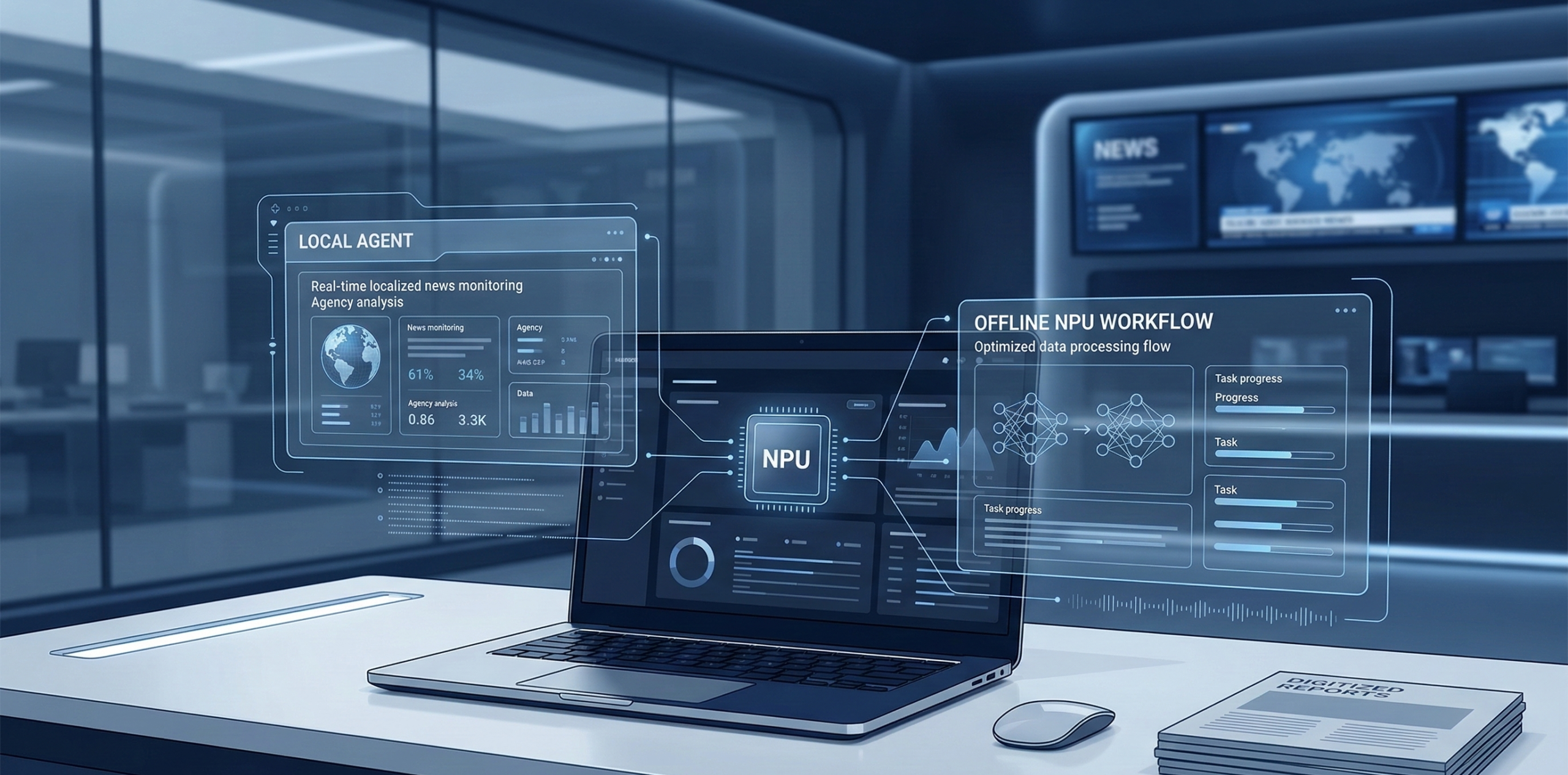
Executive Summary: The era of strict cloud-dependent AI is fracturing. The integration of high-performance processors in consumer hardware has triggered a massive shift toward local, autonomous AI agents capable of executing complex workflows entirely offline.
Key Takeaways:
- Privacy and Latency: Local processing eliminates data-sharing risks and reduces execution latency to near-zero.
- Hardware Catalysts: Next-generation processors, particularly those with dedicated NPUs like the Intel Core Ultra 5, are making desktop-level AI automation accessible without server costs.
- Workflow Automation: Users are now deploying agents to manage local file systems, execute software installations, and run multi-step digital routines without human supervision.
The Shift Away from Cloud Dependency
For years, advanced AI capabilities were locked behind corporate API paywalls and server constraints. This created a severe bottleneck for power users and developers requiring secure, high-speed task execution. The current tech landscape shows a distinct pivot. Developers are increasingly building and utilizing lightweight, highly capable models designed specifically to run on local machine resources, bypassing cloud latency entirely.
Hardware as the Ultimate Enabler
The primary catalyst for this shift is silicon architecture. With the widespread adoption of processors featuring dedicated Neural Processing Units (NPUs) and efficient RAM allocation, consumer machines now possess the compute power previously reserved for heavy desktop workstations.
This hardware evolution allows local, open-source agents to operate continuously in the background. They can monitor folders, organize files, and automate repetitive tasks without draining system memory or completely degrading battery life. It essentially turns a standard laptop into an autonomous command center.
The Vantage Perspective
The transition to local AI agents is not merely a hardware upgrade; it is a fundamental redistribution of computing leverage. Relying solely on cloud subscriptions is becoming a disadvantage. For professionals, building and deploying personal, offline agents represents the next major competitive edge, allowing for hyper-customized, secure automation that generic cloud-based solutions simply cannot match.