

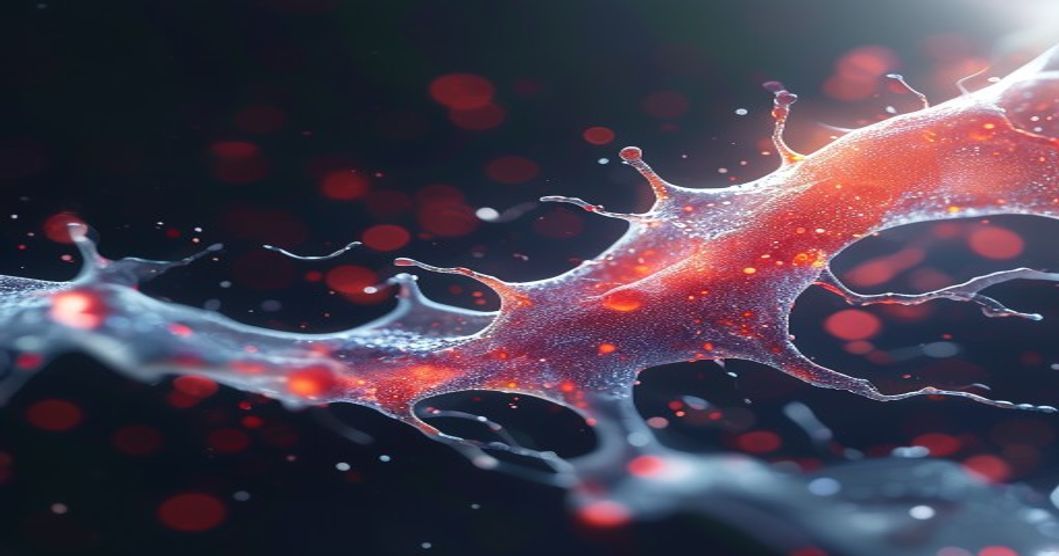
Chronic myofascial pain affects millions. It causes persistent stiffness and restricted movement. Many traditional treatments offer only temporary relief.
We explore a non-pharmaceutical approach. This method targets the cellular roots of pain. It focuses on the crucial role of myofibroblast mechanosensitivity.
This deep dive reveals how specific therapies re-tune fascial responses. They fundamentally desensitize chronic myofascial pain.
The Central Role of Myofibroblasts in Fascial Health
Fascia is more than simple connective tissue. It is a dynamic, innervated organ system. Myofibroblasts are key cells within this system.
These cells exhibit unique characteristics. They produce extracellular matrix (ECM). They also possess contractile abilities, similar to smooth muscle cells.
Their alpha-smooth muscle actin (α-SMA) expression drives this contractility.
Myofibroblast Contractile Activity and Pain
Myofibroblasts exert intrinsic tension. This tension helps maintain the fascial network. However, chronic inflammation or injury can hyper-activate them.
This leads to excessive contraction. Fascial stiffness increases significantly. This sustained tension creates physical tightness.
Furthermore, it alters the mechanical environment for nerve endings. This contributes directly to pain.
Mechanotransduction: Sensing the Environment
Myofibroblasts are exquisite mechanosensors. They continuously perceive mechanical cues. These cues come from the surrounding ECM.
Integrin-mediated focal adhesions facilitate this process. Mechanotransduction converts mechanical forces into biochemical signals. This influences cell behavior and gene expression.
In chronic pain, this machinery can dysregulate. Consequently, the mechanical threshold for nociceptor activation lowers.
The Myofibroblast Secretome: A Biochemical Orchestrator
Beyond contractility, myofibroblasts secrete many molecules. These include cytokines, chemokines, and growth factors. TGF-β is a notable example.
They also release matrix metalloproteinases (MMPs). This “secretome” profoundly impacts the local microenvironment. It modulates inflammation, fibrosis, and nociceptive pathways.
A dysregulated secretome perpetuates pro-inflammatory conditions. It also promotes a pro-nociceptive milieu within the fascia.
Non-Pharmacological Pathways to Relief
Physiotherapeutic interventions offer targeted solutions. Myofascial Release (MFR) and multi-directional stretching are prime examples. They apply controlled mechanical stress to fascial tissues.
Targeted Myofascial Release (MFR)
MFR involves sustained pressure and specific shear forces. These are applied to restricted fascial areas. The aim is to induce viscoelastic creep.
This also causes plastic deformation of connective tissue. The target is not just macroscopic release. It also includes microscopic cellular responses.
Multi-Directional Stretching Protocols
These protocols differ from simple linear stretching. They engage fascial planes in multiple vectors. Their goal is to restore physiological glide and extensibility.
The applied mechanical strain is often dynamic and varied. It stimulates a broader range of cellular mechanoreceptors. This promotes comprehensive tissue health.
Modulating Myofibroblast Contractile Activity
Mechanical forces from MFR and stretching directly influence myofibroblast contractility. These interventions are highly precise.
Sustained, gentle pressure or controlled stretching can “unload” myofibroblasts. This mechanical perturbation reorganizes the actin cytoskeleton. It also reduces α-SMA expression.
Consequently, intrinsic cellular tension decreases. Forces transmitted through integrins alter signaling pathways. The Rho-kinase pathway is a key example.
Normalizing mechanical input downregulates pathological contractile states. Reduced myofibroblast tension, combined with ECM remodeling, decreases fascial stiffness. This improves tissue compliance.
Therefore, the mechanical environment of embedded nociceptors improves significantly.
Shifting the Myofibroblast Secretome
Mechanical modulation of myofibroblasts extends to their secretome. This shifts the biochemical landscape of the fascia. This has profound implications for pain.
An Anti-inflammatory Biochemical Shift
Mechanical stimulation can reduce pro-inflammatory cytokines. These include IL-1β, IL-6, and TNF-α. It can also increase anti-inflammatory mediators.
This rebalancing quells local inflammation. Local inflammation significantly contributes to chronic pain. For more insights, see our post on The Science of Inflammation.
ECM Remodeling and Neurotrophic Factors
Myofibroblasts secrete MMPs and their inhibitors (TIMPs). These regulate ECM turnover. Altered mechanical signals normalize this balance.
This prevents excessive fibrosis or degradation. It restores optimal tissue architecture for neural function. Changes in the secretome also influence neurotrophic factor release.
This can promote nerve health. It can also reduce aberrant sprouting of nociceptive fibers. Specific physical forces and their duration determine the secretome’s response.
Re-tuning Fascial Mechanosensitivity for Lasting Relief
The combined effects fundamentally re-tune the fascial system. Modulated contractile activity and an altered secretome drive this change.
Nociceptor Desensitization and Function
Myofibroblast-induced tension decreases. The local inflammatory milieu also changes. This reduces both mechanical and chemical sensitization of nociceptors.
The pain activation threshold elevates. The tissue becomes less reactive to normal stimuli. Normalizing myofibroblast function restores physiological mechanotransduction.
The fascia then processes mechanical information appropriately. It avoids triggering unwarranted pain signals. Reduced stiffness and improved viscoelasticity facilitate better inter-fascial glide.
This prevents mechanical impingement. It also reduces sustained mechanical stress on neural structures. This leads to profound, lasting relief.
The Intersection with Daily Health
Understanding myofibroblast mechanosensitivity directly impacts your daily life. Chronic pain severely limits mobility. It affects mood, sleep, and overall quality of life.
This research offers a path to regain comfort. It promotes a more active lifestyle. Imagine moving freely, without constant discomfort.
These non-pharmacological methods empower individuals. They provide tools to manage and alleviate pain sustainably. This means less reliance on medications.
Consequently, you can enjoy greater physical freedom. This translates to improved mental well-being too.
Future Directions and Empowering Your Health
This mechanobiological cascade offers a robust pathway. It desensitizes chronic myofascial pain without pharmaceutical reliance. It addresses root causes, not just symptoms.
Further research will quantify dose-response relationships. Advanced imaging and molecular biomarkers are crucial. Sophisticated biomechanical modeling will enhance our understanding.
Clinically, this reinforces skilled physiotherapy’s role. It emphasizes targeted, evidence-informed interventions. These leverage the body’s intrinsic cellular mechanisms for healing.
Our aim is to move beyond symptomatic treatment. Our goal is true mechanobiological re-education of the fascial system.