

Chronic neuropathic pain presents a significant challenge. It often results from nerve damage or dysfunction. This pain persists, leading to debilitating sensory issues. Traditional treatments frequently offer limited relief. They also carry significant side effects.
A new approach is emerging. It leverages advanced technology. This innovative strategy focuses on Proprioception VR Pain recalibration.
Understanding Neuropathic Pain’s Complexities
Neuropathic pain differs from acute pain. Acute pain signals immediate tissue harm. Neuropathic pain continues even without ongoing damage. Patients experience allodynia. This means pain from non-painful stimuli.
They also suffer from hyperalgesia. This is an increased pain response. These conditions severely impact daily life.
The central nervous system undergoes maladaptive changes. This is called neuroplasticity. The somatosensory cortex is particularly affected. This part of the brain maps our body.
Chronic pain can “smudge” this map. The brain then misinterprets sensory input. This leads to persistent pain signals. We urgently need drug-free strategies.
Immersive Haptic VR: A Paradigm Shift
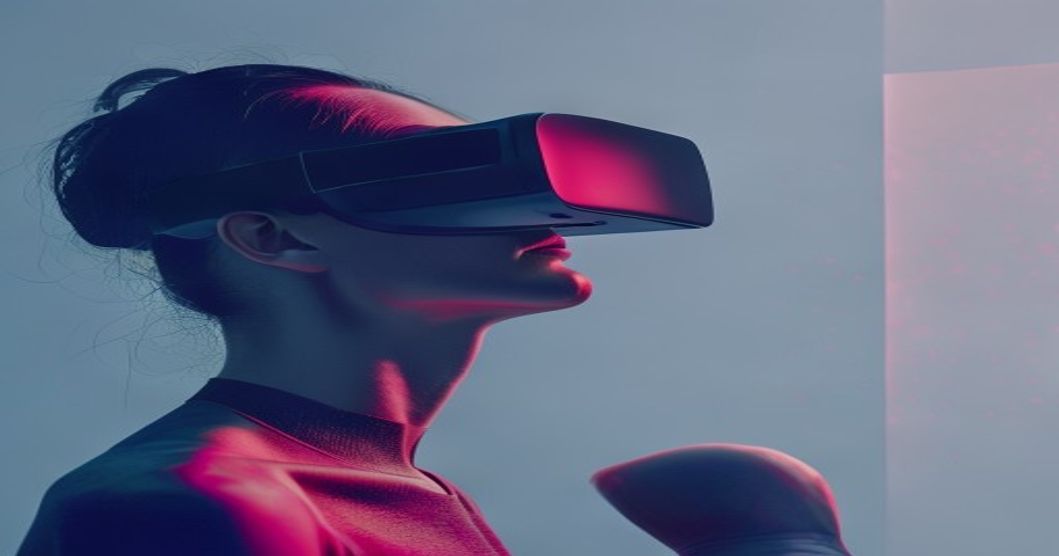
Emerging research highlights immersive virtual reality (VR). This technology holds transformative potential. Haptic feedback enhances its effectiveness. This approach directly targets neuroplastic changes linked to chronic neuropathic pain.
The brain possesses inherent plasticity. VR leverages this capacity. This offers a new therapeutic modality. VR provides rich, controlled multisensory input. This happens within a virtual environment. It effectively “rewires” distorted proprioceptive pathways. It rebuilds accurate cortical body maps.
Recalibrating Proprioceptive Pathways
Proprioception is crucial for body awareness. It is our sense of body position and movement effort. Chronic pain conditions often disrupt proprioceptive processing.
Conditions like Complex Regional Pain Syndrome (CRPS) show this. Phantom limb pain also involves disruption. Patients may feel disconnected from their movements.
Haptic feedback systems are vital here. These include force-feedback gloves or exoskeletons. They provide tactile and force sensations. These mimic real-world interactions.
For instance, a CRPS patient might perform virtual tasks. These tasks require precise grasping. Haptic feedback simulates object texture and weight. It provides verifiable sensory data.
This congruent input bridges a gap. It connects motor intention with sensory outcome. Repeated successful movements help re-establish correct neural pathways.
Accurate haptic feedback is key to correcting erroneous internal models. The brain receives clear signals. It learns about limb position and movement. This gradually reduces pain.
Rebuilding Distorted Cortical Body Maps
The cortical body map resides in the somatosensory cortex (S1). This map is dynamic. Experience, injury, or chronic pain can alter it. In neuropathic pain, this map can become “smudged.”
This means a loss of distinct body part boundaries. It can also be “shrunken,” reducing the affected area’s representation. Sometimes, it shifts sensation.
Immersive VR environments offer control. They manipulate visual and proprioceptive input. VR can present a healthy, functional limb visually, even if the real limb is affected.
Haptic feedback reinforces normal movement. This powerfully influences cortical reorganization. It is a “top-down” effect.
Advanced VR induces “virtual embodiment.” Patients feel the virtual body is their own. Synchronized visual and haptic feedback enhances this. This phenomenon is critical for therapy.
For phantom limb pain, seeing a virtual limb move helps. Feeling haptic sensations on it normalizes brain representation. This reduces painful phantom sensations.
Furthermore, VR facilitates graded exposure. Patients can encounter painful movements or sensations within a safe virtual space.
This desensitizes the nervous system. It challenges maladaptive pain-avoidance behaviors. This further aids cortical map reorganization.
A Drug-Free Approach to Pain Relief
This approach’s main appeal is its drug-free potential. It directly addresses the neuroplasticity of chronic pain. VR offers an alternative to systemic medications.
These often have side effects. They typically do not target the root cause: neural disorganization.
VR environments offer precision. They are tailored to individual pain profiles. Therapists adjust task complexity, haptic feedback intensity, and visual representation.
This optimizes therapeutic outcomes. Such customization is difficult with traditional therapies.
Moreover, VR therapy demands active patient engagement. It is not a passive treatment. This fosters agency.
Patients gain self-efficacy in managing pain. Active participation promotes long-term behavioral change. It also encourages neuroplastic adaptation.
The Intersection: Daily Health Impact
The advancement of Proprioception VR Pain solutions directly impacts daily health. Chronic pain severely limits mobility and reduces independence.
VR therapy offers a pathway to regaining function. Patients can perform everyday tasks more easily, including walking, grasping, and self-care. It improves overall quality of life.
Consequently, individuals can return to work or hobbies. Their mental health often improves. Reduced reliance on medication is another benefit.
This lessens side effects and addiction risks. This technology helps restore a sense of normalcy. It empowers individuals to live fuller, more active lives.
Empirical Evidence and Future Directions
This field is still emerging. However, preliminary studies show promise. Pilot programs have yielded positive results for conditions like CRPS and phantom limb pain.
Spinal cord injury pain and post-stroke pain also respond. Future research will involve larger trials. We will optimize VR protocols. Integrating biofeedback is another goal.
We aim to explore long-term efficacy. Cost-effectiveness is also a factor. Our goal extends beyond symptom management.
We strive for a true “deconstruction” of chronic pain. This means normalizing brain function and restoring accurate body representations.
Explore how technology is reshaping healthcare.
- Read about the Future of Neuroplasticity Therapies.
- Understand more with Understanding Chronic Pain Mechanisms.
- Discover Haptic Technology Innovations.