

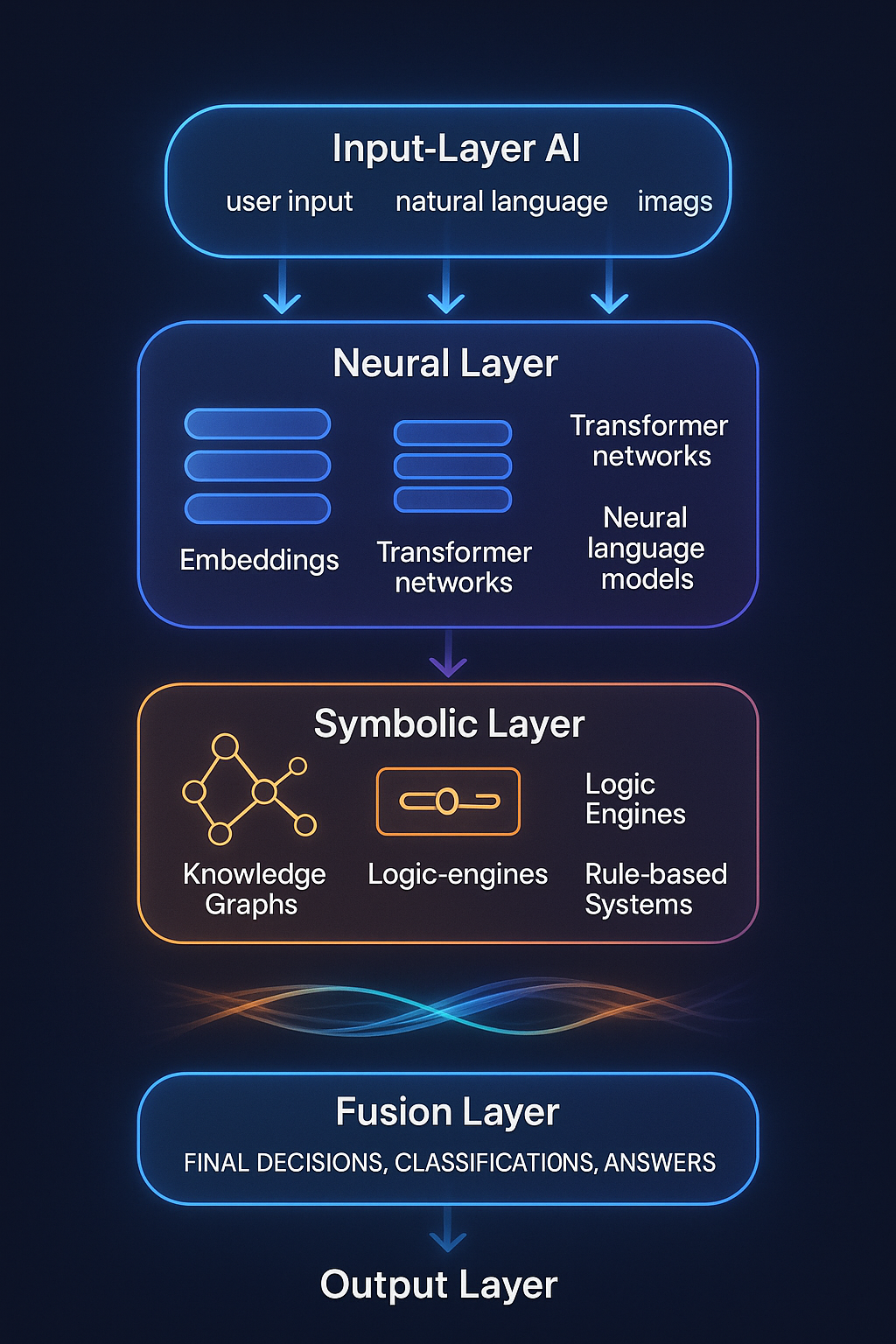
The landscape of artificial intelligence is rapidly evolving, and at its forefront is Neuro-symbolic AI – a groundbreaking paradigm that merges the raw power of deep learning with the logical rigor of symbolic reasoning. This innovative approach is fundamentally transforming how businesses approach strategic decision-making, especially in today’s increasingly volatile and complex markets. By dynamically integrating deep learning’s unparalleled pattern recognition capabilities with explicit causal knowledge graphs, neuro-symbolic AI architectures are poised to deliver explainable, real-time insights and enhance predictive scenario planning for B2B stakeholders, fostering unprecedented trust and more effective strategic outcomes.
Understanding Neuro-symbolic AI Architectures
The Core of Neuro-symbolic AI: Dynamic Integration
Adaptive neuro-symbolic AI architectures are defined by their hybrid nature, where neural networks (the deep learning component) and symbolic reasoning systems (like knowledge graphs and rules engines) work in concert. This collaboration often occurs within a tightly integrated, iterative feedback loop, creating a more robust system than either approach could achieve independently.
- Deep Learning Component: This layer excels at processing vast quantities of raw, unstructured data, from market sentiment in news feeds to intricate financial time series and extensive customer interaction logs. It identifies subtle patterns, anomalies, and emergent trends invisible to symbolic systems, providing “perceptual” and “intuitive” insights crucial for complex, real-world phenomena.
- Causal Knowledge Graph Component: Serving as the symbolic backbone, this component explicitly represents entities, their relationships, and, critically, their causal links within a specific domain (e.g., supply chain dependencies, economic indicators, competitive landscapes). Unlike mere correlations, these “explicit causal knowledge graphs” model *why* events lead to others, forming a structured, verifiable, and human-understandable reality model, vital for deep, actionable insights.
- Dynamic Integration: The “adaptive” and “dynamic” aspects are the true differentiators. Information flows bi-directionally, creating a continuously learning and adapting system. Deep learning models can extract new entities, relationships, or even hypothesize novel causal links from data, which then enrich or update the causal knowledge graph. Conversely, the causal knowledge graph provides structured context and constraints to the deep learning models, guiding their learning, mitigating spurious correlations, and significantly improving generalization. For instance, if a deep learning model flags a market trend, the knowledge graph can instantly contextualize it within known causal chains, determining its strategic relevance or potential downstream effects. This continuous interaction refines the system’s market understanding, offering a significant advantage over static models. Architectures range from neural-guided symbolic to symbolic-guided neural, culminating in truly integrated systems where components influence each other’s processing at a deeper level.
1. Achieving Explainability for B2B Stakeholders with Neuro-symbolic AI
Explainability (XAI) is not merely a desirable feature but a paramount requirement for B2B strategic decision support. Trust, accountability, and regulatory compliance hinge on the ability to understand why an AI system made a particular recommendation. Neuro-symbolic AI inherently addresses this challenge, moving beyond the “black box” nature of pure deep learning.
- Traceability through Causal Graphs: The symbolic component, particularly the explicit causal knowledge graph, provides a transparent, human-readable trace of the reasoning process. When a strategic recommendation is generated, the system articulates the specific causal pathways, business rules, and underlying data points that led to that conclusion. Stakeholders can query “why” a decision was suggested, and the system explains logical steps and causal factors by traversing the graph, building immense trust.
- Hybrid Explanations: These systems offer multi-level explanations that combine data-driven insights with logical reasoning. For example, a deep learning component might identify a subtle shift in consumer behavior, such as “sentiment for product X is declining due to discussions around feature Y.” The symbolic component then integrates this insight with its causal knowledge, perhaps stating, “decline in feature Y discussion often precedes a 15% drop in market share if not addressed within 30 days due to competitor Z’s superior offering.” The combined explanation is empirically supported and logically coherent, offering richer understanding.
- Counterfactual Reasoning: A powerful capability enabled by causal knowledge graphs is counterfactual “what-if” analysis. Users can explore hypothetical scenarios, asking questions like, “What if we had prioritized action A over B?” or “What if market condition C had not occurred?” The system then simulates these alternative realities based on its causal model, providing explainable predictions about different outcomes. This invaluable tool allows leaders to assess risks and opportunities before committing resources. For more on the importance of explainable AI, consult resources like Stanford AI’s perspective on Explainable AI.
2. Real-time B2B Strategic Decision Support
In today’s fast-paced B2B environments, the ability to process vast amounts of information and generate actionable insights in real-time is no longer a luxury but a necessity. Neuro-symbolic AI is uniquely positioned to deliver this agility.
- Dynamic Insight Generation: By continuously ingesting and processing streams of B2B-relevant data – encompassing supply chain telemetry, competitor activity, macroeconomic indicators, and customer engagement metrics – the deep learning component detects emerging patterns with minimal latency. Crucially, the causal knowledge graph then instantly contextualizes these patterns, transforming raw data into actionable strategic insights that can be immediately leveraged.
- Context-Aware Recommendations: The symbolic layer provides essential business context, elevating predictions from mere observations to prescriptive actions. For instance, a deep learning model might predict an impending sales decline. The causal knowledge graph can instantly link this prediction to specific underlying causes, such as supply chain bottlenecks, shifts in competitor pricing strategies, or newly introduced regulatory mandates. This allows the system to recommend highly targeted strategic interventions, such as, “re-route supply from vendor A to B to mitigate bottleneck C, projected to save $X million over 3 months.”
- Reduced Latency in Decision Cycles: By automating the complex interpretation and contextualization of data, neuro-symbolic AI significantly shortens the time from data ingestion to strategic insight generation. This empowers B2B leaders to make agile, informed, and timely decisions, vital in situations demanding rapid response to market disruptions or competitive moves.
3. Predictive Scenario Planning in Volatile Markets
Volatile markets are characterized by high uncertainty, rapid shifts, and often unpredictable events. Traditional predictive models often falter under such conditions. Neuro-symbolic AI offers a more robust framework for predictive scenario planning, capable of navigating and even leveraging this volatility.
- Robust Forecasting with Causal Anchors: While deep learning excels at short-term forecasting, patterns can break in volatile markets. Causal knowledge graphs provide crucial “anchors”—fundamental causal relationships more stable than surface correlations. When deep learning detects a deviation, the symbolic layer discerns if it’s transient or a fundamental shift, leading to robust long-term predictions.
- Simulating Complex Interdependencies: Volatility often stems from complex, non-linear interactions between numerous factors. The explicit causal links embedded within the knowledge graph empower the system to simulate how changes in one variable (e.g., interest rates, commodity prices, geopolitical events) propagate through the entire business ecosystem. This allows high-fidelity “what-if” scenario exploration, providing comprehensive understanding of potential futures across departments and markets. For a deeper dive into deep learning fundamentals, consider resources from IBM’s Deep Learning overview.
- Risk Assessment and Mitigation Strategies: By simulating various potential futures, neuro-symbolic AI can proactively identify potential risks (e.g., supply chain disruptions, market shifts, regulatory changes). It suggests proactive mitigation strategies based on causal understanding, predicting cascading effects (e.g., raw material shortage) and recommending alternatives with likely impact.
- Adaptive Strategy Formulation: In highly volatile environments, static strategies are often ineffective. Neuro-symbolic systems continuously monitor market conditions, compare actual outcomes against predicted scenarios, and dynamically adjust strategic recommendations as new data emerges or causal relationships evolve. This fosters a continuous “sense-and-respond” strategic posture for agile and resilient businesses.
4. Deployment Considerations and Future Outlook for Neuro-symbolic AI
Deploying adaptive neuro-symbolic AI solutions requires careful planning and robust infrastructure. Key considerations include seamless data pipelines, sophisticated infrastructure for interoperability, and robust management of neural and symbolic components. A strong emphasis on domain expertise is critical for initial construction and ongoing maintenance of the causal knowledge graphs, which form the bedrock of the system’s reasoning capabilities. Challenges involve initial knowledge graph construction, seamless component interoperability, and managing computational overhead.
However, the future outlook for neuro-symbolic AI is exceptionally promising. As AI systems become more deeply integrated into critical B2B operations, the demand for intelligence that is not only powerful but also explainable, trustworthy, and inherently adaptive will only intensify. Neuro-symbolic AI stands at the forefront of this evolution, offering a clear path toward truly intelligent systems that can process vast amounts of data, reason logically, provide transparent explanations, and adapt dynamically to changing circumstances. This empowers businesses to thrive amidst market volatility, transforming challenges into competitive advantages. Explore The Vantage Reports for more cutting-edge insights into AI and business strategy.
Conclusion: The Strategic Advantage of Neuro-symbolic AI
Adaptive Neuro-symbolic AI architectures represent a pivotal advancement in artificial intelligence, specifically engineered to meet the intricate demands of B2B strategic decision support and predictive scenario planning in volatile markets. By seamlessly integrating the pattern recognition prowess of deep learning with the logical reasoning and inherent explainability of explicit causal knowledge graphs, these systems offer unparalleled transparency, real-time insights, and robust predictive capabilities. This hybrid approach empowers B2B leaders to transcend correlation, delve into underlying market dynamics, and make strategically sound, explainable, and adaptive decisions. Neuro-symbolic AI is a strategic imperative, transforming how businesses navigate uncertainty and secure their competitive edge.