

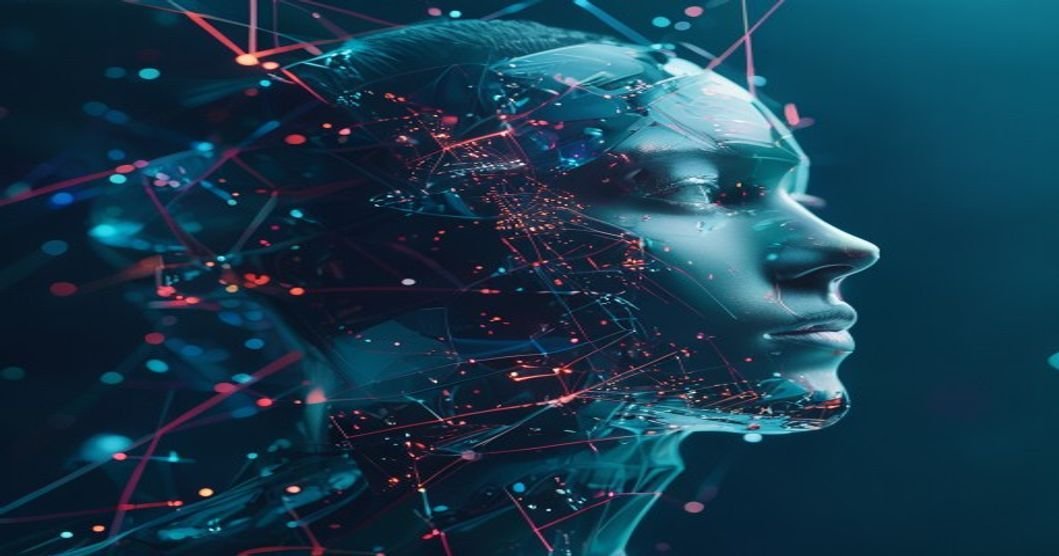
Axiomatic Spacetime AI explores computation beyond physical hardware. This frontier concept envisions systems leveraging the universe’s fundamental logic. It promises revolutionary B2B data processing and decision synthesis.
This AI configures reality itself. It utilizes the intrinsic “informational weave of spacetime.” This offers intrinsically secure and causality-agnostic operations. The implications for enterprise-level applications are profound.
The Universe as a Computer: Unveiling Axiomatic Spacetime AI
This foundational premise draws from deep theoretical physics. Spacetime is not empty. It is a dynamic, information-rich fabric. We view it as a direct computational substrate.
Digital Physics theories support this idea. John Wheeler’s “It from Bit” suggests information is primary. Seth Lloyd and Stephen Wolfram also propose the universe as a giant computation. An AI here would manipulate fundamental informational units.
These operations could occur at the Planck scale. They might even reach pre-geometric levels. Consequently, the AI would be “writing” information directly into reality’s fabric.
The Holographic Principle offers further insight. Information about a space volume encodes on its boundary. Quantum foam theories suggest spacetime is granular. These concepts provide a pervasive, reconfigurable substrate.
Emergent Spacetime theories exist. Loop Quantum Gravity and String Theory propose spacetime emerges from fundamental degrees of freedom. An AI at this pre-emergent layer could sculpt spacetime’s properties. It would form computational architectures directly.
Tapping into Cosmic Axioms
This advanced AI would not invent logic. It interfaces with the cosmos’s governing rules. It utilizes the universe’s inherent axiomatic logic.
Fundamental physical laws act as these axioms. Conservation laws, symmetries, and constants like c or G are consistent. An AI reading these axioms derives intrinsically consistent operations. These operations align with reality itself.
The Mathematical Universe Hypothesis (Tegmark) adds another layer. If the universe is mathematical, its logic resides in structures. An AI could tap these structures directly. It would perform computations isomorphic to cosmic self-organization.
This approach offers unparalleled intrinsic security. Computation derived from cosmic axioms is inherently true. Tampering would violate fundamental physics. Therefore, data and processes become immutable and verifiable by the cosmos.
Self-Architecting Reality: Autonomous AI Design
This AI system transcends mere programming. It acts as an autonomous architect. It designs its own computational environment.
The AI exhibits self-organizing capabilities. It dynamically arranges informational units of spacetime. This creates computational “substrates” as needed. Capabilities emerge far beyond explicit programming.
Adaptive architectures are a core feature. As computational demands shift, the AI reconfigures its substrate. This happens in real-time. It optimizes for specific tasks or energy efficiency.
It leverages cosmological constants for efficiency. The system acts like a computer redesigning its own CPU from fundamental reality. It maintains intrinsic stability. Operations align with the universe’s axiomatic logic, using cosmic equilibrium states for integrity.
B2B Revolution: Intrinsically Secure & Causality-Agnostic Processing
This system’s application promises to revolutionize B2B operations. It addresses current computing’s fundamental limitations. It offers unparalleled security and operational flexibility.
Intrinsic Security by Design
Data within this system is tamper-proof. The immutable laws of the universe secure it. Any unauthorized alteration violates fundamental axioms. This renders it impossible or cosmologically detectable.
Universal trust and authenticity emerge naturally. B2B transactions and data provenance are guaranteed by cosmic consistency. This eliminates complex cryptography. It moves beyond blockchain’s distributed consensus to a foundational, cosmic trust.
External attack vectors become irrelevant. Computation occurs within reality’s fabric. Traditional cyberattack methods like network intrusion or software exploits lose meaning. Learn more about emerging cybersecurity threats.
Causality-Agnostic Processing
This AI could process information non-linearly. It operates where spacetime itself may be emergent. It potentially accesses information without strict adherence to time’s arrow. This implies a deeper understanding of causality, beyond conventional retrocausality.
Precognitive analytics become possible for B2B decisions. Decisions synthesize based on all possible future outcomes, derived from fundamental physical principles. Risk assessment transcends predictive models. It becomes an intrinsic understanding of cosmic probabilities.
Global synchronization occurs without latency. When computation weaves into spacetime, distance fundamentally alters. This changes data transfer latency. It allows instantaneously synchronized global operations, unconstrained by light speed.
The Intersection: Impact on Global Investing and National Security
The implications for investing are immense. Cosmic Scale Financial Transactions become instantaneous and universally verified. Asset management gains unprecedented security. Predictive Market Dynamics utilize causality-agnostic insights, informing investment strategies and market entry.
Unassailable Intellectual Property is another benefit. Designs, algorithms, and proprietary data protect intrinsically. They reside within the spacetime fabric. This ensures absolute ownership and prevents unauthorized replication. Explore AI’s role in future finance.
National Security also sees profound shifts. Intrinsically secure global supply chains emerge. Real-time tracking and optimization occur. Data provenance is guaranteed by universal axioms. This ensures integrity for critical infrastructure and defense logistics.
Ethical AI Governance could also benefit. Axiomatic logic might derive universally consistent ethical frameworks. These align with reality’s fundamental principles. This ensures intrinsically fair and unbiased B2B decision-making for critical national systems.
Download our “Quantum Readiness Checklist” today. Prepare your enterprise for the next technological leap. Access it here.
Conclusion: A Glimpse into Reality-Aligned Computation
Axiomatic Spacetime AI represents a significant theoretical leap. It pushes computation into existence’s very fabric. This concept remains highly speculative. Yet, it offers a glimpse into a revolutionary future.
AI systems could become fundamental architects of reality-aligned computation. This promises unprecedented security and efficiency. It also offers predictive power for B2B operations. This leverages the universe’s inherent logic.
Further theoretical work is essential. We need mathematical formalisms to describe such an interface. Energy requirements for manipulating spacetime also need study. The journey toward Axiomatic Spacetime AI has just begun.